





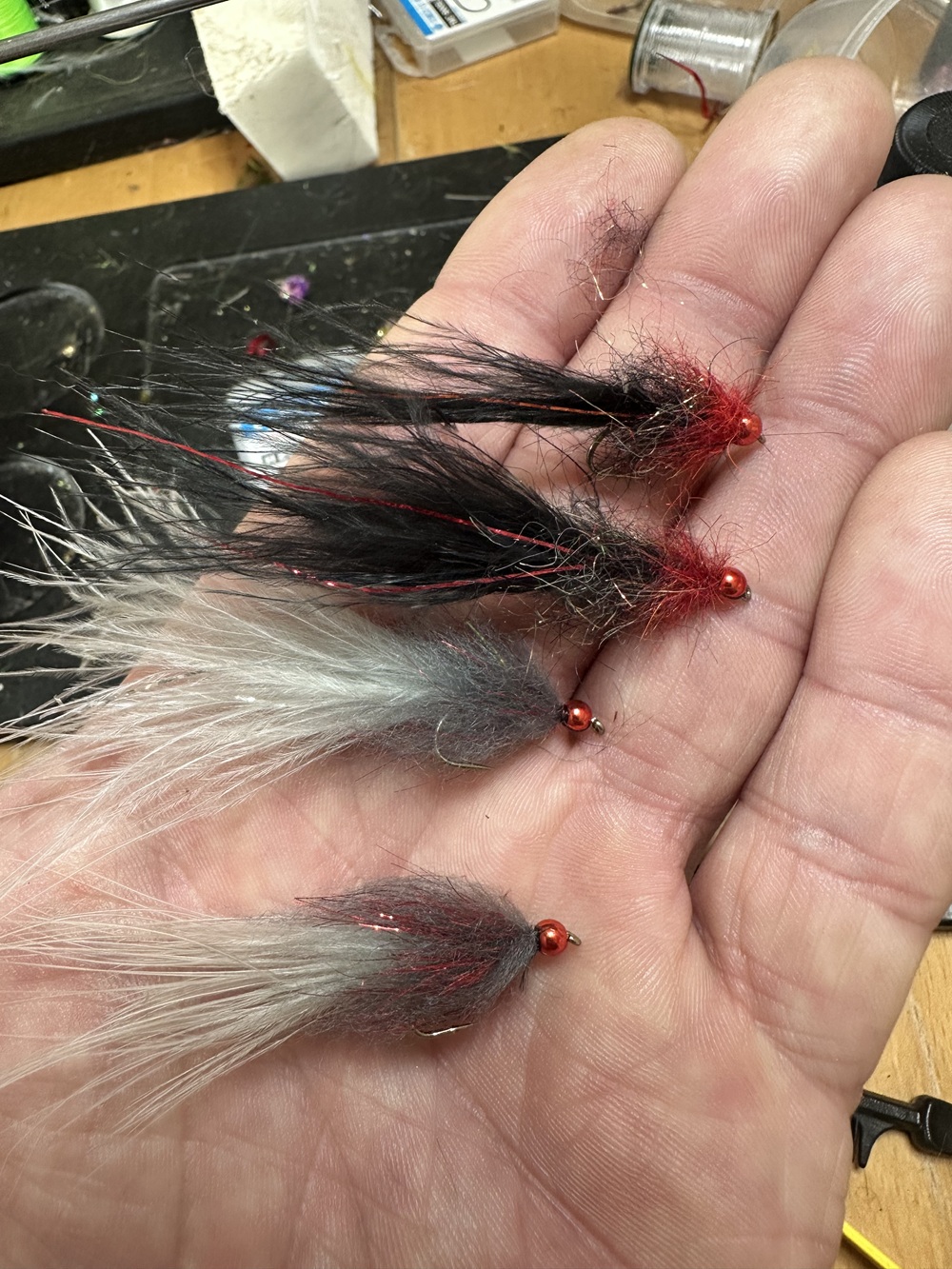
The successful Fuzzle Buggers for my Tasmanian sea trout day.
What do flyfishing for pike in Canada, and sea trout in Tasmania have in common? Apart from both being a species you can fish for opportunistically, rather than carefully plan for, I discovered catching both benefits from a fly retrieve where you add some ‘jam’! I’ll explain shortly…
First the pike. I had planned to fish the crystal-clear waters of the Columbia River and Bow River system in the Rocky Mountains, Canada, during our winter. A flyfishing itinerary was carefully made with help from Doug from Bow River Fly Fishing. I had been tying Green Drakes, dainty CDC emergers and hoppers. Then, literally as we arrived, record rains turned all those systems to mud for 2 weeks – exactly the duration of our trip.
Sensing my disappointment (devastation?) Doug suggested I hitch a ride with Curtis, one of his guides, and retreat from the Rockies to fish for pike.
I could safely leave the dainty trout flies behind, as pike flies are like cod flies or barra flies – you basically cast a fly the size of a rat! Pike are a popular species in the Northern Hemisphere, and I had caught them with bait where I grew up in Europe. So rather than sulk at the edge of the muddy, raging waters of the mighty Bow River, I decided to go with the new plan and launch a few rats.
We drove for 2 hours out of the Rockies, from Lake Louise to some lower-lying lakes. They looked calm and almost surreal compared to the wildness of the glacier-fed river systems high up in the mountains. My nephew joined me, and being new to flyfishing, all of this was exciting for him. But I knew casting these big flies was going to be a challenge.
After drifting for 2 hours and hitting the likely pockets amongst the weeds without success, Curtis encouraged us to ‘put some jam’ on the retrieve. After a cast was made, we let the fly settle for a foot or two down the face of the weed-bed. Then we started retrieving the fly in big, powerful pulses (‘jams’) back to the boat, before a final hang.
So we went jamming, jamming, and jamming, until I hit a log. A log that started swimming!
Hello backing! We hadn’t seen this fish, but it pulled the three of us plus the boat into open water. After a tussle it came into sight, and it was a lunker! Curtis got all excited, and more so when its sharp toothy snout sliced through not one, but two of his boat nets. Chaos ensued, but at around 120cm I could make the grip (kind of) and grin (for sure)! What a trophy!
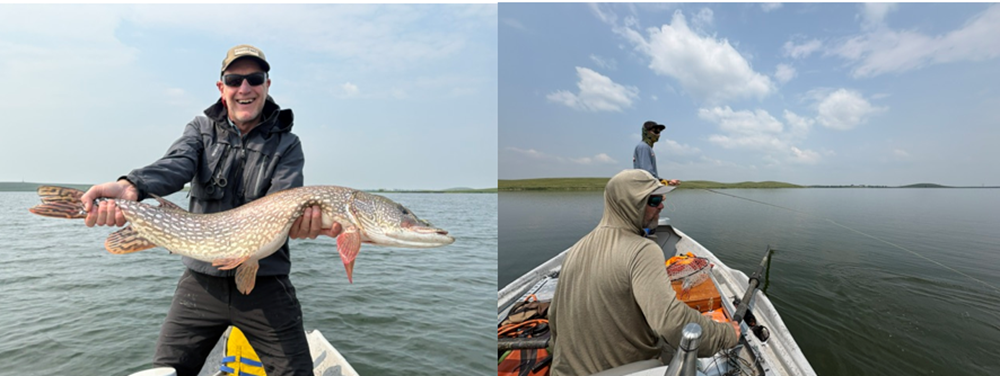
A trophy pike and 'jamming' for more.
After safely releasing this pike, we kept jamming for the rest of the day. I jammed some more and hit another half a dozen. My nephew did very well for a novice, but accuracy and longer casts were needed. With those big flies, it was a huge task and he missed out that day. (A story for another time: at the end of the trip, he hooked, played and landed a 7½ ft white sturgeon! So he got his fish-fix, plus his grip and a very big grin.)
***
Back from Canada, and after a few weeks of work and normality, my wife and I visited Tasmania. The main aim was two days game cooking at the Agrarian Kitchen… or was it? I had sea trout on my mind. After a few failed attempts with the Spey rod in years gone by, I thought what I really need was a boat. This would help follow the whitebait – a major driver for sea trout fishing – and to most effectively hit the snags. I needed up-to-date local knowledge about where the bait (and trout) were. Enter Lachlan Young from Insight Guiding.
Of course, being Tassie, the weather threw a curve ball – again! This time, it was the 40-60km/h wind gusts that made casting, well, interesting. Luckily, Lachy is an expert at moving his stable boat around with the electric, so we got into the right spots, and we could also recover the odd errant fly stuck in the reeds.
We drifted the Derwent around New Norfolk. There wasn’t a lot of whitebait, so we resorted to jamming the fly again.
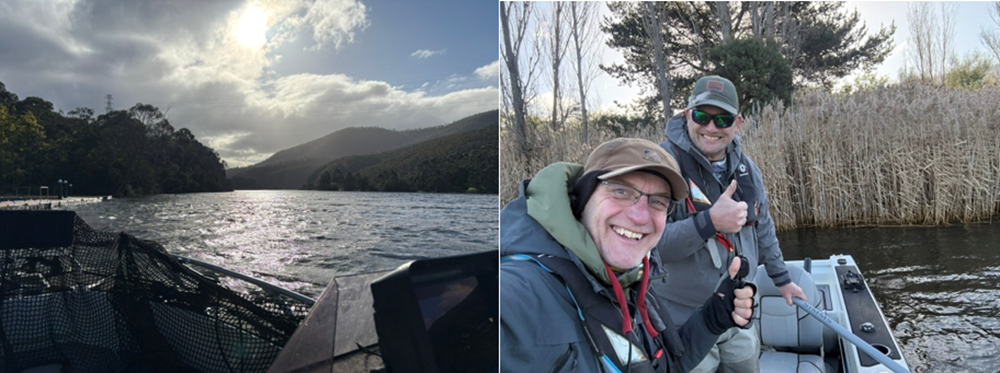
On the Derwent with Lachy.
I found the following process produced the best results: casting the fly (Fuzzle Buggers as pictured at the start) into small inlets. Then a pause to let the fly sink and create an anchor, allowing you to throw a mend in the line so it points 90 degree from the bank… then jam that fly back Canadian pike style!
With luck, after one or two jams, the fly would be hit hard. I ended up with about half a dozen hits, for three sea trout to the net. We surmised that these trout stayed in the cover of the snags at least in part because of number of cormorants around.
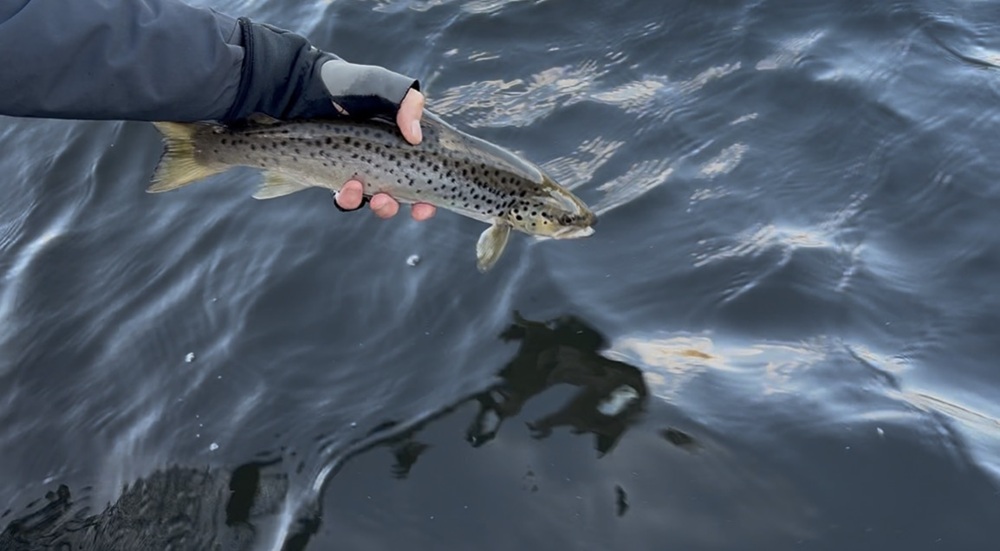
No trophy, but great fun.
These trout were real ambush feeders; perhaps something to keep in mind on other lakes and rivers at times? In any case, these sea trout were silvery bullets and they put up a great fight. Although these fish were not trophy size, being out there at all was a bonus, and Lachy’s guiding services were superb.
Like many Victorian and New South Wales flyfishers, I am now counting the days to the opening of the new stream season. I have restocked the fly box and have my dainty stream flies on standby. However, I will be ready to adapt when needed, including fishing Fuzzle Buggers with lots of added jam!


