





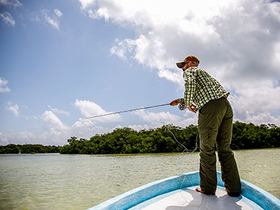
Unlike many dry fly-only situations, you can't be too quick with an indicator strike. (P. Weigall pic.)
Following on from part 1, I think it’s worth looking at some more indicators/ bite detection devices.
Nymph under a bobber
I’ve spent a lot of time over the last decade or so fishing the US summer on the waters of Montana. I love to wade the rivers and fish my cane rod, a long leader, and a beautifully-tied dry fly. I don’t go there to bobber-fish out of a drift boat down the big tailwaters like the Madison River.
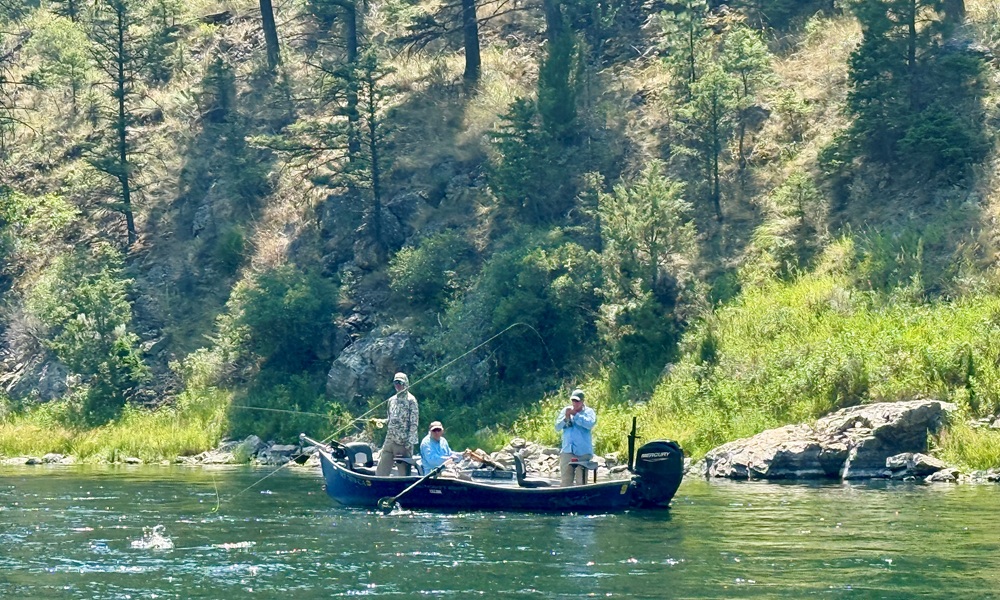
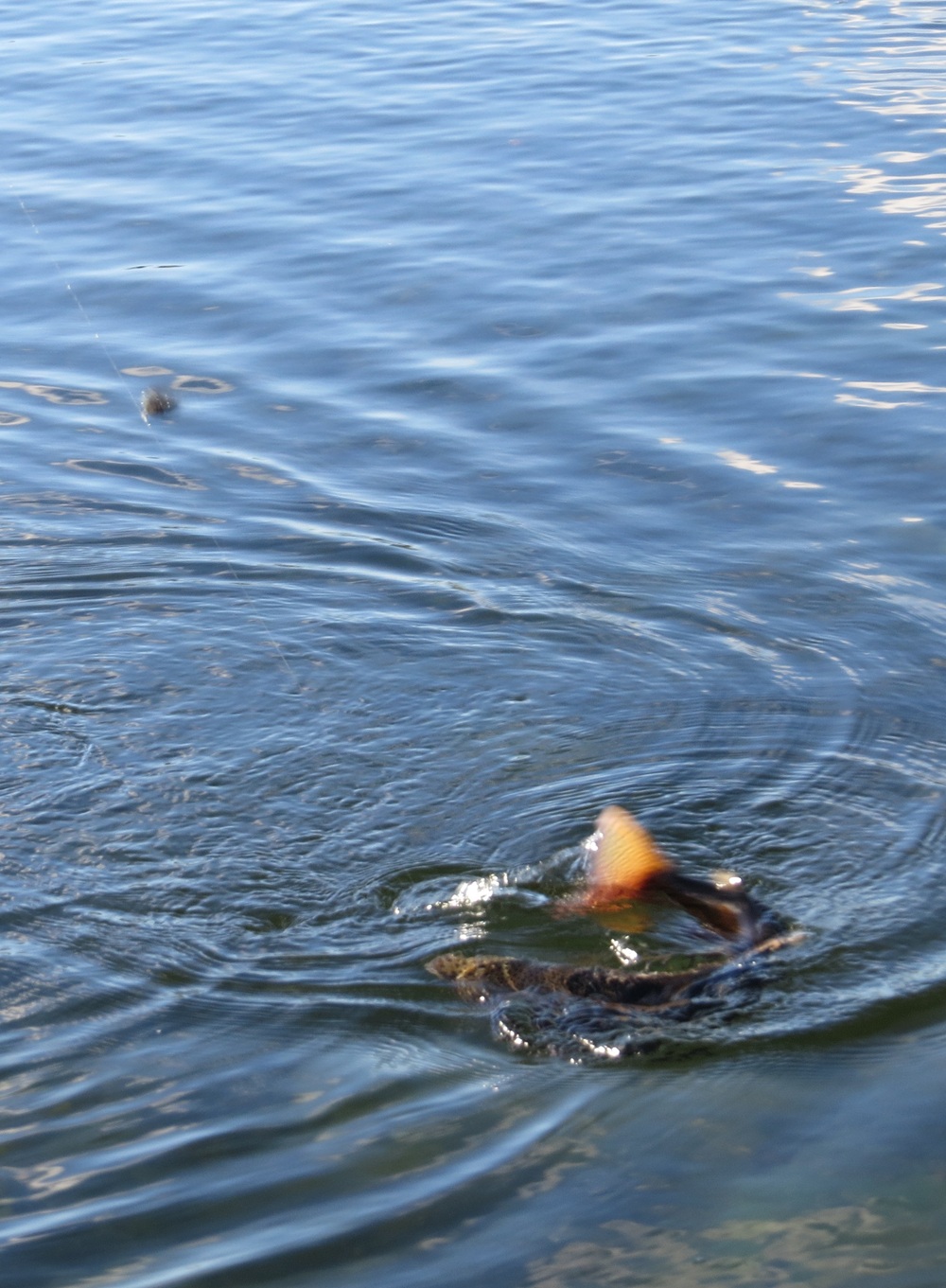
Hooked up while bobber nymphing from a drift boat in Montana - an undeniably effective technique!
Each morning, as I sit and drink my coffee at the Black Butte coffee shop on the main road in Ennis, I watch upwards of 200 guides and recreational anglers go past towing drift boats. They head upstream to various put-ins (launch sites) and float their way down. Nearly every boat you see has two clients, and they’re mostly using bobbers and nymphs.
As I said, it’s not how I like to fish, but if I were a guide in North America, I too would be tying bobbers and nymphs on my clients' rods. For the guides, this is a tip-based business. If the clients catch plenty of fish, the guides get a great tip. If they don’t catch many fish because they spend their day tangled or dragging dry flies across the surface, high-value tips are less likely.
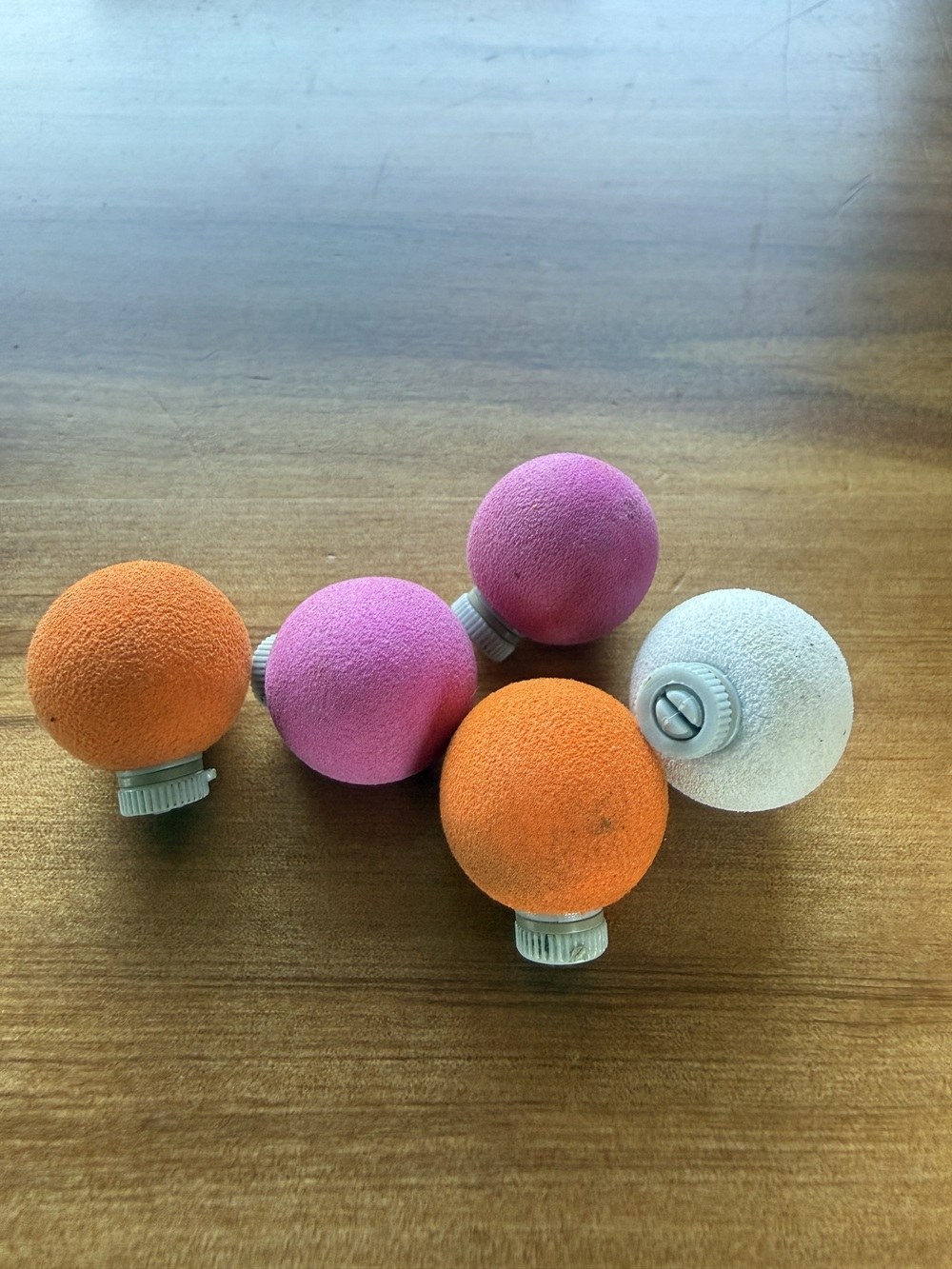
So, the guides set up with a foam bobber, usually ranging in size from a 10-cent piece to a ping-pong ball. The only time a bobber this size ever sinks is when a fish eats one of the two tungsten-bead nymphs.
Mostly, there is no need to strike because the downstream movement of the bobber and the water resistance are enough to self-set the hook. The guide simply says "Lift," and the fish is already on. The client thinks they hooked the fish, but in most cases, the bobber did. It’s a good deal if the client just wants numbers and the guide wants a tip. There’s no teaching false casting, no tailing loops, and no undoing tangles. There’s never a wind-knot, no need for the guide to dry a drowned dry fly, and no need to time the strike. It even removes the need to teach mending – why waste time on that?
Watch your own damn bobber!
My mates and my clients know that I’m a ‘dry-fly-or-die’ kind of guy. Years ago, I brought a bumper sticker to this effect back from Montana and stuck it on the rear windscreen of my car. Sometime later, another sticker appeared next to it. To this day, I still don’t know who put it there – no one has owned up! It says, "Watch your own damn bobber." Unfortunately, that’s not far removed from what we’ve often needed to do these past two or three years here in Tasmania.
Now, large-diameter, highly buoyant bobbers work really well on fast rivers. However, in my experience, using even much smaller bobbers (say, 15mm in diameter) in lake environments is problematic. The great thing about them is that there is usually a very simple method to change the depth setting of your nymph, often using a screw thread and a slot.

These bobbers are easy to cast, and because they are round, they seldom snag when a fish is running through weed beds or around stumps. Their main downside for lake fishing is their resistance to sinking. This makes them easy to see, but as soon as a trout eats the fly and starts to swim off, it feels the resistance of the bobber above and the weight of the nymph in its mouth. Trout will spit the fly out like lightning if they don’t like the feel of it. Imagine if you took a mouthful of dinner, and as soon as it was in your mouth, it started tugging back. You'd spit it out quickly too. If you’re going to use a large foam bobber, you need to strike like lightning.
Haysie's Lighthouse
This design was inspired by competition anglers fishing the ‘bung’ method. Because competition anglers are not allowed to use an indicator as such, they have to use flies instead. So, they very cunningly tie a highly visible egg-yarn fly, and suspend a couple of nymphs from it. One benefit of this is that, particularly when rainbow trout are around, a fish will occasionally come to the surface and eat the bright orange egg-yarn fly, and the angler is a chance to actually hook it. (A conventional woollen or yarn indicator obviously has no hook in it.)
In Tasmania, I know that many state-run fishing competitions have been won using the bung technique. This is mostly two nymphs suspended under a bright egg-yarn indicator fly. To me, it is as boring as it gets, but it is clearly a very effective way to catch a lot of trout.
As a guide, I don’t have to worry about whether the indicator is a fly or not. The Lighthouse, in my opinion, is the best indicator I have seen for this style of fishing. One of the great benefits is that there is no hook in it. When I catch a trout on the nymph and it runs around every snag and weed bed in the lake, there is no hook on the indicator to get stuck and cause a break-off. The Lighthouse simply slides past obstacles underwater.
The Lighthouse has a 40mm tower protruding above it. This was inspired by my mudeye fishing in years long gone, when I used a quill float. With a float like this, there is very little resistance when a fish eats your nymph and swims off. I am certain a trout is happier to hold the nymph in its mouth longer because of this minimal resistance. Furthermore, there is something mesmerising about watching the post on the Lighthouse as it wiggles left and right in the wind and waves. It actually becomes fun to fish like this, and it reminds me of my childhood.
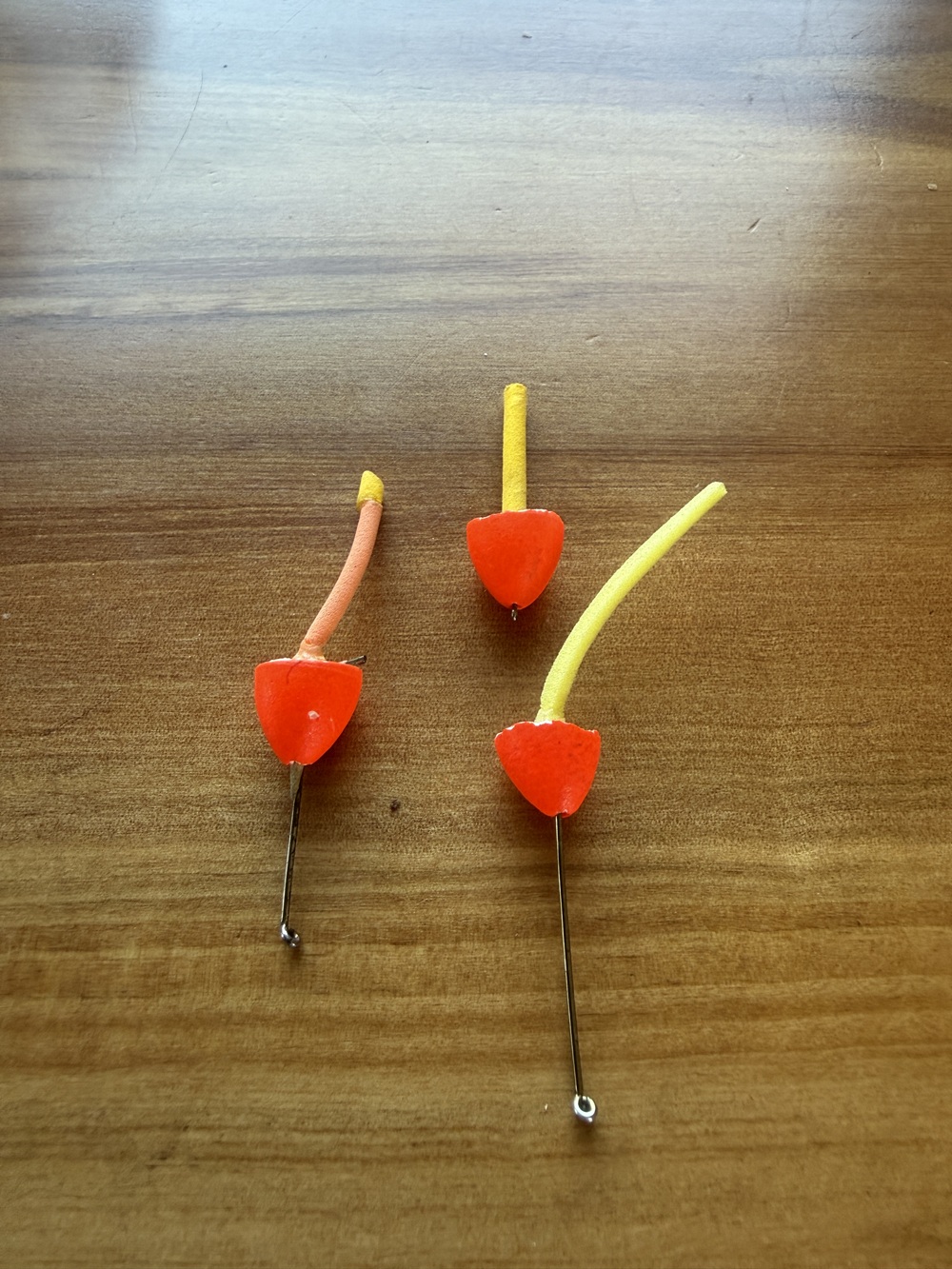
Another great benefit of the Lighthouse is this: if the dropper length from the Lighthouse to the nymph (which of course should be fluorocarbon to aid sinking) is too long for the depth of the water, the nymph will land and sit on top of the weed or the bottom of the lake. In this instance, the Lighthouse will continue to lie flat on the water's surface because it needs the weight of the suspended nymph to pull it upright. So, if you are fishing around weed-beds, you quickly learn that it takes, say, four seconds for your nymph to reach its depth and cock the Lighthouse vertically. If after five or six seconds the Lighthouse is still lying horizontal on the surface, I can assure you the nymph is sitting on top of weed or on the lakebed. You either need to shorten the depth, or pick up your rig and cast it somewhere else. Otherwise, you are wasting fishing time with your fly hidden.
This cocking concept also helps with bite detection. If you are using a dry fly as an indicator and a trout eats the nymph and rises toward the surface, you won’t see any indication of the take on your dry fly. If that happens with the Lighthouse though, it will lose the ‘cocking’ tension, fall over, and lie flat on the water again. We catch a lot of fish because we strike when the Lighthouse falls over.
I suspect that very often, anglers don’t fish their nymphs deep enough. If the nymphs are above the fish, the trout have to come up in the water column to eat. In this scenario, there is rarely any bite detection unless you are using a Lighthouse.
Fulling Mill Bungs
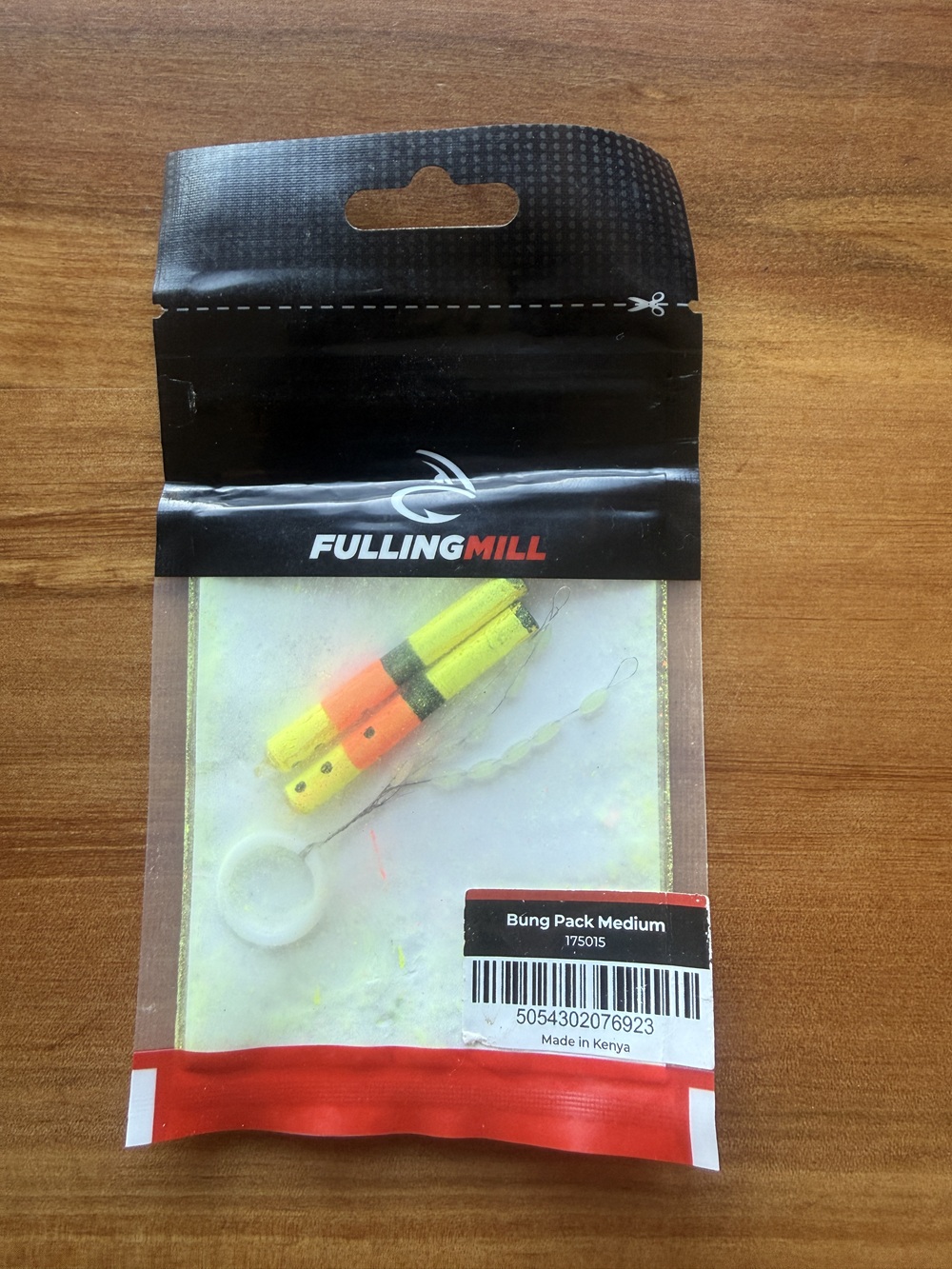
Recently, a new indicator product came on the market made by the Fulling Mill company, promoted by Howard Croston. Howard won the World Championships when they were held in Tasmania back in 2018. I have no doubt that Howard is an excellent angler. (For what it’s worth, he is also an excellent drinker – I know this because we spent a long night in a bar in Montana last season, and I came off worse for wear!)
These floats are very sensitive to the weight of the nymph they support, and so require using an adjustment system. It’s not for me, but having said that, you should probably go and check them out. The concept is more or less the same as the Lighthouse, and they might work admirably for you.
The Jim Allen dry fly
For upwards of the past decade here in the Highlands of Tasmania the world renowned and accomplished angler, Jim Allen, has been fishing a nymph under a dry fly more regularly than not.
You see, Jim has a reputation to uphold and he certainly is a very fine angler. Jim needs to come home with fish every day he goes out, and he does a great job of cold smoking them and gifting them to people who appreciate it. As the dry fly fishing has tightened up, Jim has felt that he sometimes needs to go subsurface to catch them. Whenever anyone asks what fly he’s catching them on, the tongue-in-cheek answer has often been , “The Jim Allen dry fly.”
The Parasol Nymph
Years ago, I came across the parasol nymph. Tied into the dressing of the nymph is a couple of inches of monofilament (say, 6-pound), topped with a small foam ball, post, or tuft of poly yarn. This keeps the nymph suspended just under the surface film – a seemingly perfect emerger. Alex, a valued client, has tied up a bunch of these for next season, and he is certain they will be deadly when the water levels of our mayfly waters drop. We’ll see.
To pull or not to pull?
I fished for over a week this year in March in dead-calm conditions. The fish in Penstock Lagoon are always spooky late in the season, and with low water levels, crystal-clear water, and flat calm conditions, they are very hard to catch. The best I can do is use a very small, lightly dressed nymph on a fine fluorocarbon leader and suspend the fly at what I think is the trout's depth.
In conditions like this, I don’t want clients constantly casting and retrieving. There is too much boat rocking, fly-line movement, and splashing. We need to set traps and let the fish find them.
The problem, as I see it, is that the fish like to hold up, lie doggo, and not actively move around very much. If we suspend our fly under an indicator and leave it there for 30 minutes, a trout may be just 15 feet away, but if neither is moving, they will never cross paths.
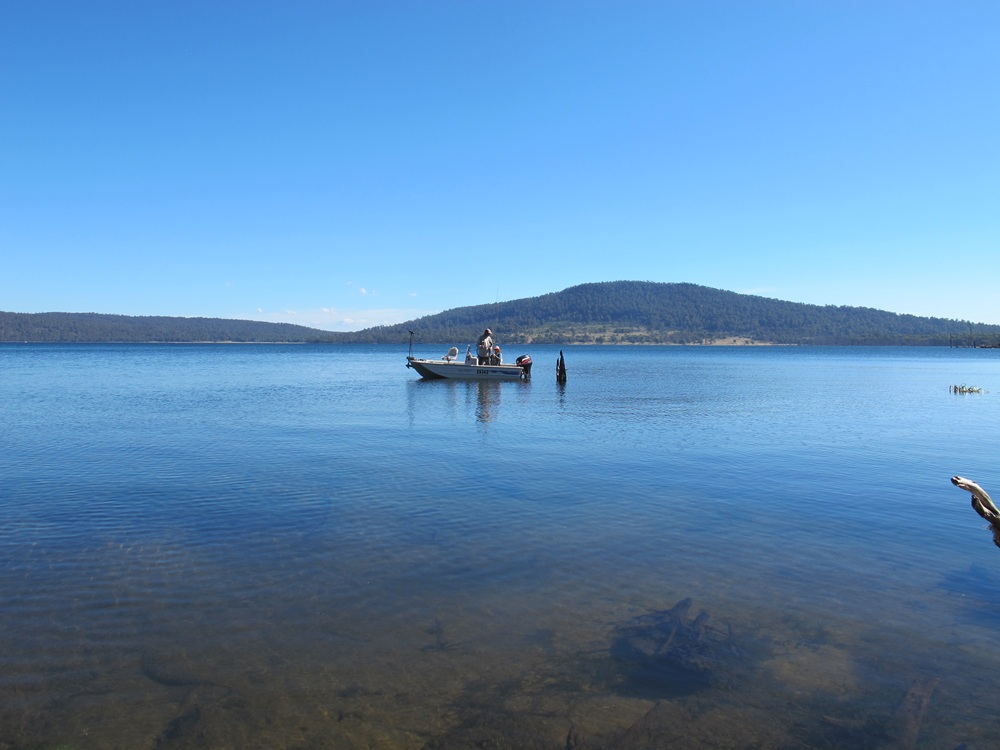
Bright, calm conditions in shallow water can benefit from a retrieve, but at glacial pace. (P. Weigall pic)
When I suspect this is happening, I ask the client to ever-so-slowly move the nymph. I’m talking about a retrieve where a 50-foot cast takes upwards of five minutes to bring within 10 feet of the boat before recasting. Keep this concept in mind when you’re fishing lakes on calm days and the fish aren’t actively feeding or travelling.
The strike
When trout fishing with any type of indicator, you need to strike immediately, or don’t bother at all. It is rare that a fish holds a fly in its mouth for long once it feels the resistance of your indicator.
A while ago, my partner was fishing to an actively surface-feeding trout. After several fly changes, the fish still refused to eat a dry fly. I put a nymph under an indicator and suggested it would be game on immediately.
A minute later, the indicator sank ever so slowly. Painfully slowly, in fact. I was screaming ‘Strike!’ and eventually the strike came. The fish was hooked, and we landed it. When I asked why she had hesitated, my partner said the indicator had only sunk very, very slowly.
I pointed out that I can’t control the speed at which a fish swims away with the fly in its mouth. Sometimes it’s rapid, and sometimes it’s incredibly slow. I know from sight-fishing with nymphs that a fish will often glide up to the fly and stop as it inhales the offering. In cases like this, there is almost no movement on the indicator. In such a situation, if I can observe the trout, I often call strike when I see the white opening of the mouth.
So, if you think there is a fish near your fly and there is any change in the indicator, strike. Don’t wait for it to rocket under because that might never happen. (Another good reason to use a Lighthouse indicator.)
Here’s another example. Earlier this season, my client Steve cast a very lightweight and slimly dressed Bill Beck Crystal Nymph 3 or 4 metres in front of a big brown which was very slowly mooching toward us. Steve had been using a Shaving Brush dry fly for the past hour or so and we had caught a couple of fish with it. This trout was clearly different to the previous surface feeders. It was living in a small bay where no duns could accumulate or hatch.
We watched this trout for 10 minutes before we cast. He was feeding on the bottom and I didn’t ever see his mouth open. It was my opinion, and Steve’s, that we should put a nymph maybe a foot under the dry. This would place the nymph exactly at the trout’s level in the water column. This brown was swimming directly towards us and it would’ve been no more than 25 feet away.
There was good light and really good visibility in the gin clear, shallow water. I could see every spot on the fish. When he got close, he angled up slightly towards the flies and I absolutely did not see the mouth open whatsoever. The fish continued on at the same rate and gently sipped the dry fly from the surface.
When Steve struck, I saw the dry jump into the air. He missed the fish but in an instant the nymph pinned him. I said to Steve that I think he’d snagged the fish with the nymph so be careful during the fight. As it turned out the nymph was deeply down the great trout’s throat. He’d managed to eat the nymph and keep coming to the dry fly without me knowing it. He must’ve opened his mouth ever so slightly and sucked like a Dyson vacuum cleaner.
In summary
In many ways, fishing with a fly under an indicator of one type or another can be one of the simplest and most effective methods of catching trout. On the other hand, if you want it to work well and consistently, you need to understand the nuances of the technique of which there are many. Indicators can be a good way to fish for an absolute beginner… and also for the very skilled angler.
PS: Speaking of nuance, just a few weeks ago, I ran into a flyfisher whose name is Tony Edwards. Tony reminded me that we had met 26 years ago when I was fishing in the Australian Fly Fishing Championships in the Snowy Mountains. Tony remembered watching me pull a bunch of fish out of the Murrumbidgee River in difficult conditions.
I remember that day well, as it was this session that enabled me to win the championship and go onto a World Championship.
It was calm and bright and the water was clear and low. It was the second day of the competition and the trout had already been fished over on two previous sessions.
It was apparent they were going to be touchy and hard to catch. I fished a very long and fine leader that day, and tried to keep my fly-line out of the water as much as I could. I also kept false casting to an absolute minimum.
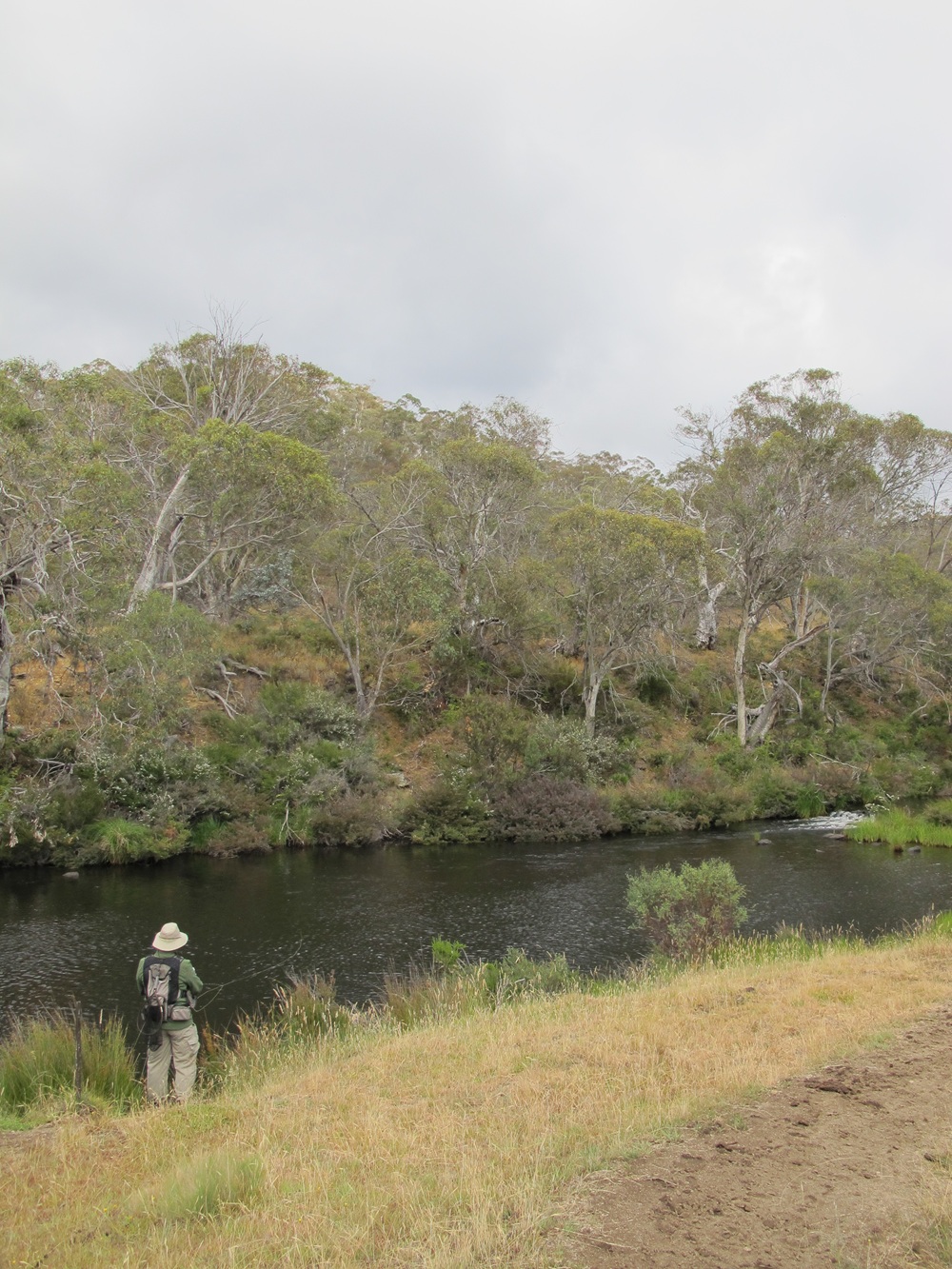
A big pool on the Murrumbidgee. (P. Weigall pic)
The main pool on my beat, which was likely to hold more fish than any other area I had available, was deep and very slow. It was a long cast to the better water on the opposite bank where a weed-bed ran the length of the pool. I figured that not many previous anglers could cast that far and the pool was too deep to wade. This area was in effect a fish sanctuary.
A small and sparsely dressed mayfly nymph, hung on fine fluorocarbon with a tiny loop knot under a dry fly, did the trick. I false cast short and shot long using a wide reach cast, which gave a very long drag-free drift, with plenty of time on the water between casts. When I think back on that day on the Murrumbidgee, there was a lot of nuance.


