





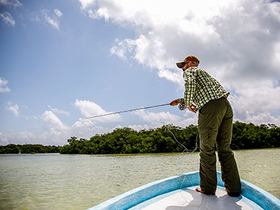
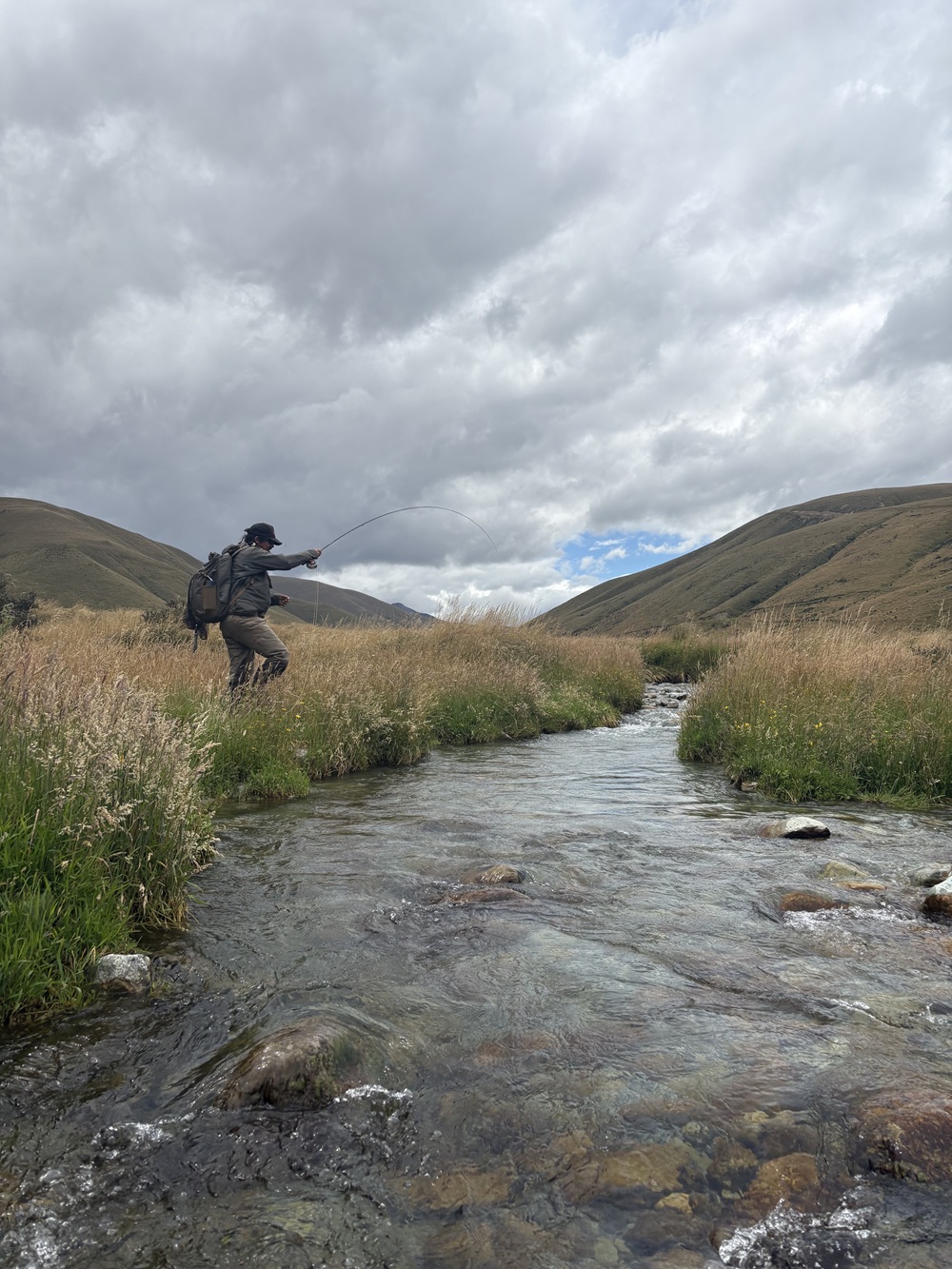
South Island action - but would this day qualify as 'epic'?
Having recently returned from a 7-day fishing trip to the South Island of New Zealand with my good friend Chris Schrueder, I wanted to unpack the definition of ‘epic’ in a flyfishing sense. Having experienced a number of what we’d call epic days, the question we tried to answer during the trip was: what exactly makes a flyfishing day in New Zealand epic?
As plenty of stellar flyfishing writers have tried defining the level of epic-ness over generations past, I decided to utilise AI. I plugged all my trip data into both Claude and ChatGPT4 for some supervised learning. Applying some of the latest machine learning algorithms, surely AI would come up with something novel?
Now, there is a rule in writing that your readership halves with every formula you include in your text. So here comes goodbye to half of you, because this is the generalised finding of what AI returned to me after a bunch of entertaining prompts:

For those of you still reading, let me explain what the drivers of this E(pic) formula are. It will shed light on what made this trip epic; and besides some more practical insights to help you with planning your next trip, hopefully it will generate some thought and discussion about what would make a trip epic for you.
f – stands for Fish
Obviously, if it was a day where you blanked, you might as well have gone for a good bushwalk. Now that is probably too harsh, because yes, we can sometimes learn something even (or sometimes especially) when we blank.
Now contrary to popular belief, New Zealand does not guarantee you a fish. Certainly, it does not guarantee you a trophy trout. Chris and I did not fish with any New Zealand guides this trip. And they know where the big ones live, which is a real advantage and a key reason for using their often superb skills and services.
Most of our trout were in the 3.5 to 5.5lb range, with some bigger ones – always the bigger ones – busting us off. We never blanked, but we did have a few days where we could only scratch up a few 1.5lb fish. These days alas, were not epic! As an aside, I think anything you catch yourself that is 7lb plus, you can consider a trophy.
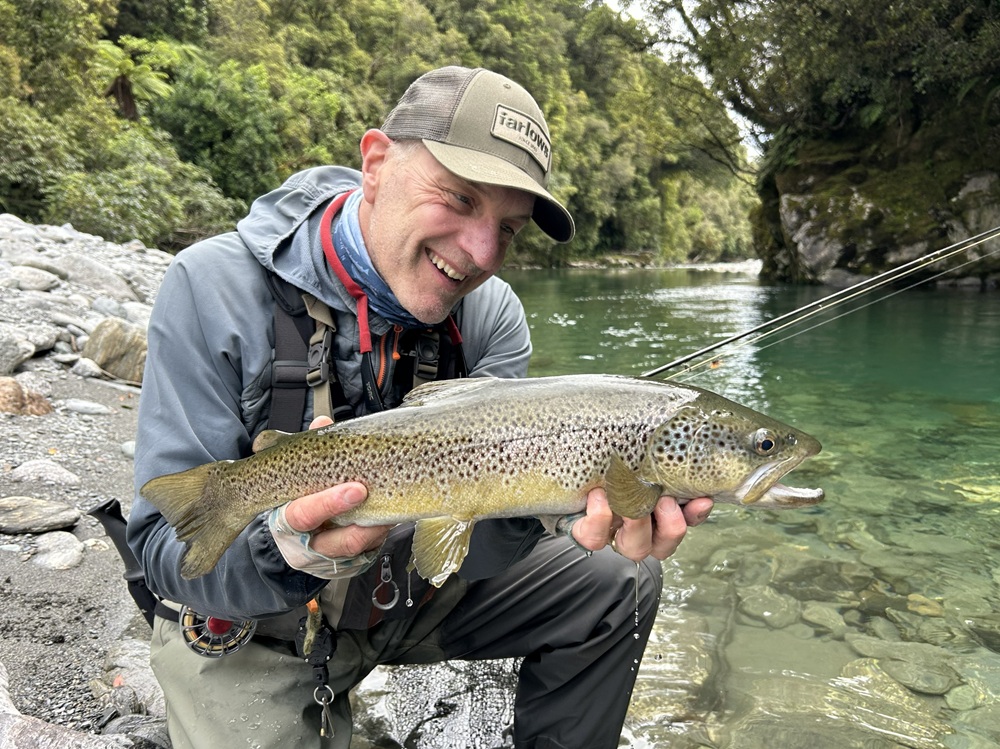
The fish are usually a part of what makes a day epic.
Incidentally, I think if we are seeking an epic fishing experience, AI also approves of Editor Philip’s quest for us to fish with the strongest tippet we can use. Whilst there is a saying that there’s quality in quantity, that’s usually uttered by competition flyfishers only. The rest of us would happily trade in a dozen tiddlers for one 5lb fish any day!
s - stands for Scenery
While catching a big fish from a muddy ditch might sound okay, we actually all know we enjoy the sport because it takes us to amazing places. And unsurprisingly, New Zealand excels in dishing out amazing places.
We fished among some of the most rugged, snow-capped mountains on the West Coast, and emersed ourselves in crystal-clear waters in dense beech forests on the East Coast near Fairlie. The variety of the scenery is spectacular, with no day being the same and all having something special to offer.
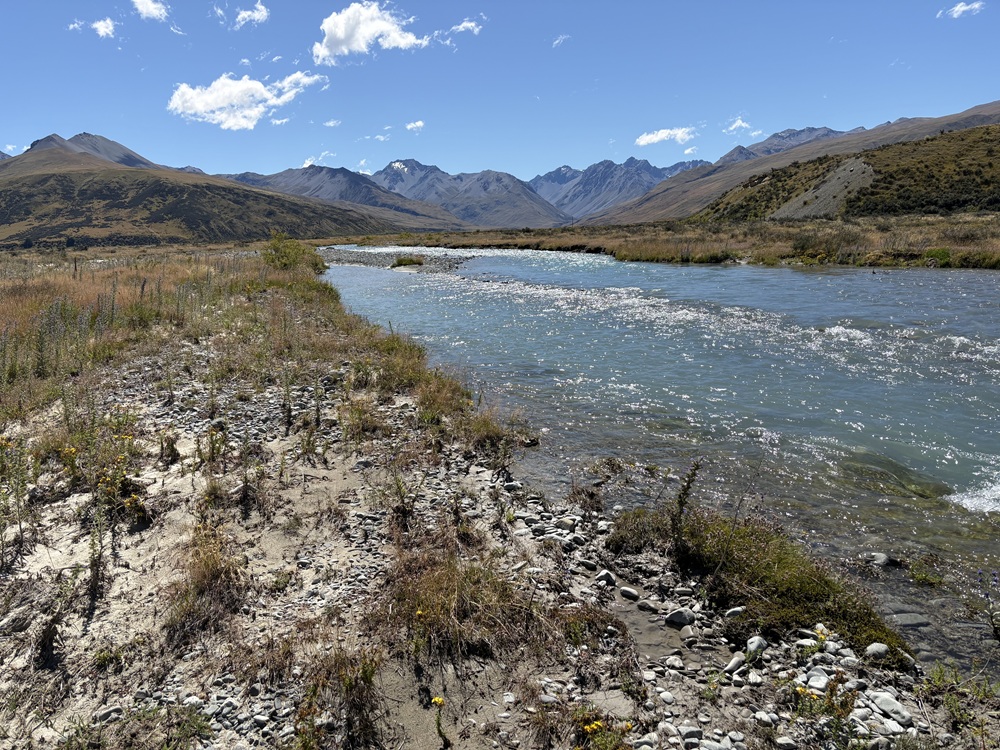
The right scenery can certainly contribute to an epic day.
Alas, we had one day on a West Coast river that ticked the box for scenery big time, but only produced said 1.5lb fish. We later heard this river had recently suffered from a severe flood that killed most fish. Which led me to mark in my notebook that it really pays to ask about the quality of a fishery before fishing it! But you know, sometimes you just have to roll the dice.
We also had another great day fishing with lots of good 4-5lb trout, but fog hung a thick blanket across the valley the entire day, and we never got to see any of the scenery. Photos were drab, the fish looked dull and you know what – despite the quality of the fish, that day just did not make the cut for what we agreed was ‘epic’. AI agreed too!
r – stands for River Clarity
New Zealand is known for spotting big trout. Or at least, that’s what it says on the label. Conversely then, if a river is not crystal clear, can the experience be ‘epic’? Personally, I don’t mind ‘blinding’ a good run, be that with nymphs or dry (droppers). However, some of us (yes, Chris!) really really really want to spot their fish. And rightly so, the numbers are usually lower and the size and quality of fish is higher. It pays to spot – when you can!
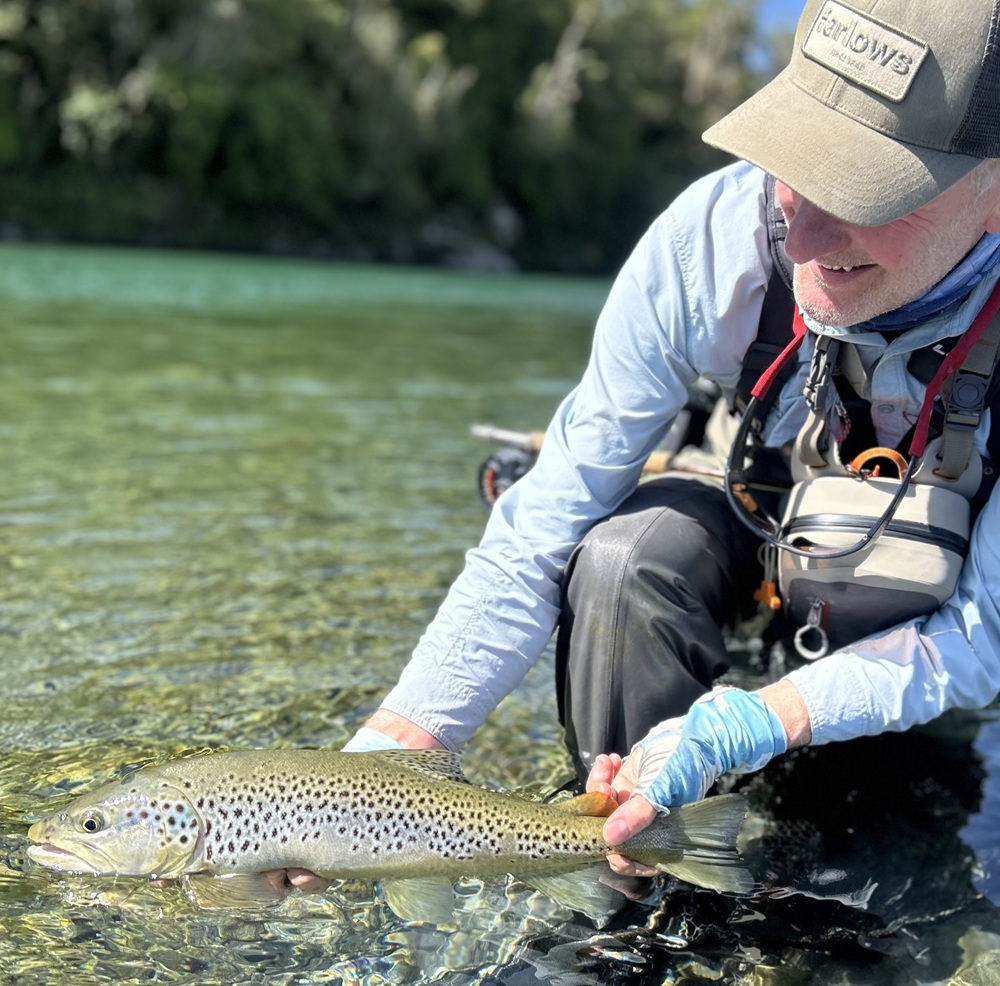
To paraphrase 'The Castle', how's the clarity?
River clarity is also affected by rainfall. And New Zealand has a lot of that, often in short heavy bursts. What this means is a river that looks clear at the start of a sunny day, can suddenly turn milky because of heavy rain high up in those amazing mountains.
On one river, Chris and I had hiked down along the valley, thinking we’d fish back to the track to get back to the car. Only to discover, after an hour’s hike (!) that the river was milky. So here’s another tip: check the river before you hoof it in. On that day, I managed to sneak one 5lb brown from that very milky river. As the scenery was truly amazing, that catch would mark the day (just) as epic for me.
m – stands for Method
Anyone reading about New Zealand will know soon enough that it’s often about either fishing two nymphs under an indicator, or a dry. We were there in February, which, not by chance, coincided with cicada time and (theoretically) big dries.
And on some days, we did manage to find very good fish happily gulping down our very big dry flies to the exclusion of anything else. The excitement of catching a large fish on a large dry fly is special. But would it also be epic if a similar fish was caught on a nymph? We caught a decent number on a nymph dropper, and some on the deep nymph. I would say all these fish could make the score of ‘epic’, with the exception of any fish caught on a worm fly! For Chris, I think he’d quietly only count the ones which eat the dry – although he’d be quick to say he’s not a purist. But AI says it doesn’t matter!
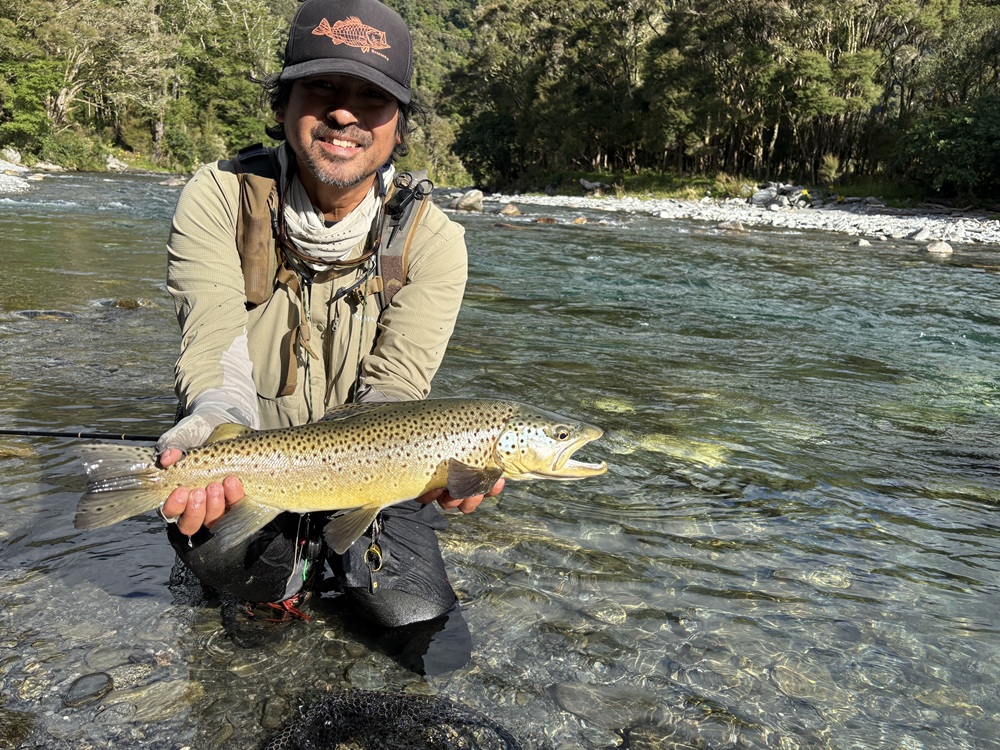
Chris with a cicada feeder on a big dry: epic!
Speaking of method, we also had to mend the line a lot. On quite a few occasions, slack had to be added. This poses a problem if you have to cast an 18ft leader against a gale force wind, accurately and with slack. Casting here is not for the faint-hearted! Yet, when it succeeded, the epic label awaited.
b – stands for Backcountry
If you drive up to a pool, park, get out, cast and catch a big fish – is that epic? Even if that happens on a stunning day and with eye-popping scenery, my machine learning algo gave that a big cross!
We averaged 25K steps each day. And since I know that my step counter does not register steps when I wade, that number is a very conservative estimate of the miles we covered. As a result, we got away from roads, tracks and civilisation. We only had the company of fish, wildlife and some planes flying 10,000ft overhead leaving New Zealand (poor suckers).
Yes, doing the miles to get the smiles. But with that comes a few more tips, such as making sure you mark your entry and exit points well. I relied a lot on my phone, and made sure I had a waterproof pouch with a lanyard. I could still take good photos with it, but keeping the phone secure is important for navigation and communication.
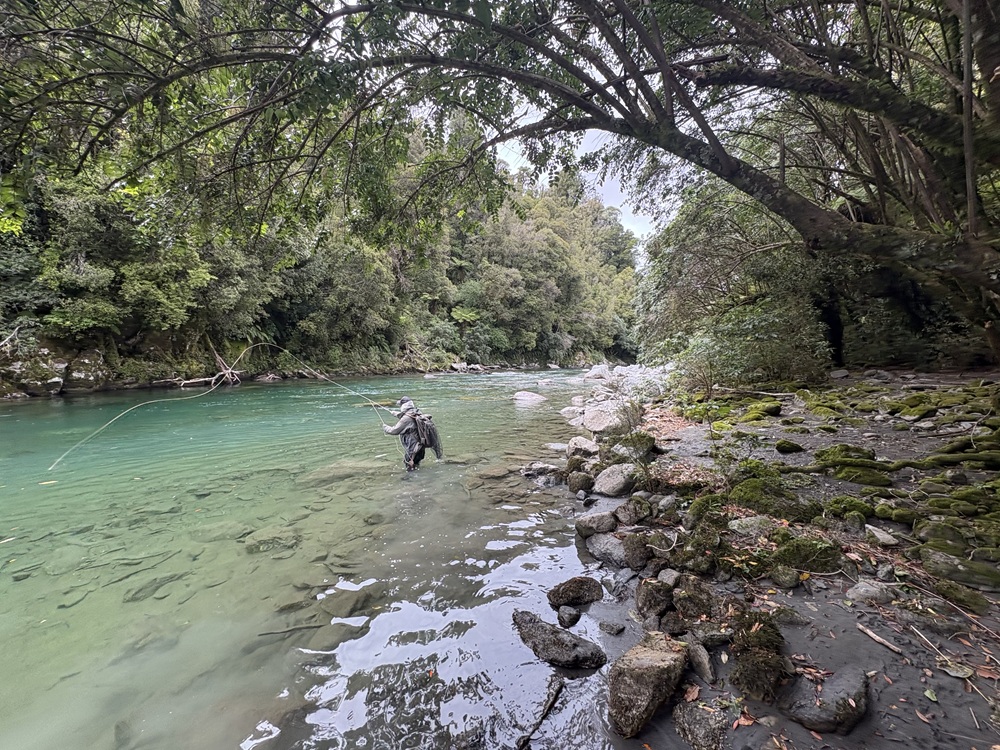
Worth the walk.
On one of these big days, we were hiking back after a day’s fishing to an official hiking track we had seen. The walking was tough as there were big gutters amongst the grass. You were fine one moment, and next, your feet would drop in a 2 feet hole. Ouch. Struggling for an hour through that, we just made it to the track when, out of seemingly nowhere, a thick fog rolled in. Had that come in only 15 minutes earlier, we would have been in trouble! With navigation / compass we would have made it though, so make sure you have your tools and wits about you.
c – stands for Company
I truly cannot think of an epic day fishing when I was on my own. Well, okay, I have had plenty of super days on my own. But when you sit in a chair, recounting those days to yourself, it might brand you as a loner!
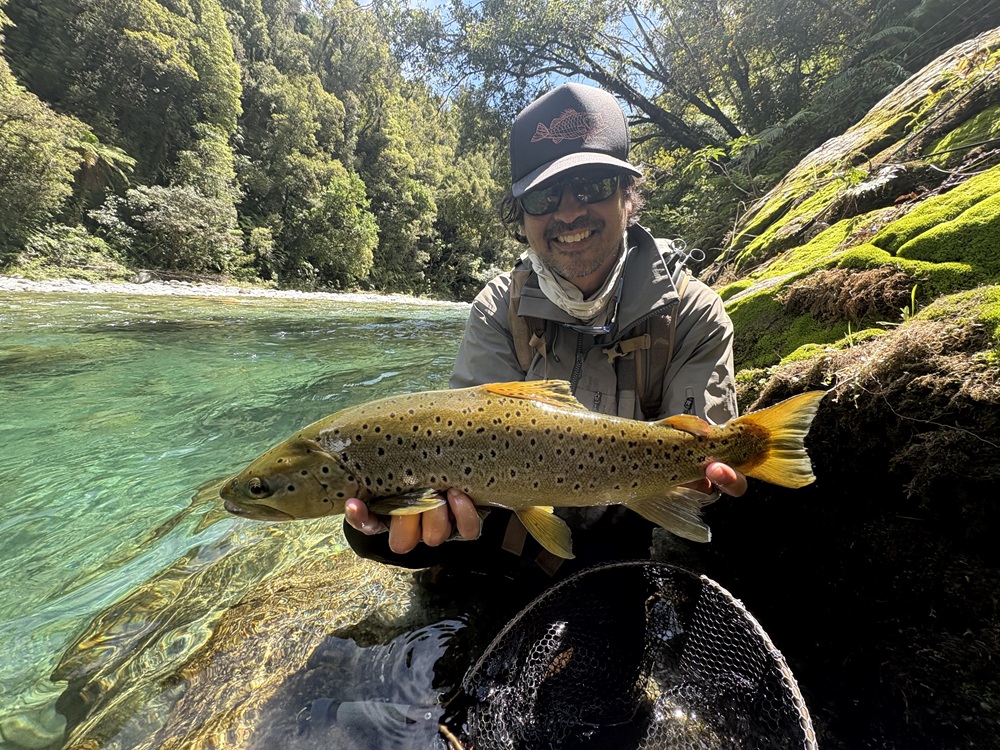
In years to come, it will be more fun talking about this trip with Chris, than simply remembering it myself.
To share a great day on the water with a good friend marks the day as epic. On this trip, the drink at the end of the day in celebration was briefly interrupted. We had no glasses, so what to do? Creatively, we shared a suitable beverage by filling the caps of our rod-tubes! That added an unexpected dimension to an après fishing drink, one I suspect we will share for years to come.
So there you have it. I’ll leave the weights on the AI machine learning formula out, as they are specific to each person – and they may vary over time.
Now, the dangers of AI have been widely discussed, but here’s the thing. AI is data hungry, and my AI algorithm just told me that seven days flyfishing has generated insufficient data to develop a robust model. AI recommends that I must put in a leave request, travel and collect more flyfishing data to plug into my AI-epic-estimator. Maybe that’s an example of ‘AI for good’ after all!


