





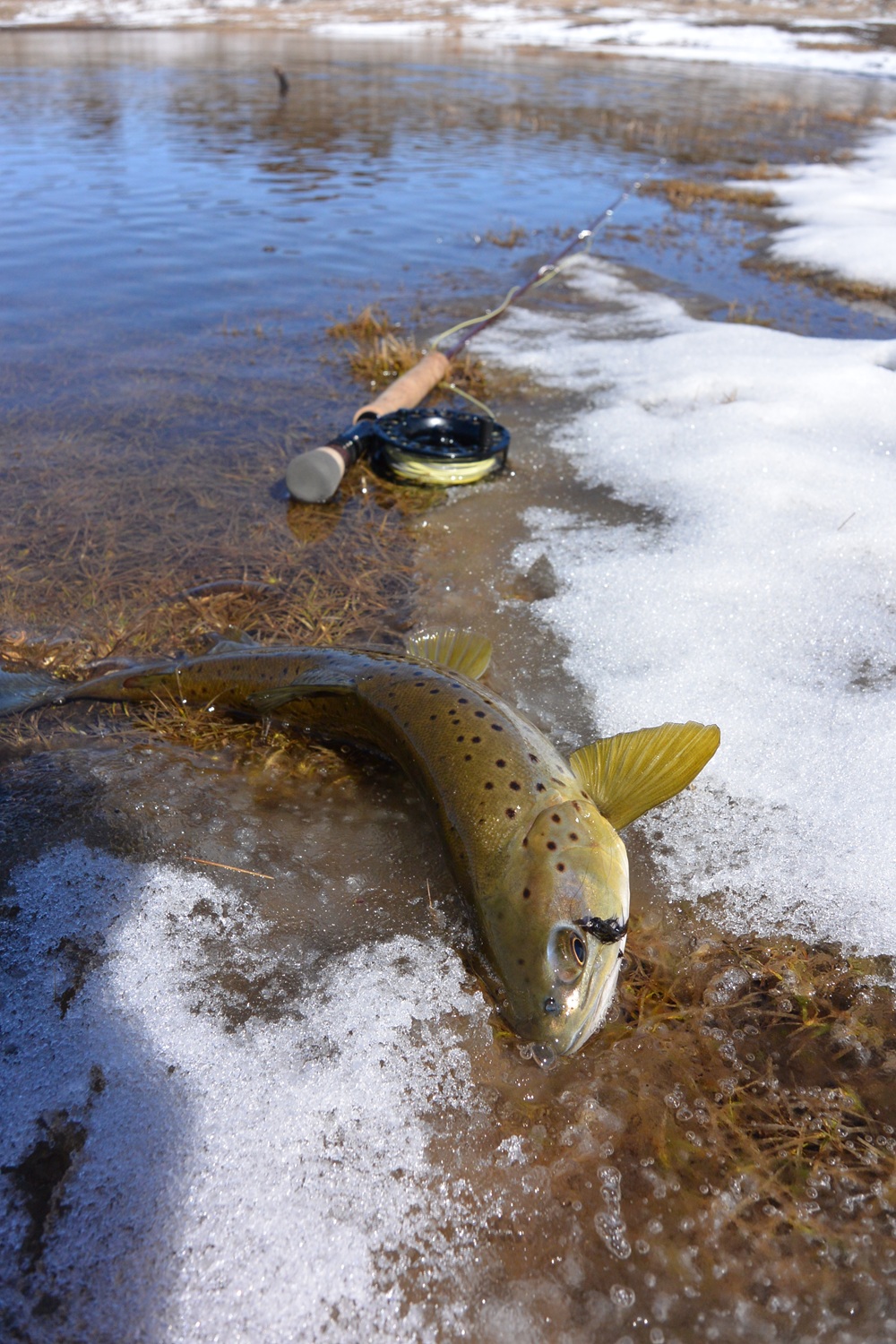
Trout can continue to feed well (and eat flies) in very cold water.
I’ll admit it, winter can come as a bit of a shock, especially after an Indian summer like the one in April/early May this year. One moment you’re packing the light sun shirts for a north-east river trip, the next you’re digging into the back of the wardrobe looking for something more insulating – and ordering a new puffer jacket to replace your pin-holed original while you’re at it. The broad-brimmed hat is ceremoniously removed from its semi-permanent place in the car and put on a peg inside for a few months, with two beanies (a main one plus spare) taking its place. Sun gloves are swapped out of the daypack for possum/ merino and Simms. And by the way, which drawer did I put those thermal layers in?
Lake or stream?
While winter throws up very good fly opportunities for natives, salt and estuaries, for now we’ll focus on trout. For winter stream fishers from Victoria and NSW, that gives you about a week at the start of June for regular stream fishing before the gate is shut. For Tasmanians, the stream season is mostly over already, with early August your next chance. Yes, there’s some estuary trout fishing in the southern states right through winter (consult the respective regulations) and a few south-western Victorian rivers remain open all year in the fresh. But the main game becomes lake fishing, with all trout lakes open through winter on the mainland, and quite a few in Tasmania as well.
Rising water
One upside to prolonged low water on lakes is, it gives vegetation (and fauna) time to reestablish on long-exposed shores. Then, in a normal winter (or even a slightly drier one) at some point inflows will exceed outflows and evaporation, and water levels will begin to come up.
.jpg)
The Grampians lakes in Victoria can be good candidates for this kind of winter fishing.
Meanwhile, you don’t need much cover for terrestrial life to have moved back in on the exposed lakebed. Sometimes even green fuzz, or bare rocks and stones are enough. Once lake levels start rising again, all manner of recolonising beetles, worms and grubs get flushed out, providing a decent meal for any trout brave enough to follow the incoming tide into the shallows.
Here’s where you want water creeping up, not rushing up, plus a gentle shoreline gradient. Too much rise too quickly, and the trout will be cheerfully chomping on ‘risk-free’ worms etc in metres of water; possibly even beyond casting range from the shore. Conversely, too slow a rise, and the most sluggish grub or worm can still outpace the flood.
Get the rising level and shore right though, and the trout will be there. However, the best action is when you can sight the fish, and this means a relatively calm surface so you pick the subtle disturbances of feeding trout. I look for either light wind days, or at least a sheltered shore. And while cloud, or low light early and late in the day can certainly help, if the food supply is suitably irresistible, you may find the trout foraging in sunshine. Polaroiding heaven! (See below).
For flies, lightly-weighted ‘buggy’ generalist wet flies like small Woolly Worms are usually sufficient, and sometimes you can get away with a nice ‘footprint’ dry like a Possum Emerger or Claret Carrot, particularly if you give it a twitch at the right moment. Remember to bring a lightly-weighted Squirmy or two as well.
By the way, don’t be put off if the water is discoloured. Although that will limit polaroiding, with the extra sense of security, the trout are even more likely to enter the shallows.
Smelters
It’s important to accept that winter trout chasing baitfish are unpredictable: you can go hours without seeing one, and then suddenly, there will be several working one shore or bay. Then there’s the matter of actually catching a smelter. The fact the targeted minnow species in question (in winter, mostly galaxias or Australian smelt) are thriving rather than extinct, shows how good these little fish are at avoiding predation. In turn, their strategies seem to challenge – even confuse – the trout, making smelters not exactly straightforward to catch.
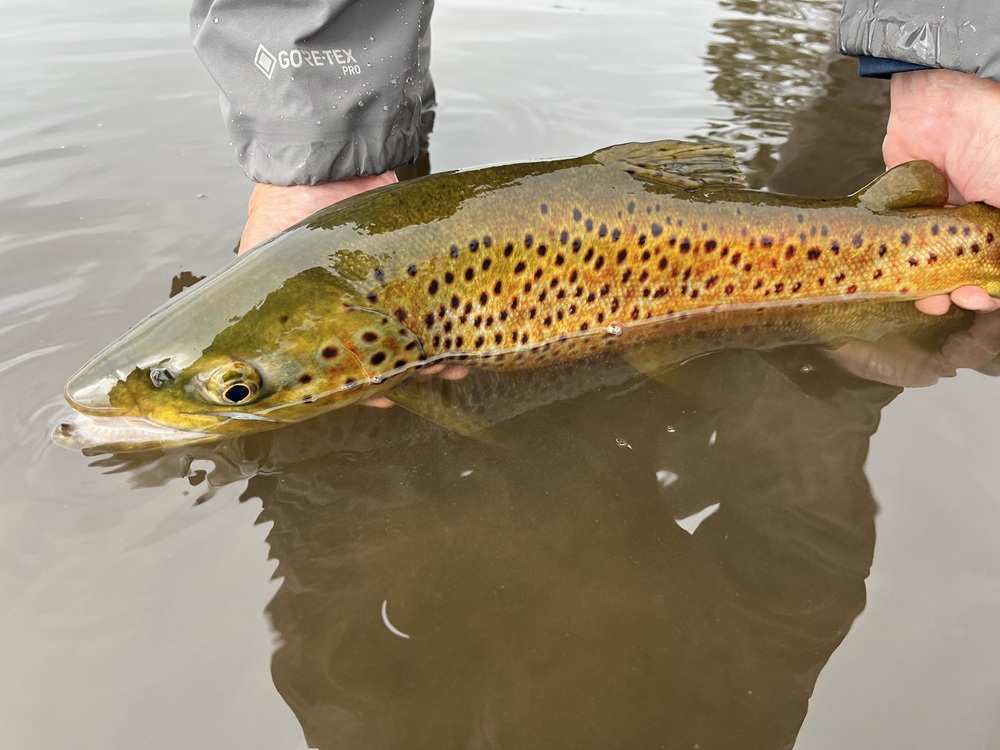
This big brown was totally focused on hunting galaxias.
For all that, smelters are a winter highlight. There’s something about the drama of fish hunting fish that gets you in, and it doesn’t hurt that smelters are often bigger trout.
Although there’s often not an easy solution to catching them, here are some tips:
- Approximate the size of the real baitfish with your fly, and use something with soft, moveable materials like Zonker, BMS dubbing, or similar. Often, a perfect colour match isn’t important; in fact something a bit different can be an advantage, suggesting injury or illness, and standing out from the rest of the smelt or galaxiid school.
- Get your fly in the smelter ‘zone’ as quickly as possible, which might mean jogging to the scene of the latest attack – or at least a fast presentation with no false casts. Failing that, look for a pattern in smelter behaviour (for example, regular raids on a particular corner, fenceline, or snag) and fish the spot repeatedly and methodically.
- When the trout are feeding on large galaxias, they’ll often chase down individual fish, so a fast and steady retrieve can be effective. On the other hand, when they’re attacking smelt or juvenile galaxias, it’s often worth fishing your small imitation slowly – and even pausing – because the trout’s strategy can be to bust up the school, then circle back for the stunned or injured. There’s no failsafe retrieve formula however, so be prepared to try different things.
- The word I would emphasise more than any other for smelter fishing, is persistence: persistence to find them, and persistence to catch them. As an example, on an overcast but light wind day last winter at Lake Purrumbete, the lack of smelters was doing my head in. Schools of minnows were clearly visible dimpling along the shore, yet I walked for maybe a kilometre without seeing a smelter. Finally, out of nowhere, a good fish exploded right on the bank 100 metres ahead. I ran down and began peppering the area. To my dismay, I quickly spooked a nice brown right next to me. Fortunately though, another one crashed the minnows again a comfortable cast away. I knelt down and cast near the shore more carefully. About 10 minutes later, there was swirl near my Olive BMS, and I hooked into a 3 pounder.
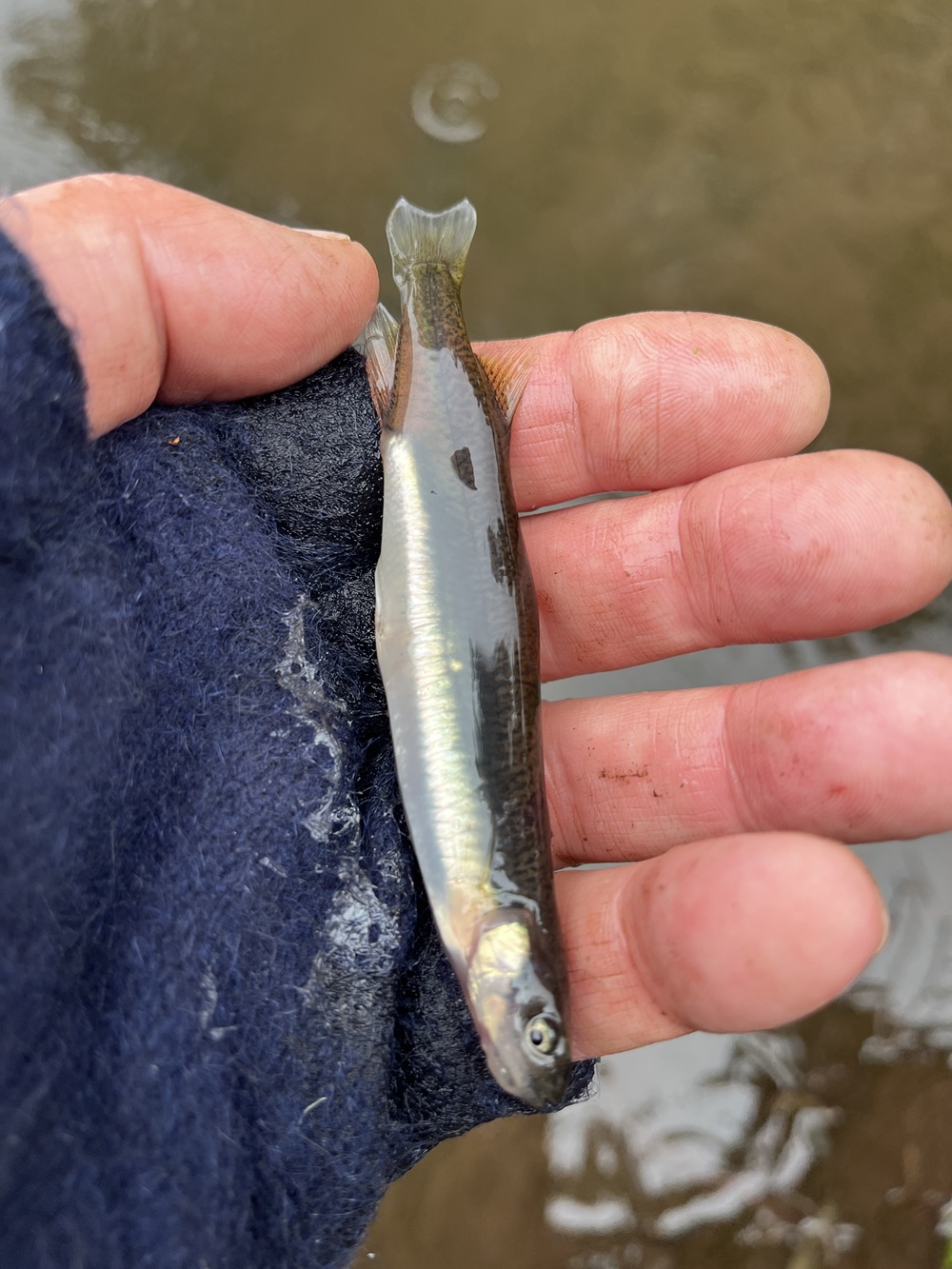
Trout feeding on big baitfish (like this Galaxias maculatus) will chase down a single fly. That's less likely when the minnows are smaller.
Midge feeders
Many species of midge (chironomid) have antifreeze in their blood, so it’s no surprise they’re one of the few insects to be regularly active on or near the surface in winter, thereby creating a ‘rise’. And with a very high protein content, even small midge can attract the interest of big winter trout.
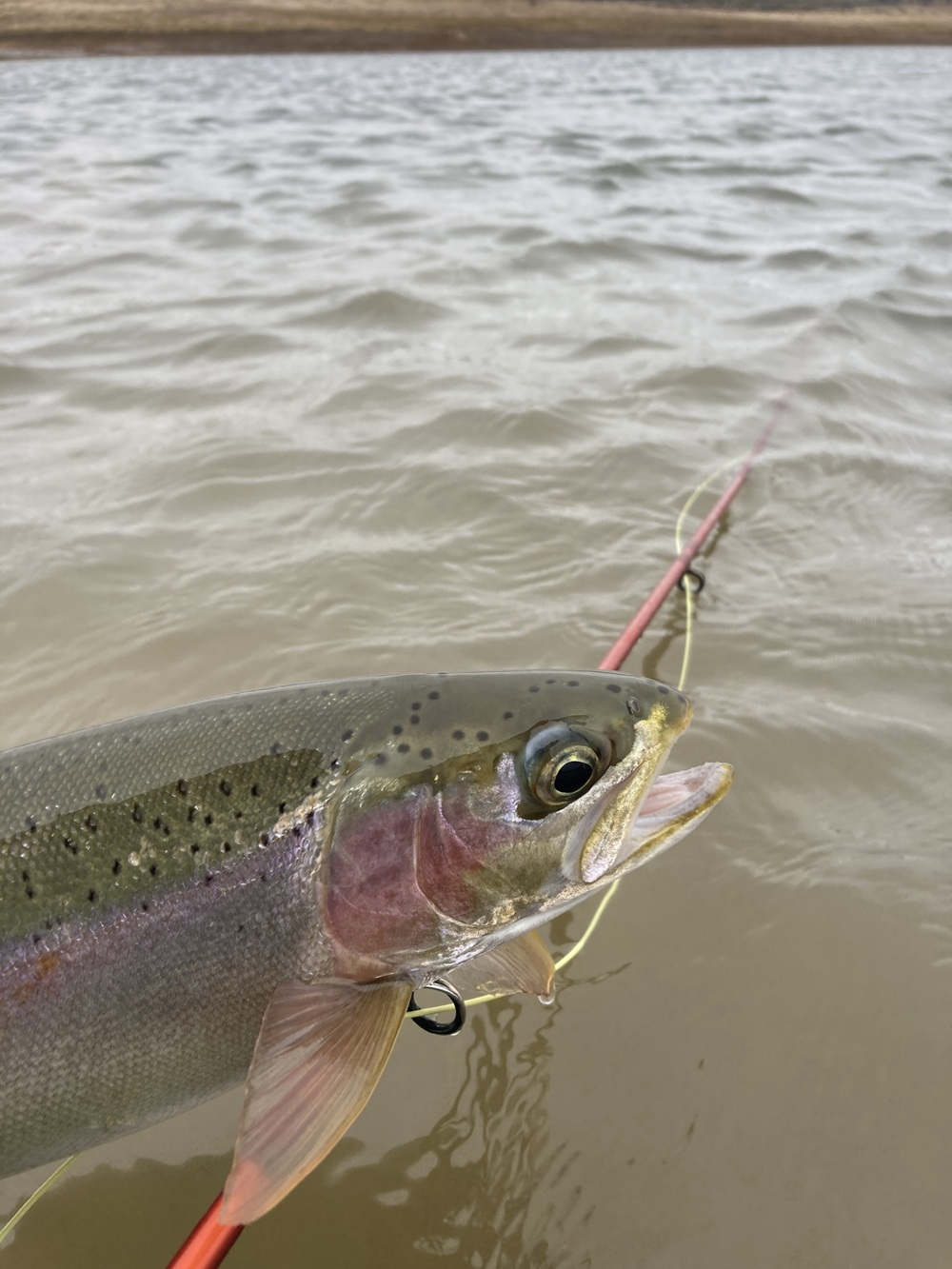
Midging midwinter rainbow from Lake Eucumbene. On this overcast day, they were going flat out for several hours.
Check out Kiel’s latest article for most of the other midge information you need.
Polaroiding
Polaroiding is probably the last thing you think of when it comes to winter on the lakes, but it can be a really effective stand-alone tactic… or at least a back-up to other ways of fishing.
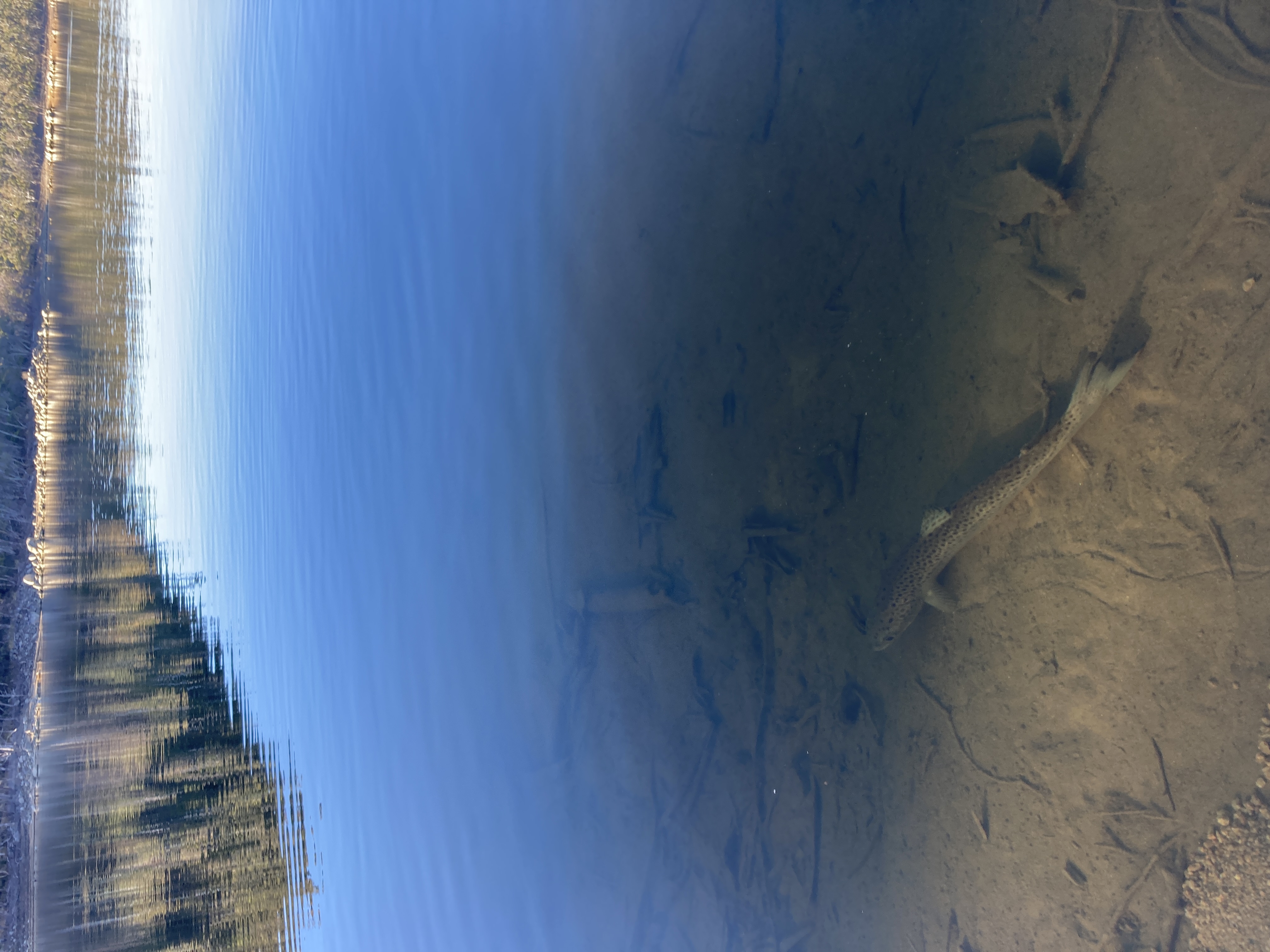
Winter polaroiding at Lake Jindabyne.
With a low and unreliable winter sun, five things will help:
- Reasonably clear water.
- Moving very slowly and cautiously, using cover if there is any.
- If possible, use a dark backdrop (such as forest, a steep dark bank; even dark cloud) to take white ‘glare’ off the water.
- Look very carefully anywhere there’s fairly uniform and light-coloured substrate.
- Find a view from a high vantage point like a steep bank or small cliff close to the water. (In this case, fishing with a mate as a spotter can be a big advantage.)
Cockchafer beetles
You’re not imagining things if you see trout clomping down big food on an August evening as if it’s the Tasmanian Highlands in January; they’ll be on cockchafers. These large, dark, clumsy beetles emerge from the ground to fly right on twilight, and if there’s water in the way, they’ll crash into it. It takes a day or two before the trout, unaccustomed to big, floating winter food, accept that this phenomena isn’t, in fact, too good to be true, and start rising for them. Then, dry flies of similar dimensions are eaten without hesitation.
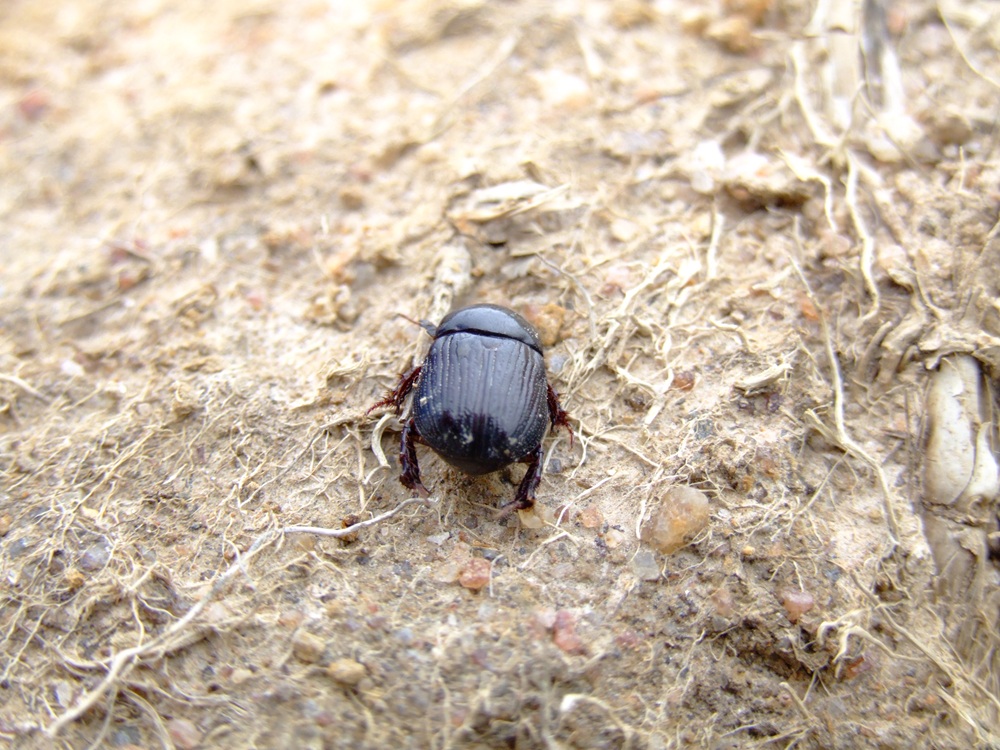
The small print says that cockchafers can’t be guaranteed from one late winter to the next. The favourite food of cockchafer grubs is the roots of pasture, so water-logged paddocks can drown them. On the other hand, occasionally, there are too many beetles and the usual challenges of persuading the trout to eat your fly apply.
Despite these uncertainties, I would never leave home in late winter without at least a few suitable dry flies in my box, like dark foam or deer hair beetles of at least fingernail size.
Winter conditions to avoid
If I can, I try not to fish already cold water temperatures that are plummeting further. I also avoid fishing in gales. In both cases you still can catch trout: for example, yabby feeders can haunt wave-collapsed clay banks, proving yet again that absolutes in flyfishing are rare! But cold winter water getting even colder doesn’t do great things for trout metabolisms, while gales really limit my preferred sight fishing, and also sap morale.
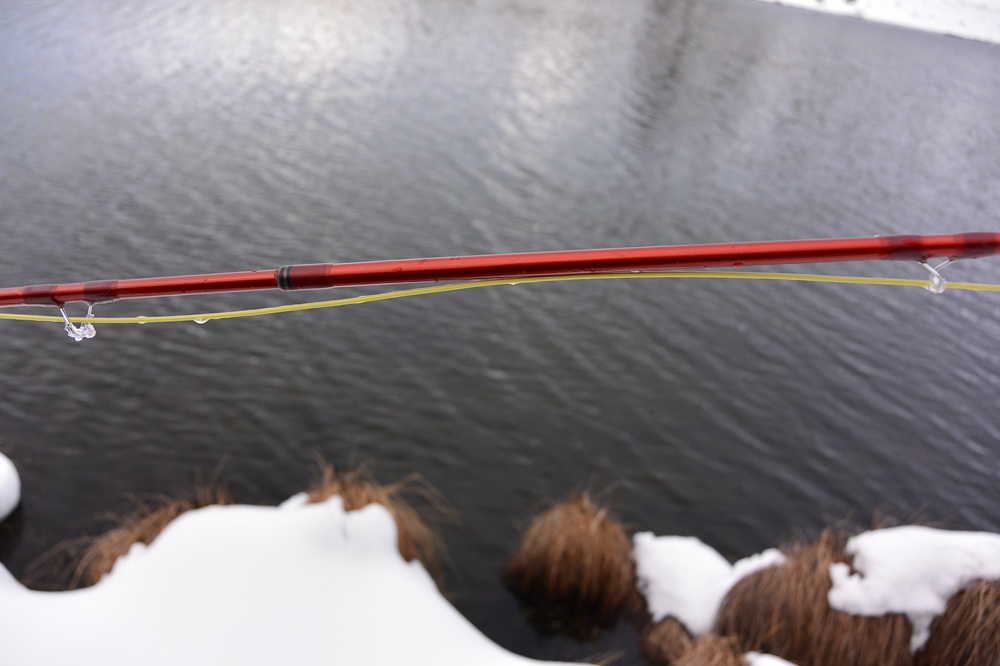
Runners starting to ice up may be pushing the temperarure boundaries - at least for the angler!
Oddly enough, very cold water on its own doesn’t stop trout from feeding well – it just needs to be a stable cold temperature, or water rising in temperature from an even colder base.
Surprises
Often, with a bit of research, you can establish which lakes have made it through a hot, dry summer (such as 2025/26) to be worthwhile candidates for winter. Keeping up with the latest FlyStream reports will help too. However, occasionally, nature throws us a curveball, and a lake that, on paper, 'should' have lost all its trout through summer’s low water levels, high temperatures and poor water quality, suddenly has decent winter trout grabbing flies as if nothing ever went wrong.
After 50 years of trying to understand how this plays out in trout land, I’m really none the wiser. Are there invisible refuges where the trout can hunker down to survive, or are they simply tougher than we sometimes give them credit for? All I can say is, over the journey, I’ve watched some low, warm and smelly summer lakes without a trout to be seen, apparently come back from the dead once some rain and cooler temperatures return. In the words of Yosemite Sam (sorry younger readers!), “I don’t know how youse done it, but youse done it!”
If you’re time-poor or lacking confidence, the safe bet remains sticking with the lakes that had a good run through summer. But if you want to roll the dice and fish a lake which has a poor post-summer prognosis while at least holding some water, pick one that’s also not much of a detour from a more conventional choice. That way, worst case, if it does indeed prove lifeless, you’ve got a good chance of salvaging the day. And best case? You have unbelievable ‘off the radar’ fishing and maybe never even make it to the safe bet!
Just another season
It drives a lot of people mad – especially non-fishers or the inexperienced – when I don’t give a straightforward answer to the question, “Where’s your favourite fishing spot?” They assume my noncommittal response is simply a reluctance to share a secret. In fact, with so many favourites to choose from, and so many possible scenarios, it’s impossible to give an honest one-water reply.
So it is with seasons. I can find plenty to love about spring, summer and autumn, and many people assume my favourite will be one of those. However, I can find at least as much to enjoy about flyfishing the lakes in winter. I forget about the chill (or at least dress for it), remind myself that trout are in fact a mid-latitude fish which evolved in cold water, and go looking for some action.


