





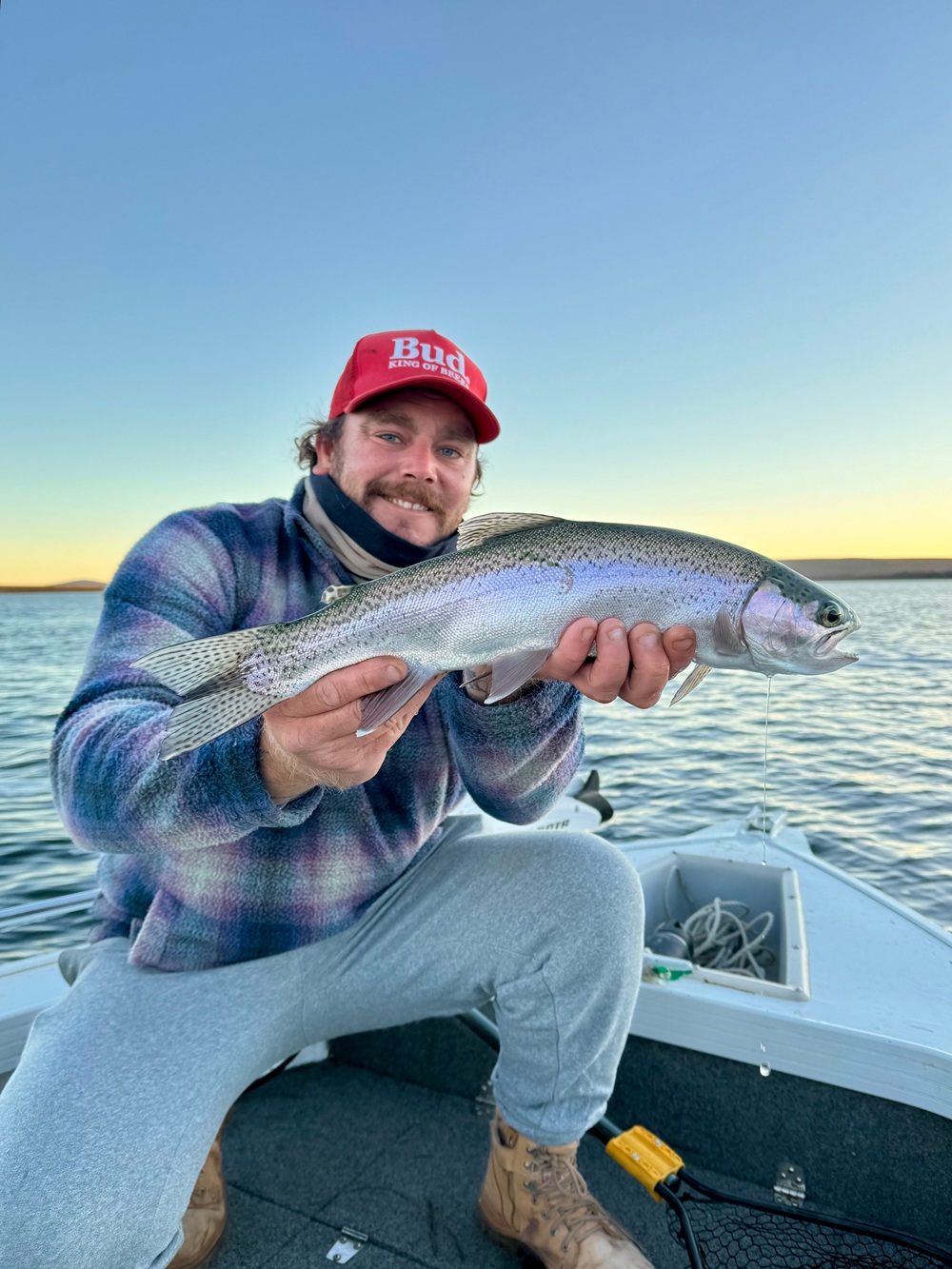
Great Lake midge feeder at dawn.
It's late autumn, you’ve snuck out to your local lake mid-afternoon in the hope of a mayfly hatch. No surprises, the Bureau got the weather forecast a touch off. Predicted: cloud with a slight breeze. But as the day grows older, the sky opens up into a clear sunny afternoon. Those mayfly nymphs crawl back under their rocks quicker than you can say ‘typical Bureau’.
Walking back to the car, head hanging low and tail between your legs, again getting let down by the lack of visible insects hatching, no mayfly, no damsels. Can’t rely on mudeyes as it’s getting too late in the year with cooler nights.
Out of pure spite at flyfishing, you take one more look across the lake before heading home to make up some stories of the fish you let go but didn’t bother taking any photos of. In that moment you see a subtle rise on the ripple line. Then another, only metres away – a dorsal fin followed by the tip of a tail. Soft rises you can only see, not hear. Almost tailing yet in metres of water.
Finally, targets to cast to!
They’re obviously rising to something you can’t make out that’s on or near the water’s surface. Beetles maybe, ants? Small mayfly? More trout join in. Brushing annoying little bugs away from your nose you keep looking for what the fish are feeding on. Hard to concentrate with those little things getting caught between your eyeballs and polaroids.
You still can’t see any noteworthy food source, then you look to the sky for any cloud, and realise there’s a plume of thousands of those tiny bugs dancing in the slight breeze above your head. Then it all clicks. They’re eating bloody midge!
Now I know a few people who would continue back to the car at this point. They would then drive home and sit on the couch to watch ‘Deal or No Deal’, because that would be less frustrating than trying to trick a midge feeder.
I’m writing the following in the hope you might not swap midge for Grant Denyer, and instead stay on the lake and have a go. With some tricks and an understanding of what’s going on, you may not be guaranteed midge fishing success every time, but I think I can promise more entertainment and personal development than you'll get from an evening gameshow.
Understanding the food source
Chironomidae, chironomids, midge, lake flies, bay flies, muckleheads, chizzywinks, Canadian soldiers, buzzers, or as I sometimes call them … annoying.
They’re all the same insect, yet depending on which part of the world you’re fishing, they’re called different names.
‘Midge’ for the purpose of this article, are non-biting insects which can resemble mosquitoes, but without the elongated mouthparts characteristic of our common mozzie. They are part of the superfamily Chironomidae, with some estimates of over 10,000 species worldwide.
Some species inhabiting intertidal zones, some living in cow dung, some even live in Antarctica.
They can tolerate a very wide variety of conditions even (sometimes especially) where oxygen is extremely low. From the glaciers of the highest mountains to the deepest bodies of water.
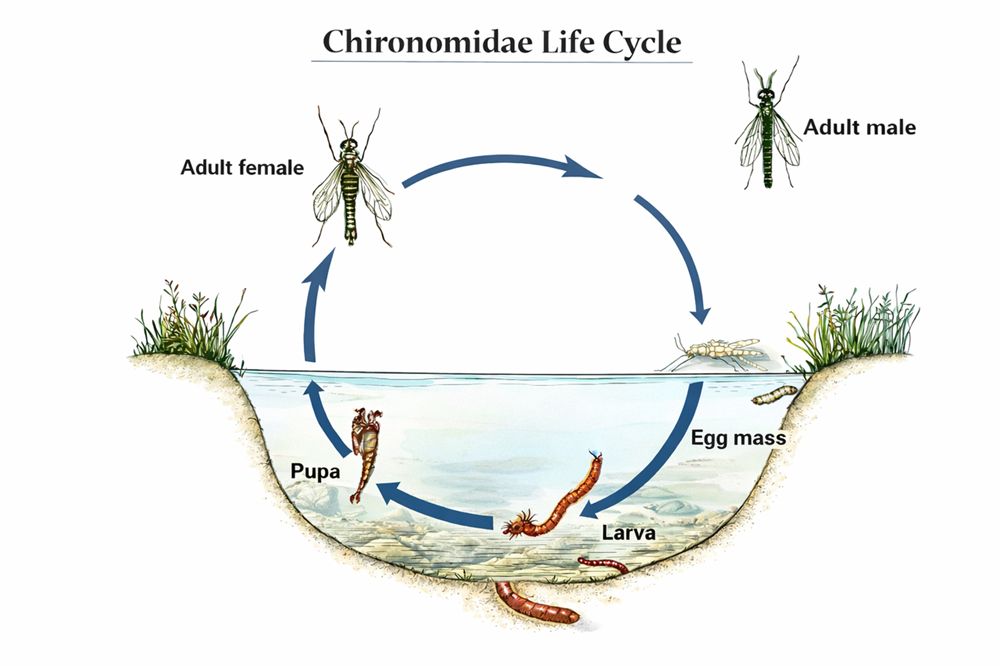
Let’s not get lost in too much scientific mumbo jumbo. Basically here in Australia, if you find a body of water, there will be midge. Midge in Australia typically have a rapid lifecycle: from egg to adult in 2 to 10 weeks, depending on species and temperature. It goes something like this:
- Egg – After mating, females lay egg masses directly onto the water’s surface, or submerged logs, weed or reeds. They usually hatch within a few days. We don’t imitate this stage in flyfishing.
- Larvae – Widely labelled as bloodworms. After hatching from the egg, this phase settles into the sediment at the bottom of water bodies, building burrows or tubes from silt and debris. Midge are one of the only insects to use haemoglobin to survive in environments low in oxygen. Often, this gives the larvae a blood red colour. We do imitate this stage in flyfishing.
- Pupae – Before metamorphosis, the larvae transform into pupae inside their tubes. The pupa then swims to the surface, a process taking as much as 3 days. Pupae are often the most imitated stage in midge fishing.
- Adults – The adult emerges at the surface into that non-biting mosquito-like winged insect, and then usually only lives for a few days before completing the cycle. We also imitate this stage in flyfishing. Significantly, with some species of midge (particularly the smaller ones) the adults cluster together to mate, forming midge balls. What can appear at a distance to be a single furry insect, can in fact be a clump of smaller midge.
How do the trout respond?
Midge larvae (bloodworm) feeders
Aside from the infrequent occasions when they drift in the water column, midge larva live on the lake or stream bed, meaning trout feeding on them are harder to spot than surface feeders.
Slow cruisers
On days with good visibility into the water, you can sometimes spot trout cruising slowly along drop-offs or silt/ mud shorelines, pausing frequently. Rather than actively chasing food, they’re more just picking it up off the bottom.
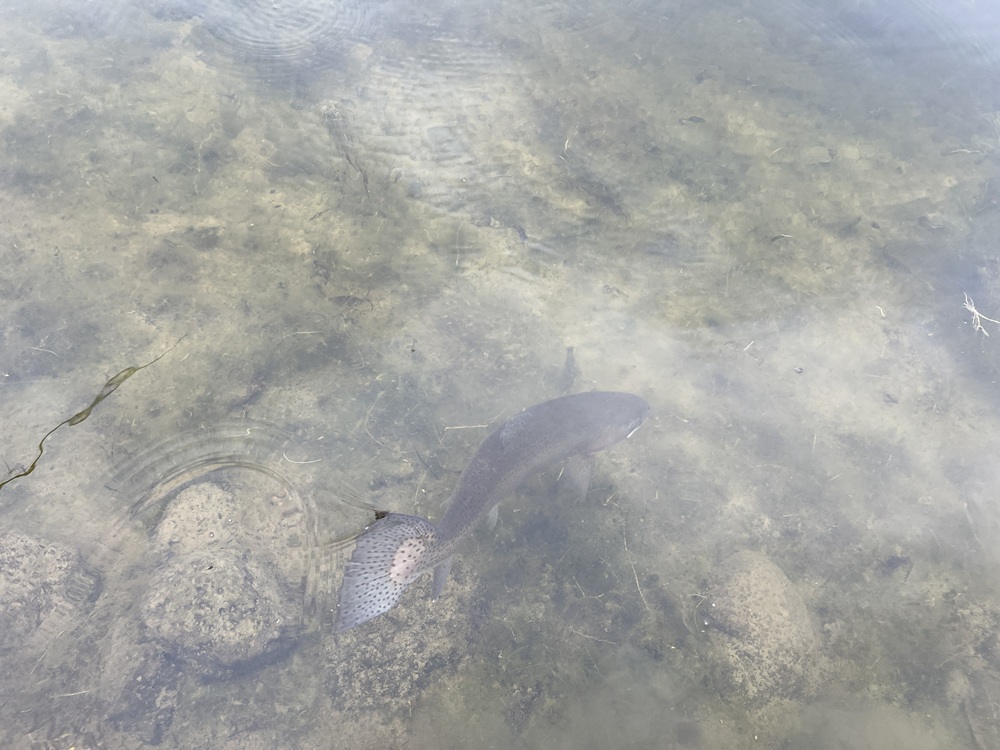
The tilting down posture of a trout over a silt or mud bottom may indicate it's feeding on midge larvae. (Pic © P. Weigall)
One of the best indicators trout are feeding on midge larvae are mud puffs: small clouds of mud or silt coming off the bottom as trout tilt down to eat, much like watching a bonefish or carp feed.
Tailing in shallow water
Another indicator trout are possibly feeding on larvae in shallow water, is a typical bottom-feeding posture: head down/ tail up. The fish are focussed on the bottom and moving slowly. For the trout, it’s more about simply finding the bloodworms than trying to catch these fairly helpless bugs. Look for tail tips gently breaking the surface, very subtle ripples, reeds wobbling, or slow-moving or even stationary shapes.
Key bloodworm locations
Muddy or silty bottoms, around rotting weed or rotting flooded vegetation, flats, and drop-offs are all good locations to find bloodworm feeders. Hard rocky bottoms or areas of loose sand usually have fewer bloodworms.
Midge pupae feeders
Recognising midge pupae feeders is one of the most useful skills for stillwater anglers. Keep in mind it takes time and practice to spot these subtle feeders – even on calm days.
When the pupae are ready to hatch into adults, they swim from the bottom to the top. So pupae feeders are usually midwater or just under the surface rather than on the bottom. Trout behaviour can give you some clues:
Subtle no-mouth ‘rise’
This is when trout are intercepting pupae just under the surface film. They’re just gently dimpling the surface, and you may see a dorsal fin or tail break the water (editor Philip calls them tail-waggers); most of the time silently – no actual nose or mouth. The movement is slow and deliberate, not aggressive.
Bulging or swirling water
Trout feeding a bit further beneath the surface. The water looks like it’s been pushed up from below. (This is very hard to see in low light.)
Rise and rhythm
Midge pupae arrive near the surface in waves. When that happens, trout feed on them steadily rather than randomly. They will often patrol methodically, rising every few seconds in the same area; then stop until the next ‘wave’ of midge pupae, when they’ll start up again. You’ll rarely see single splashy rises typical of trout feeding on, say, caddis or mayfly spinners.
Adults left alone
Pupae are a bit more nutritious and usually easier to catch than winged adults. This is why often, we imitate the pupae when flyfishing, rather than the adult stage.
You may see lots of flying adults in the air or on the water, but except on very nutrient-poor waters, fish generally aren’t splashing or leaping for them.
Time of day
Midge pupae activity is often strongest early morning, or late afternoon into the evening, although overcast and/ or ‘oily’ conditions can produce pupae feeders at any time.
My own favourite time to chase midge pupae feeders is daybreak. After a very still night followed by a calm dawn, the pupae have been trying to emerge, but the calm conditions keep the meniscus intact, making it hard for these tiny pupae to bust through. Underneath is a blanket of stuck pupae, and trout taking full advantage!
As so often in midge fishing, you’re competing with huge numbers of real insects, so it’s not easy fishing by any means. You have to be quick and pinpoint accurate with your casting, as the trout won’t move off their line to eat. And the still conditions make it very easy to spook trout which are cruising just under the surface. Spotting the rises in low light can be challenging too, but the overall experience is great fun – I absolutely love it!
A midge pupa swimming near the surface.
Adult Midge Feeders
These rises often look a lot like pupae feeders, with some small but key differences. The adult midge sit right on the surface of the water, so trout must take them off the top rather than just under the surface. It’s the same with the balls of adult midge mentioned earlier.
Small and delicate rises
The trout are picking the adults or midge balls off as they sit on the surface film. The rises leave tiny circular rings. Sometimes you don’t see the fish at all, just a nose pokes out, or even just the rings left drifting away. A key feature of adult midge feeders is you can often actually hear their quiet clips as they break the surface. And if you’re close enough, you may see bubbles in the rise rings, something subsurface feeders don’t leave behind.
If I knew the fish were feeding on mayflies or many other larger insects, I’d tell you to keep a keen eye on these rings left after a rise. If the larger rings are heading one way, that’s the way the fish is swimming, pushing water one way or the other. I’ll lead those fish in that direction.
However, in calm conditions, trout feeding on midge don’t act like that because there is such a vast supply of food. For the fish, it doesn’t really matter where they go, given the blanket of adult midge floating on the water. Often, they love zig-zagging, or even completely changing direction, seemingly just to frustrate us!
A light breeze may provide a slight angler advantage, as the trout tend to feed into the wind (at least for short bursts), giving us a chance of predicting where they’ll rise next.
Trout holding in the same area.
On their own or in balls, adult midge often collect in slicks, wind-lanes or patches of oily water, concentrating the food source. Trout feeding on this concentrated food won’t have to move far and rise repeatedly in a fairly confined area. The rise interval can be very short; every second or two at times.
Clouds of midge
When it’s calm, especially at dawn and dusk, you will often hear a hum in the air caused by thousands of tiny wings beating. This is the buzzing sound which gives midge their English nickname: buzzers.
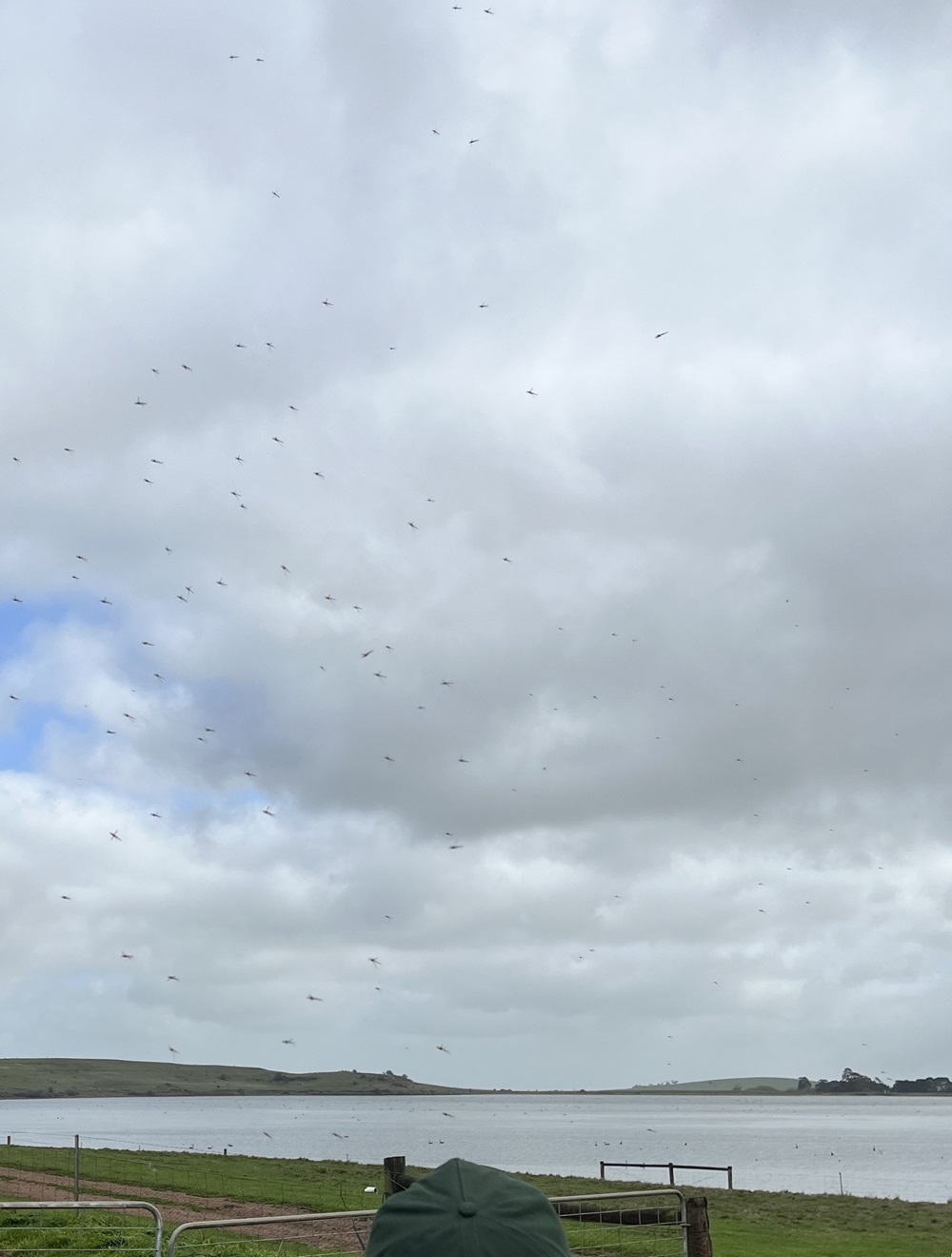
Columns of adult midge 'buzzing' at Hepburn Lagoon, Victoria. (Pic © P. Weigall)
Fly suggestions
Midge larvae (bloodworms)
Trout feed on the larvae or bloodworm when they are on the bottom, or dislodged from it and drifting slowly. The larvae are usually red, thin and worm-like; much smaller than a common garden worm. Imitations are simple but very effective.
In lakes, larvae often become available when wind-driven waves slap the shoreline, washing them into open water. Always a great place to look.
Bloodworm
Thin red body, some tinsel or wire wrapped from around the body to suggest segmentation.
Best in sizes 12 through to 18.
Red Brassie
Small long-shank hook wrapped with copper or red wire rib. Finished off with peacock herl near the eye.
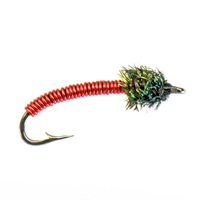
Best in sizes 12 through to 18.
San Juan or Squirmy Worm -
Yeah, yeah, yeah, I know…but it works.
Keep them very thin and small, and don’t tell your mates.
Thank me later.
How to fish midge larvae
Most important, fish near the bottom. 10-30cm above it. Very slow retrieve or just drift in the wind.
Floating line indicator setup, 1 or 2 flies.
Fishing as deep as you need to be just off the bottom but staying in contact. When fishing long leaders or deep indicator setups, you can run into trouble missing the take. Pay attention.
If fishing two flies, have a pupae pattern (green buzzer for instance), then a bloodworm off the point near the bottom.
A very slow retrieve helps you stay in contact.
A very slow but long draw will imitate the pupae rising through the water column. Not quite natural bloodworm behaviour, but trout don’t always seem to know that, and this combo is sort of two birds with one stone.
Long leader and floating line*
At least a 15ft leader and tippet setup to the first fly. Give it time to sink near the bottom then a very slow figure-8 retrieve. Watch the ‘loop’ that forms between your rod tip and the water. If that ticks or pulls, SET!
(*Not a recommended technique in windy conditions, as wind tends to distort the behaviour of the loop, making it difficult to detect takes.)
Sight fishing
This is possible in the shallower water where we find the tailing fish. Tailing fish are notoriously hard to hook because the fish is facing down. I like to fish dry/ dropper here. A small dry that won’t slap the water or look out of place compared to many indicators.
Alternatively, fish a ‘nude’ bloodworm pattern, wait till you see the fish change its demeanour, shack its head or stop abruptly… SET!
Midge Pupae
Because pupae are around and available a lot, arguably they’re the most important stage of the midge lifecycle for feeding trout and therefore fishing.
As the pupae rise towards the surface to hatch, they become easy prey. They swim up slowly by filling their exoskeleton full of gas. This aids their ascent to the surface, sometimes hovering, waiting for the right time. When the moment is right, they can pause just under the water’s surface before pushing through and hatching into the adult.
Knowing they fill themselves with gas can confuse our fly choice. The pupae at this stage can seem somewhat glassy, and they can change colours abruptly so it’s important to change flies if you aren’t getting results.
Zebra midge
One of the most widely used pupae patterns, curved or grub hook with a slim thread body. Fine wire rib and a small bead of various colours.
Common colour variants are black/silver, red/silver, olive/copper.
Sizes 12 through to 18.
Buzzers
A classic for all midge fishers here in Australia. Sometimes called a 3D Glass Buzzer or Superglue Buzzer.
A slim thread or floss body tied on a buzzer or grub hook, sometimes lacquered with nail varnish, superglue or similar to give that glassy look. Wire or tinsel ribbing.
Not a must but I like a white thorax or gill tied in next to the eye using Antron or the like.
Common colour variants for the body are red, olive, claret or black. Some people will tie in a red hot-spot at the bend of the hook, imitating the leftover haemoglobin from the larvae.
Sizes 12 through to 18.
Milly Midge
Another classic must-have fly in your arsenal. My personal favourite fly to cast at rising or tailing fish feeding on pupae. The editor of this magazine invented the fly so I better get the fly recipe right…
I like to tie them very thin and light. I almost want them to sit in the surface film 80% of the time.
Tied on a buzzer, curved, or grub hook. Olive thread with a vinyl rib back tied in with thin wire or dark nylon line.
White Antron out the front and back as the gills. Peacock herl or dubbing as a thorax.
Refer to pictures.
Sizes 12 through to 18.
Ice-cream Cone
A fly that’s new to me; I’ve only been fishing them for 2 years but highly recommend.
Curved or grub hook, red thread and wire wrap, up to the eye of the hook. White bead to aid sink rate. The white bead also keeps clean compared to white Antron, which can get dirty when fishing in weedy or muddy conditions.
Sizes 12 through to 18.

Superglue buzzers, Milly Midge, Icecream Cone
How to fish midge pupae
Note here, if you’re not seeing fish feeding on pupae near the surface as described earlier, you’ll have to figure out what depth they're at, and a lot of times, that’s trial and error. Keep changing depths, flies and colours until you get the eats.
Floating line indicator set up, 1 or 2 flies
Much the same as described above for larvae, but changing depths, from just 50cm under, to as deep as you can fish proficiently.
Make long slow draws every 40 seconds to imitate those pupae rising and dropping.
Sinking line, sink tip, hover
When fishing deeper lakes, the extra depth non-floating lines achieve can be the difference between catching or blanking. Fish these sinking lines with two flies, letting them get down, then a very slow retrieve, hopefully through the feeding fish. A hover line is helpful to keep you in the bite zone longer.
Greased-up leader
Another favourite way of mine to chase pupae feeders near the surface - intense and sometimes frustrating! Use one or two flies, either lightly weighted or unweighted like the Milly Midge.
With something like Payette Paste or Mucilin (showing my age there!) grease up the leader and tippet until 30cm from the first fly. Cast out with a slow retrieve back, pausing for 4 seconds every few metres. If your flies are very slowly waking through the surface, I like that!
Adult midge
As covered earlier, adult midges are the final stage of the lifecycle. After emerging from the pupal shuck, they sit on the surface film drying their wings, then either stay out there or fly to the bank, and then come back later to mate and lay their eggs. This makes the adults a potential target for feeding trout, but as with most midge fishing, the trout can be very selective.
Little tip here, when trout are feeding on the adults, going more for an emerger pattern can lead to more takes, with a fly sitting half in the water, not high and dry. Still, it can be very tricky to entice an eat from these fickle trout focussed on individual adult midge.
I’ll put my hand up here: please let me know if you’ve consistently figured it out, because tricking a trout that’s feeding on single adult midge (particularly the really tiny models) with a dry fly would have to be one of the great challenges when lake fishing. Certain times certain flies work… The next day… Nope.
With balling adult midge, thankfully the chances improve. It’s amazing to watch little adult midge skating around on the surface on evening, and then on some invisible signal, they start clumping together. Even more amazing, trout which have been ignoring the individual adults, can suddenly start eating these bigger chunks of food.
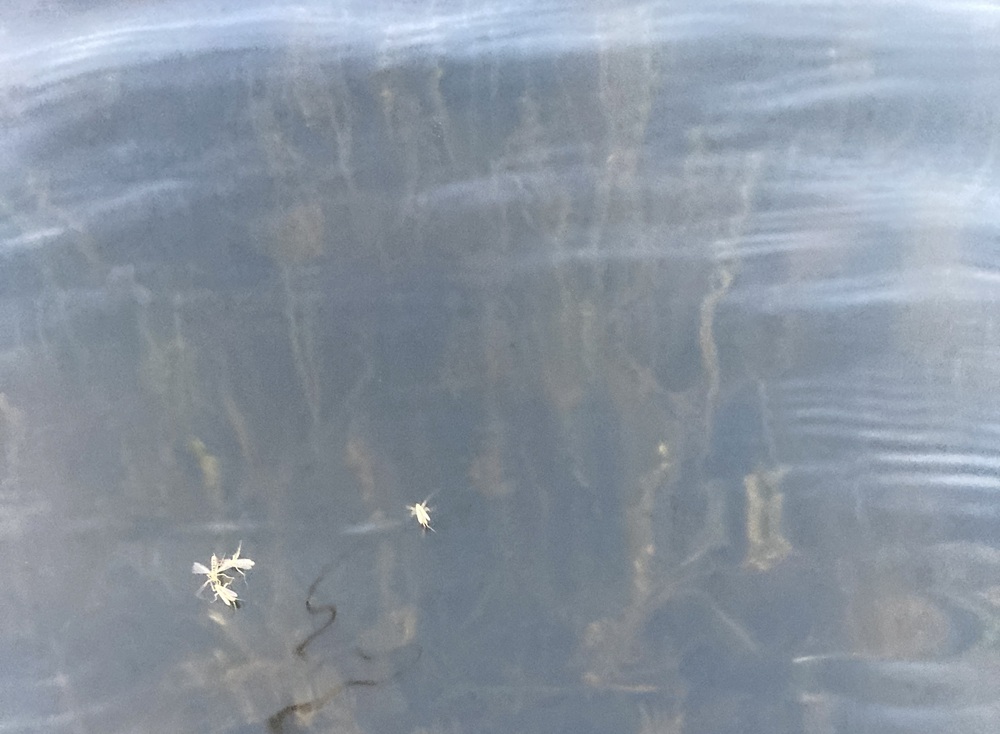
Adult midge starting to ball up at Lake Eucumbene. Note the thick flooded grass subsurface: ideal midge habitat as it starts to rot. (Pic © P. Weigall)
Here are a couple of dries that work for me:
Griffth’s Gnat
I’d say this is the most popular adult midge imitation, and to be honest it can work on fussy trout generally… if you’re lucky!
A pretty good representation of a cluster of adult midge. Typically l tie it on a light dry fly hook.
Sparse peacock herl body, grizzle hackle palmered all the way along the hook. For difficult midge ball feeders, try trimming the bottom of the hackle so the fly sits a bit flatter to the surface.
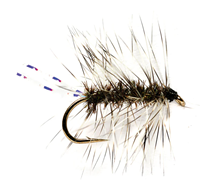
Sizes 16 through to 22. (Good luck!)
Klinkhammer
A fly that was invented by Hans van Klinken (love that name!). It was designed so the abdomen hangs below the surface yet the hackle and post sit above. Can imitate a midge pupae emerging into an adult.
Tied on a Klink or curved emerger hook. Black brown or olive thread, post of Antron, CDC or poly yarn. Grizzly hackle tied in parachute style. Thorax tied in with peacock dubbing or the like. Fine wire tinsel as a rib.
How to fish an adult midge
Give yourself a chance, trout on adult midge can be very picky. Fish to them in low light or overcast conditions. You’ll need to lead these trout so as not to spook them; about half a metre should do if you’re lucky or clever enough to get their direction right.
Choose one fish rather than trying to cover every riser. Hunt that one trout hard before moving on to the next one.
Long leaders are handy if you can cast them. In this, as in most midge scenarios, good presentations catch fish. Grease your leader about half way down from the butt so you don’t pull your fly under every cast. This will also allow you to twitch it or move it slowly if necessary – sometimes works, sometimes doesn’t.
Conclusions…
I tell the following story a lot, and it’s bit of a running joke with my close mates:
I grew up fishing Victoria’s central highlands lakes, like Newlyn and Hepburn. When I turned 18 and got my driver’s licence, I made a point of trying to trick these weird rising trout which often only showed themselves at dusk. My Dad was a bubble-float fisher, so I’d rather watch the fish rise than a float bobbing round for hours. I wish I knew then what I know now…
For 3 years, in season, I drove to these lakes after work at least twice a week trying to catch what I now know were midging fish, and in 3 years I caught seven.
After all this time, that’s what’s driven me to write this article, and nope, I still haven’t figured it out entirely. Talk to you in another 3 or 4 years!
I really hope this doesn’t scare people away from the most exciting yet frustrating way to catch a lake trout. And while I also know they feed on midge in rivers and streams, I’ve not touched on that in this article. Lakes will do for now!
Midge aren’t always the main game on lakes, and that’s probably a good thing! But make sure you always have you midge patterns on you regardless, and work really hard on your presentations.
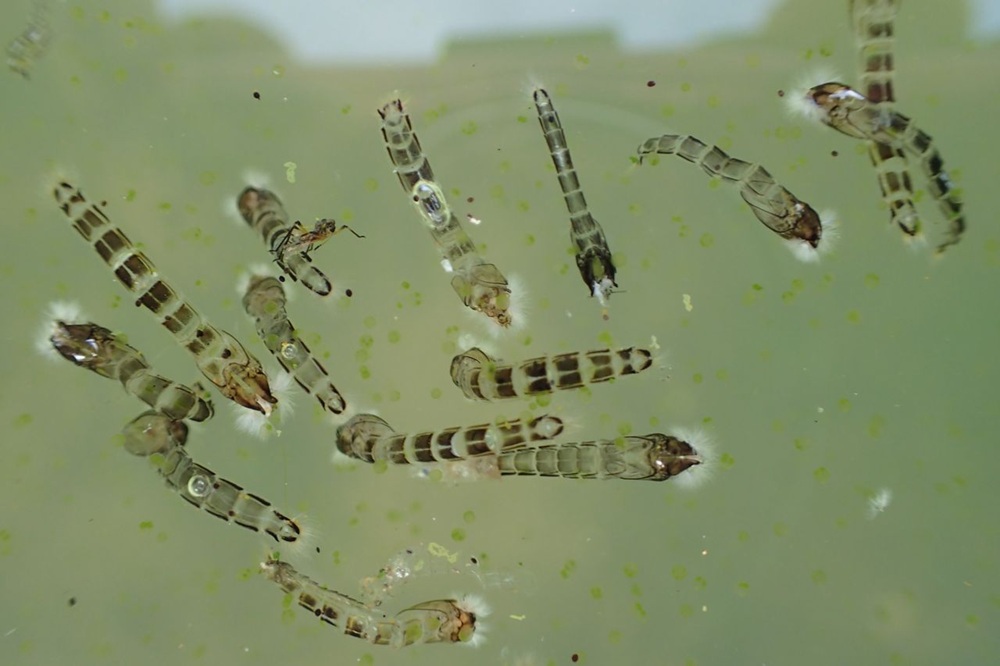
Midge shucks are a clear sign you should have your midge patterns with you, and be ready to use them.


