





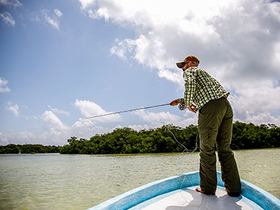
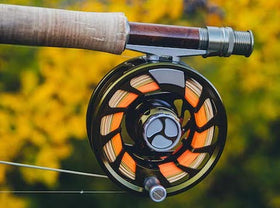
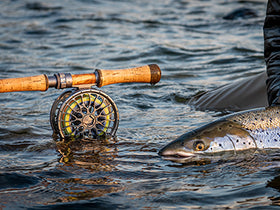
Having grown up holidaying here, I do not think I ever fully appreciated how special this place is. This year, my Dad, my mate Josh, and I returned in February, armed with two boats, two cars, and a genuine curiosity to see just how much the South Coast could offer a flyfisher. From offshore pelagics to estuary ghosts and a mind-blowing spread of freshwater options, it quickly became clear that Bermagui is far more than a one-dimensional fishery.
Getting There
Bermagui is located eight hours northeast of Melbourne, five hours south of Sydney, and two and a half hours east of Canberra. Travelling from Melbourne can require some logistical planning. You can either make the mammoth eight-hour drive or fly to Merimbula and hire a car, with the latter option limiting you to land-based options or hiring a boat or charter for the trip.
For us, wheels rolled at 6 am. Towing boats meant burning more fuel, so planning the most efficient fuel stops was even more important. Our first break was in Bairnsdale, and the second in Eden. This gave us long stretches of time to put together a rough plan for the next two weeks of fishing – weather and good water-dependent of course.
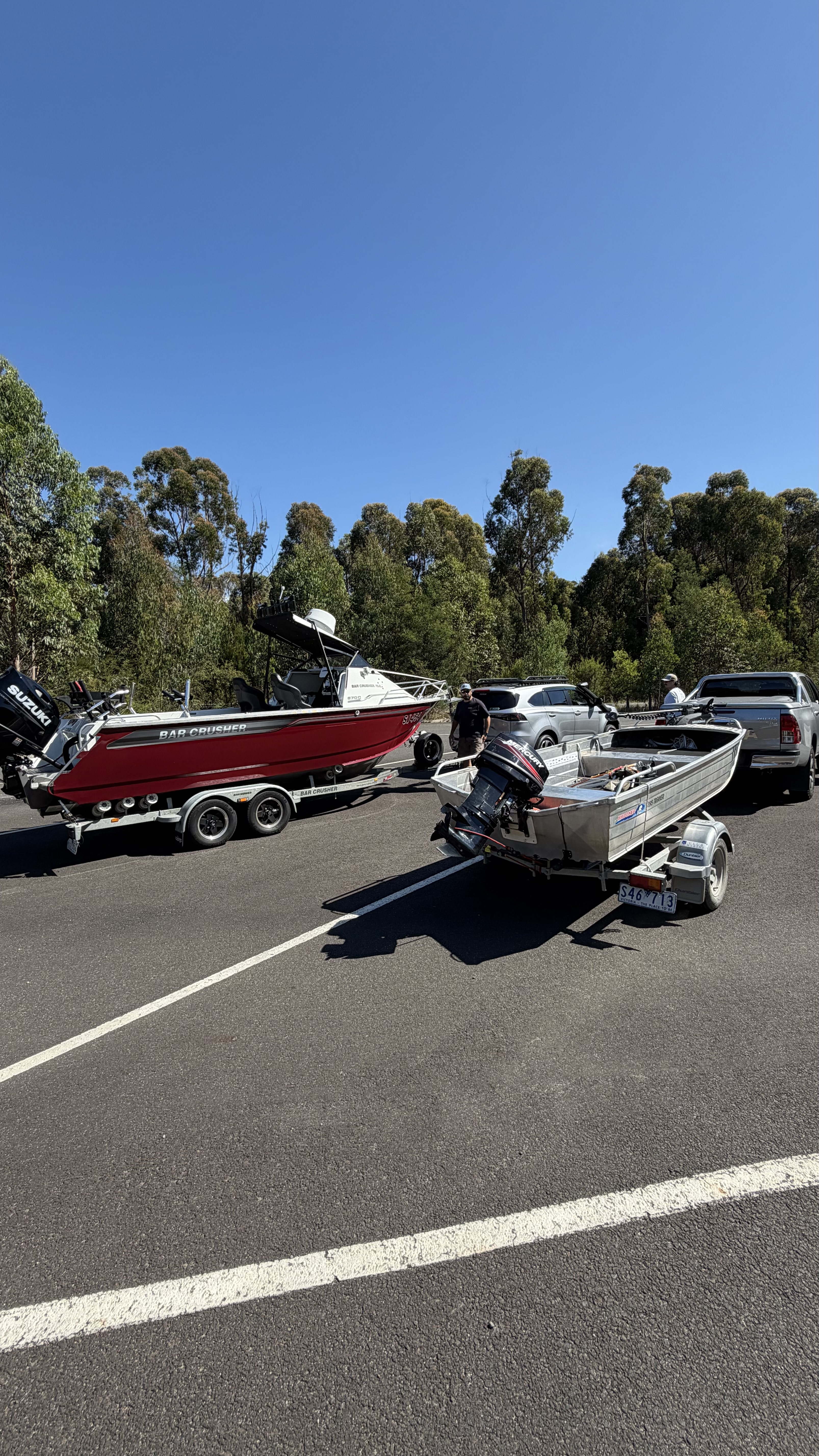
Two cars, two boats. A headache to tow, but would give us almost unlimited options.
Staying there
Booking accommodation when fishing, especially with boats, adds another layer of planning. You need secure storage, a washdown spot, and somewhere to park without worrying. If money was no object, a beachfront mansion would be the dream. But since the post-COVID regional boom, most of those Airbnbs are out of reach for the average angler chasing a fishing getaway. In the end, we went with the Wallaga Lake Holiday Park. It was simple, practical, and right where we needed to be. Best of all, it had a boat ramp right on one of the best estuaries in the area.
Gear
Such a broad spectrum of fishing opportunities demanded a matching range of gear. Estuaries called for 6 weight rods, while offshore trips needed anything from 8 to 16 weight.
My selection consisted of a 6, 8 and 10. The 6 weight Orvis Helios D covered most of my estuary and dam work. The 8 weight Orvis Recon handled smaller offshore species, while the 10 weight Helios stayed on standby for larger fish. As for reels, they alternated between Tibors or the Lamson Litespeed Marine.
While still a very viable target for flyfishers, tackling a marlin or yellowfin tuna requires at least a 14 weight rod with 500 yards of backing, plus patience and that good water we mentioned before.
Efficiency is everything on the water, and having the right gear can make or break a day. On this trip, one piece of kit stood out above the rest: the Gerber Magniplers. I have put these pliers through more abuse than I can count, yet somehow, they have survived trips to the Cocos (Keeling) Islands, cod fishing trips, and use in Bermagui – including an hour-long session chasing salmon off the beach.
They make dehooking fish far easier and sometimes safer, especially when you are dealing with toothy or spiny critters. They have even helped pull hooks out of humans in the odd unlucky moment. The line cutter is just as impressive, slicing cleanly through everything I have tried, including dacron, gelspun or braided backing, flyline, and fluorocarbon tippet.
Some might think I have described these pliers with too much love, and maybe I have. But the bigger point is simple: use the best gear you can afford. It makes fishing more enjoyable and more productive, and when the fish are not biting, at least you have a damn good pair of pliers in your hand!

The East Australian Current
Before this goes any further, we need to understand what this ‘good water’ I keep mentioning is: it’s the East Australian Current. Flowing down from the Coral Sea, it pushes warm, nutrient-rich water along the coast past Bermagui.
In the process, it brings life. Bait, current lines, and clean blue water all ride down with it, and the fish are not far behind. Yellowfin tuna, marlin, mahi mahi and kingfish all track these currents, feeding where everything lines up.
For flyfishers, it pretty much dictates offshore fishing. When the current is in close and pushing good water, the whole system fires. When it is not, things can feel quiet. Learning to read it – even just the basics – goes a long way in a place like Bermagui. While it can sound discouraging if the current is not pushing, what makes Bermagui shine even more are its other opportunities. More about these shortly…
Offshore fishing
First though, the bluewater is what Bermagui is known for and what our family there all those years ago. Unfortunately for me, my Dad is cursed with being a spin fisher, hell-bent on catching a marlin on heavy game gear, which I find boring. With good conditions prevailing, this meant we spent most of our time covering water, trying to mark fish on the sounder, and switching them with live baits. But the good water was not there. The water at Bermagui was 21 degrees, with a large eddy formed north off Jervis Bay, preventing the warmer 24 to 25-degree water – the ‘cream’ of the East Coast Current – from pushing the marlin south to the front of Bermagui.
The poorer current conditions led us to explore other offshore options, taking us to the FADs (Fish Attracting Devices). FADs are essentially buoys anchored to the sea floor in hundreds of metres of water.
Arriving at one of the FADs was a spectacle. A football field’s worth of fish were busting up, with kingfish and mahi mahi chasing smaller bait. After Dad and Josh nailed a few on dirty stickbaits, the fish quickly became wary. While we could still see them busting, they refused to eat the stickbaits.
I broke out the fly rod, and the fish were back on! Dad and Josh were speechless as I landed countless mahi mahi on my size 6 Clouser, with the fish not even considering their stick baits. Eventually, I gained enough confidence to swap to a Gurgler, and the fish continued to come aboard.

Bent over on a fun-sized mahi mahi.
Mighty Montague
In our search to find other offshore options while the warm marlin-rich waters were absent, we set our sights on Montague Island. Montague is located approximately nine kilometres off the coast of Narooma and 24 kilometres northeast of Bermagui. On paper, it would make sense to tow the boat to Narooma, launch, and shorten travel time on the water. However, this would involve crossing the Narooma bar, one of the most dangerous pieces of water in the country. Instead, we opted to launch from Bermagui and travel the forty minutes by boat.
The boat trip provided spectacular views of the coastline and hinterland, with Mt Guluga towering 900 meters above sea level, providing an almost prehistoric backdrop.
Arriving at Montague, we marked a large school of bait on the sounder, with some promising arches beneath them. I called dibs to be the first to have a crack at these fish, which we suspected to be kings. The initial sounder markings showed the fish about eight metres down. Once the excitement of marking fish wore off, I started filling with doubt. Foolishly, I had left my fast-sinking line back at the house, leaving me with an intermediate tip line, which even with the heaviest flies I would struggle to get down far enough. After two casts and very slow retrieves, my suspicions were confirmed, and I was unable to reach the fish.
Shortly, I was barged out of the way by Dad and Josh wielding their devil sticks. With 100 gram jigs, they reached the fish quickly and were onto a double hookup. After a five-minute battle, a pair of just-legal kings hit the deck. Sadly, I think my cockiness in teaching them the ‘real’ way to catch mahi had come back to haunt me. Hours of carnage ensued with an unfathomable number of kingfish hitting the deck.
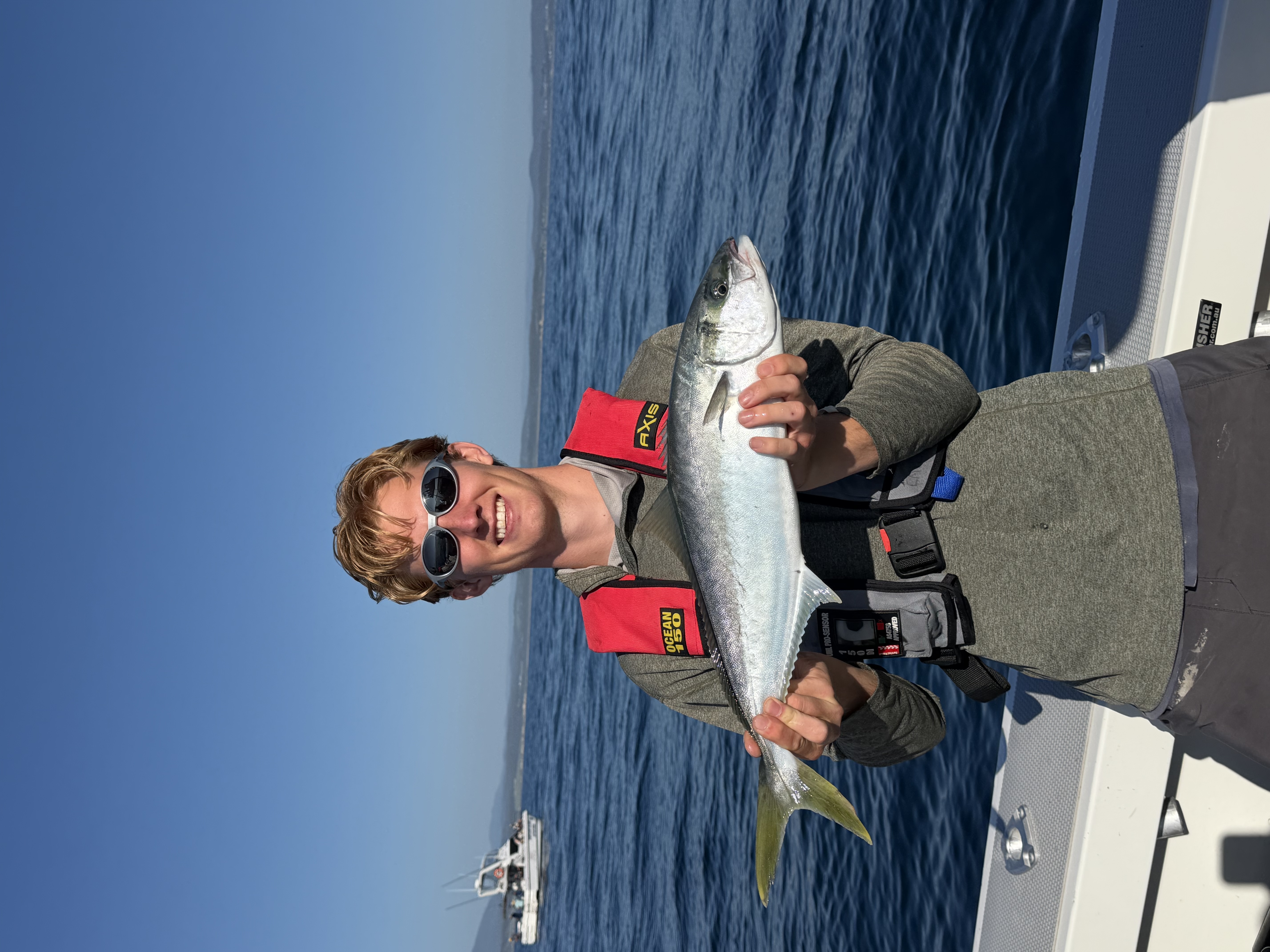
Josh with one of the many rat kingfish.
As we steamed back to the harbour, I had ample time to reflect on perhaps one of the biggest lessons fishing has taught me: always stay humble and certainly do not take fishing too seriously. Earlier in my fishing career, not catching or losing a good fish would make me genuinely upset, often negatively affecting my fishing companions or ruining the mood of a session. Lately though, I have had the chance to reflect on how lucky we are to be able to go fishing regardless of the outcome.
Estuary options
With big swell and near gale-force winds forecast, it was time to turn our attention to the seemingly unlimited number of estuary options nearby. The south coast of NSW plays host to some of the most diverse and pristine ICOLLs (Intermittently Closed and Open Lakes and Lagoons) in the country.
Overwhelmed with choice, we settled on Wallaga Lake, perhaps the most convenient option. Having a boat ramp in the caravan park meant we could easily drop the tinny in. With a short squirt of the two-stroke, we buzzed over to the flats near the mouth in seconds, an area where I had enjoyed great success in previous years.
Six weight rods were the choice as we began prospecting the shallow flats with floating lines. Soon enough, a short jerk of the line indicated a fish, but nothing, not even the familiar resistance of the shrimp-style fly I had on. Chopper tailor. While fun to catch, they can be an absolute menace, potentially costing you hundreds of hours at the tying bench. With Josh experiencing similar results on lure and a growing appetite setting in, we were soon back at the ramp.
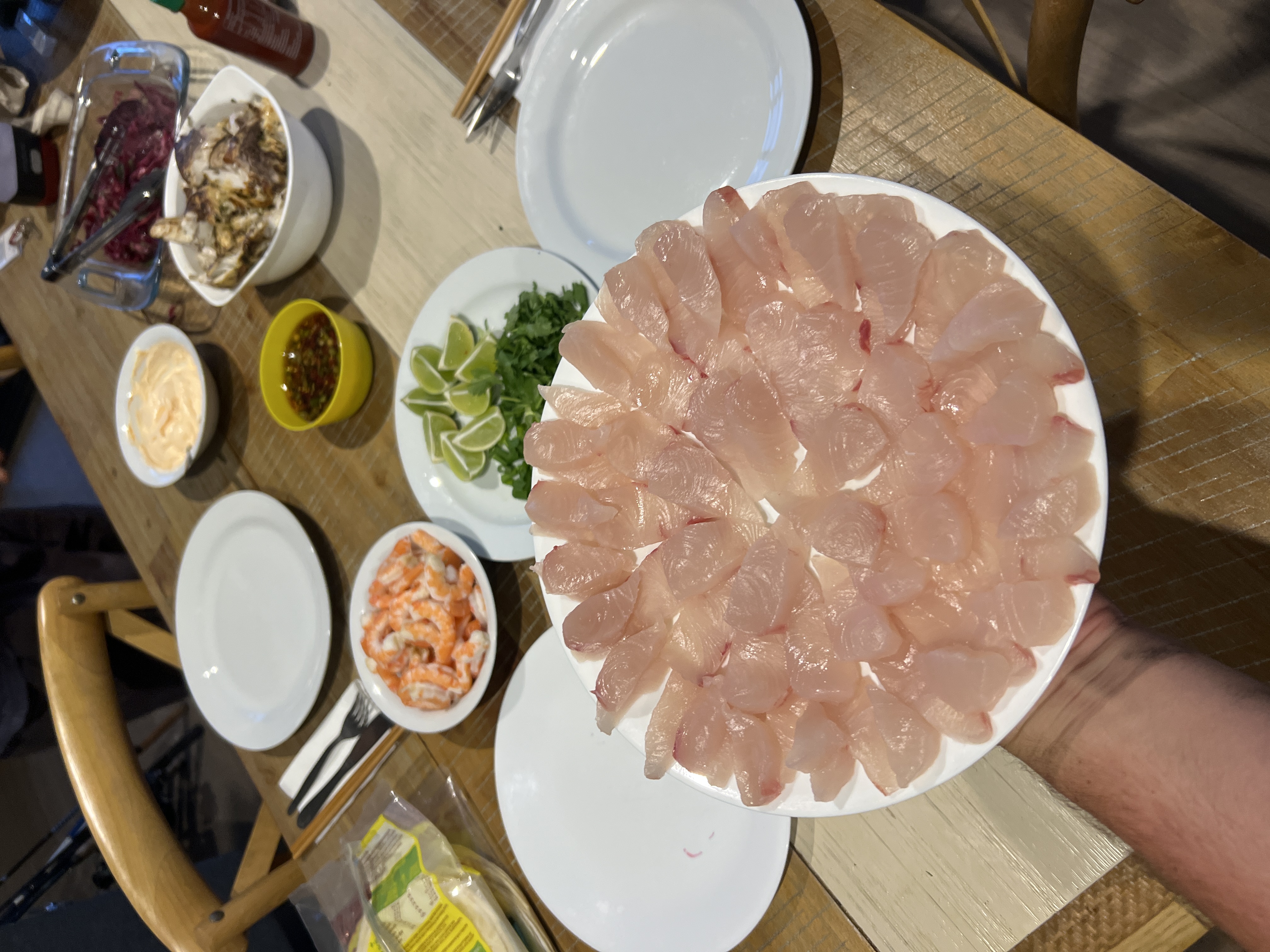
Thankfully, Dad had prepared an amazing seafood dinner consisting of mahi fritti (hang on till the end for the recipe) and kingfish sashimi with his special sauce. Bellies full and beers drunk, we hatched a plan to spend the next day picnicking on a highly tidal local estuary south of Bermagui.
The plan was to load the tinny full of beach umbrellas, chairs, and picnic food. We would sit through the whole tide change, observe fish movements, and maybe catch a few. In the event, what we saw was spectacular. As the tide pushed fresh ocean water into the estuary, the variety of fish it brought with it was incredible. Luderick, two species of flathead, yellowfin bream, black bream, tailor, and salmon all moved through the system. Perhaps the biggest highlight was the salmon smashing baitfish right on the edge in front of us.

Dad with a typical south coast yellowfin bream.
Brogo Dam bass
Brogo Dam sits roughly half an hour inland from Bermagui. Initially formed as a water supply by damming the Brogo River, it has turned into an Australian bass fishing mecca. With rocky shorelines and submerged trees, Brogo provides an exciting backup option for windy days.
While the bass are relatively small due to larger fish being lost over the dam wall as they attempt to migrate downstream to spawn, the numbers more than make up for it. Best fished from a boat with a 6 weight, the smaller bass are often opportunistic, feeding on topwater in the mornings and evenings before switching to subsurface during the day.
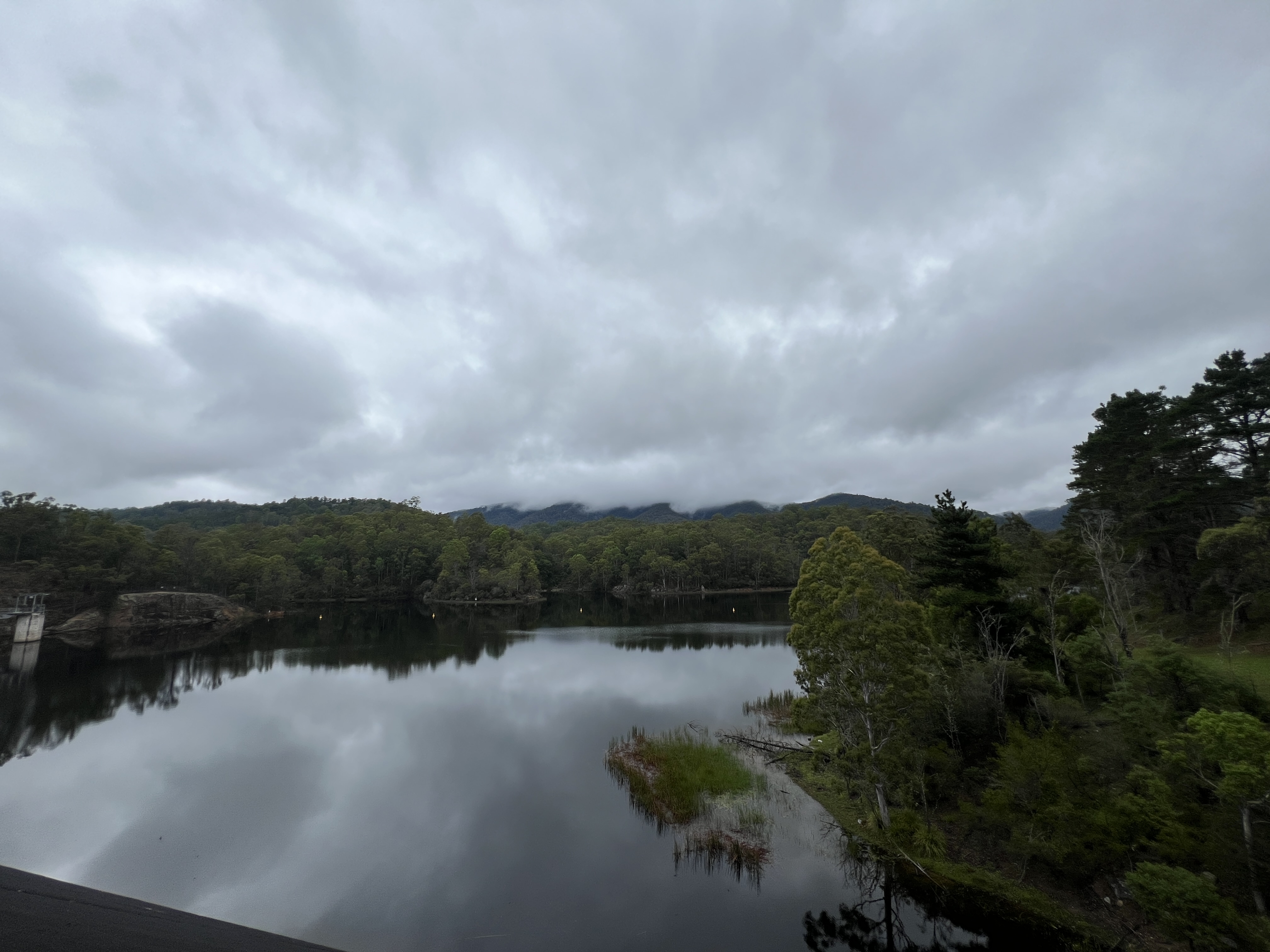
Brogo Dam viewed from the wall.
Trout options
Perhaps the most overlooked feature of Bermagui is its proximity to the Snowy Mountains. Within two and a half hours, you can be at the Frying Pan Arm of Lake Eucumbene or fishing the Delegate River. I could go into detail about these fisheries, but there is already ample literature on FlyStream.
Due to time restrictions, we did not get to explore the Snowys, but reports suggested I was missing out. The article “Snowy Lakes - February Update” by Steve Dunn does a great job of summing up exactly what I missed.
Beyond fishing
So far, we have discovered that Bermagui has more to offer than just marlin fishing. World-class estuary, impoundment bass, and trout fishing are all available within a day trip. Bermagui genuinely has something for everyone fishing-wise, but what happens if you do not fish? How do you convince your partner to come along, especially if you want to make it a kids’ school holiday trip?
The answer is simple. Bermagui and the surrounding area have just as much to offer off the water as on it. From a wander through Tilba visiting the cheese factory, to a glass of wine at the Tathra pub, dinner at the Bermi Country Club, or a feed of fresh Wapengo oysters, there is no shortage of ways to keep the family entertained between fishing sessions. Coastal walks, national parks, ice cream stops, and great bakeries mean there is enough to fill days for kids and adults alike, making it the perfect school holiday getaway.
FlyStream Facts: Mahi mahi
Also known as dolphinfish or dorado, are some of the fastest-growing fish in the ocean. They spend their entire life in the top ten metres of the water column and are highly attracted to any sort of structure, such as FADs, driftwood, or floating seaweed. They make a hugely enjoyable and accessible target for any flyfisher.
They’re also a sustainable option if you want to keep a couple for a feed, which brings me to this recipe…
.jpg)
Mahi Fritti
After a long day on the water, the last thing you want is a complicated dinner. This mahi fritti recipe is about as simple as it gets, leaving you more time to enjoy the fishing and the scenery. Best accompanied by an Australian beer.
What you need:
- Mahi fillets
- Flour
- Salt and pepper
- Olive oil
How to do it:
Pat the mahi fillets dry and season your flour with a pinch of salt and pepper. Give the fillets a light coating, enough to cover but not drown them. Heat a splash of olive oil in a pan over medium-high heat. Fry the fillets for a couple of minutes on each side until golden and cooked through. Drain briefly on some paper towel, then serve straight away.
The beauty of this dish is how quick and fuss-free it is. Minimal prep and ingredients with maximum flavour. Perfect for saving valuable time on a fishing trip while still enjoying a fresh meal straight from the boat to the plate.
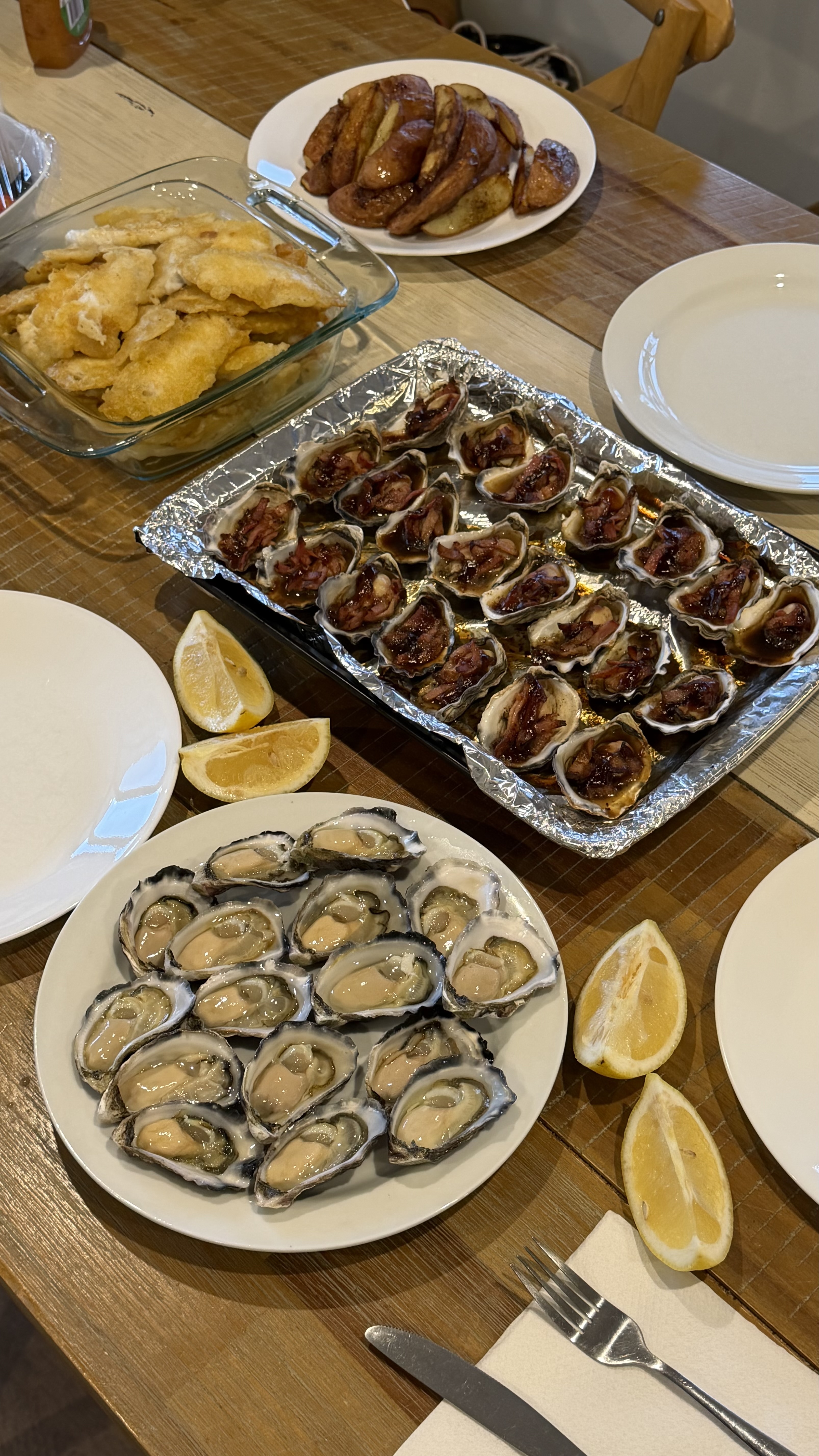 Fresh mahi mahi accompanying local Wapengo oysters.


