





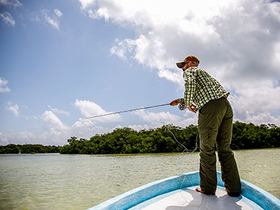

Ask any saltwater flyfisher and they’ll tell you — Queensland flats are special.
Clear water, moving tides, life everywhere you look. You’re not just casting, you’re hunting. Watching. Waiting.
Queensland’s flats aren’t just places to fish. They’re places people dream about. That’s the magic people travel for. And it’s the reason this story matters.
Today we’re talking tunnel nets. If you care about saltwater fly fishing — permit, GTs, queenies, goldens, and everything that makes a Queensland flat what it is — this is something you need to hear. Because tunnel nets are being trialled as replacement gear after gill nets, and the reality is they can clean out a flat in one tide. They scoop up everything from juveniles to iconic sport fish and leave bugger all for anyone else.
This isn’t some future problem. Trials have already run on world-class flats at Hinchinbrook, the Whitsundays and Gladstone. What’s been observed is already deeply concerning: dead fish, disoriented fish, and a whole lot of unanswered questions about what happens after the net comes out.
If we don’t pay attention now, we’ll likely lose one of the best flats fisheries on the planet before it even reaches its full potential.
The phone call that started it
I first heard about these nets when Kim Macpherson rang — president of the North Queensland Fly Fishers Club. Kim isn’t the sort of bloke who cries wolf. He’s measured, thoughtful, and he understands that fisheries management is messy. But his tone was different. Urgent. Not angry for the sake of it — worried.
Kim was instrumental in putting together the Inshore Flats Project: a group of anglers, guides, industry people and supporters doing everything they can to put a stop to tunnel nets being introduced across central and north Queensland’s flats.
They’re donating footage. Writing submissions. Collecting data. Building a case that speaks the language decision-makers care about — environment, economics, community — while still staying rooted in the simple truth: flats fishing is special, and it’s worth protecting.
And they need support, because if tunnel nets slide through on the quiet, our flats fisheries will be decimated and take decades to recover.
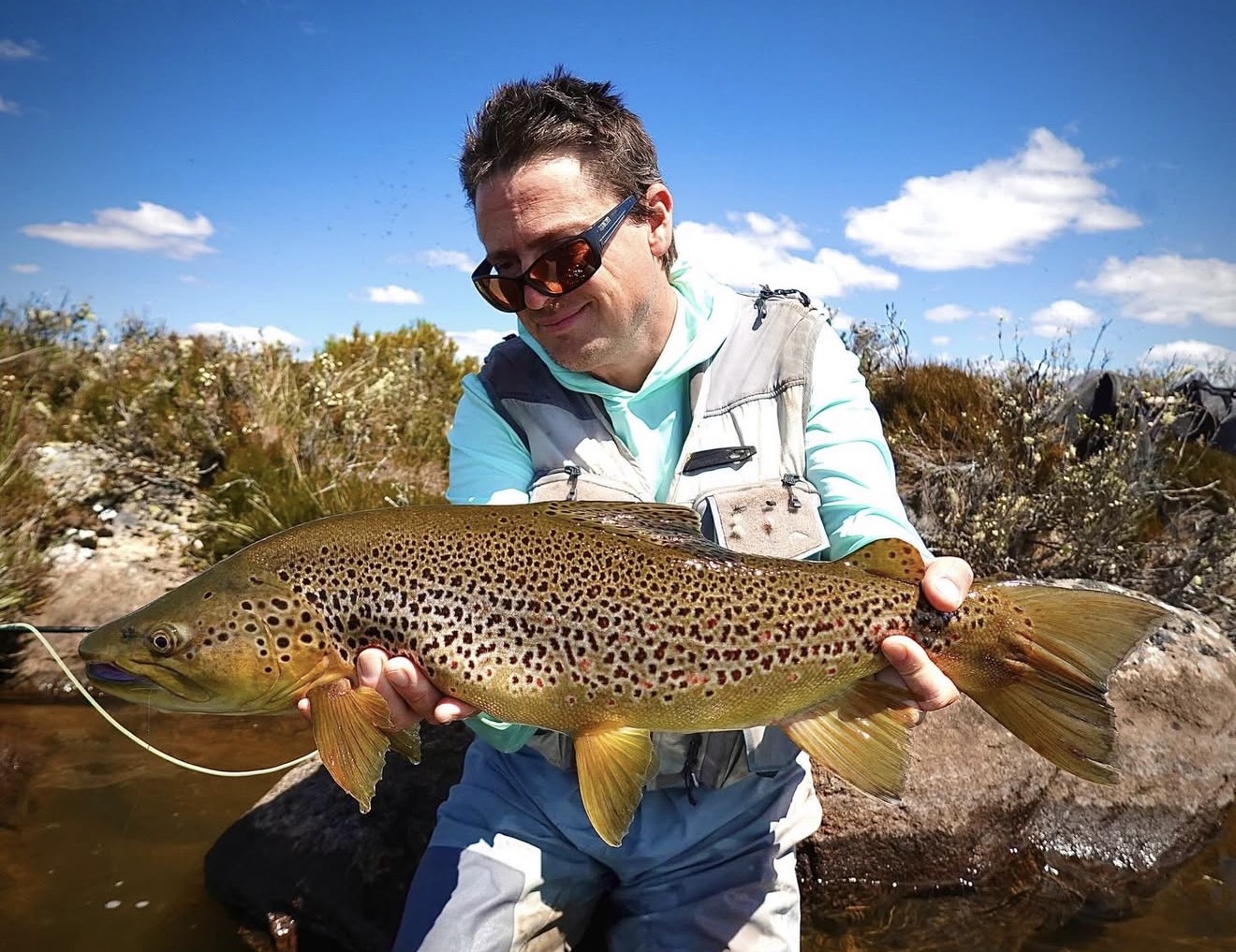
Chris Burgess: from trout dam to permit obsession
When we sat down on The Flyfishers Podcast, I was joined by Chris Burgess. If you read FlyLife, you’ll probably know his name. He’s a regular contributor, a passionate flyfisher, and he’s been right in the thick of the tunnel net issue.
Chris’s fishing story is one a lot of us recognise — it starts simple and grows legs.
He got into fishing when he was five, offshore from Newcastle chasing pelagics on lures with his dad. Then came the move to Melbourne at twelve, and an uncle who did what good uncles do: handed over a fly rod. There was a farm dam, rainbow trout stocked every year, and afternoons after school spent catching and releasing the same fish often enough that Chris started tagging them with numbered tags.
That detail tells you everything about the bloke. Curious. Methodical. The sort of person who doesn’t just fish — he watches, learns, tests.
Once he got his licence, he went hard on Victorian rivers and streams. Uni. A professional career. Then Sydney, where a boat opened up saltwater fly fishing on the harbour for kingfish and Aussie salmon. And somewhere around 2010, through the saltwater fly community, he heard about those sand flats up north — the ones that feel like a different planet the first time you step on them.
He started doing annual trips to Weipa, fishing with guides like Alan Philiskirk and crew, and around 2012 he landed his first permit on a flat near there. That’s the moment, isn’t it? Once you’ve seen and caught a permit properly — you’re cooked. Your brain recalibrates.
Chris has fished plenty of famous flats overseas too: Seychelles, Bahamas, Belize, Florida Keys. All incredible. But the epiphany for him wasn’t overseas — it was towing a boat and a tent with his wife Este up the Queensland coast, fishing unguided for permit and golden trevally. Pulling up at local ramps. Walking or poling into fish. Finding permit that were not just present, but catchable.
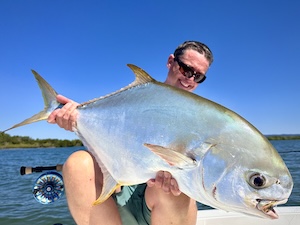
And that’s the point a lot of Australians still don’t fully appreciate: Queensland’s permit fishery is not “a nice bonus” — it’s globally significant.
In Belize or the Bahamas, an angler might pay thousands to see four permit in a day and get one half-chance at catching one. And they’ll be over the moon. In Queensland, on a good day, you can have twenty-plus proper shots. Fish tracking. Fish tipping. Fish coming right into range. One or more to the boat if you do it right.
That’s why keen flyfishers overseas are starting to talk about it. That’s why the travelling angler has Queensland on the radar. And that’s why we can’t treat this like a niche local squabble — it’s a national flyfishing asset.
It’s also only just hitting its stride.
Yes, there were pioneers in the 90s — Greg Bethune up the Cape, Alan Philliskirk and others experimenting with clousers and early crab patterns, slowly cracking codes. But what we’re seeing now is thirty years of hard-earned knowledge being passed down and refined. More guides. Better tides planning. Better flies. Better casting. Better fish handling. Better success.
The fishery has always been there. We’re only just getting good at it.
And now it’s facing a threat that doesn’t care how long it took us to figure it out.
So what is a tunnel net?
Tunnel nets sound almost harmless if you don’t understand the mechanics. Like something small and targeted. They’re the opposite.
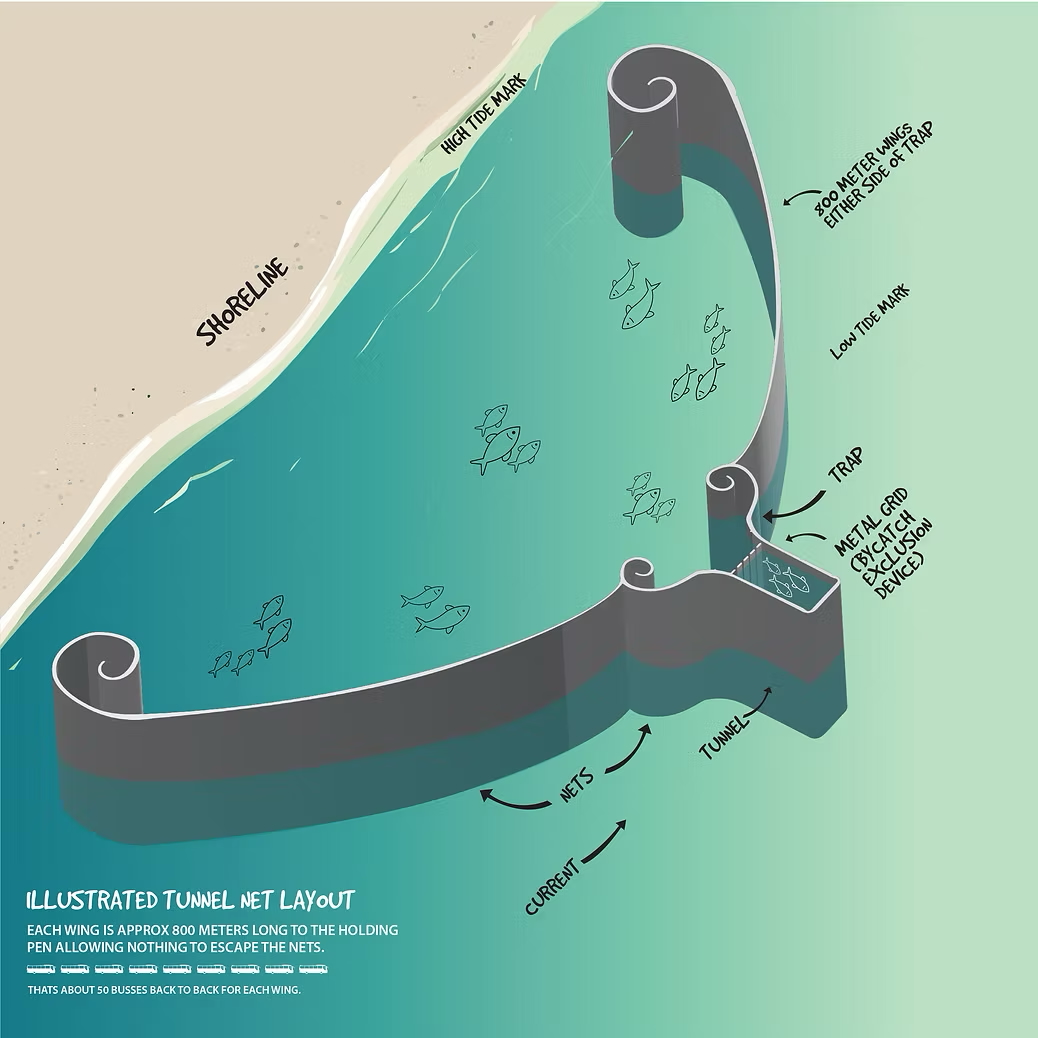
Chris explained it in plain terms:
At high tide, three or four commercial fishers go out onto an intertidal sand flat with a main boat and a few dories. They wade and stake in mesh wings — long panels of netting — fixed into the sand. Those wings can total up to 1.6 kilometres, roughly 800 metres on each side.
They set those wings around the area of flat they want to fish.
At high tide, that flat is full of life. Permit. Goldens. GTs. Queenies. Juveniles. Turtles. Rays. Everything that pushes up to feed when the water covers the sand.
As the tide falls, those fish do what they do every day: they leave the flat, funnelling toward drains and low points to get back to deeper water. The net wings guide that movement into a tunnel sock — a bag-like section positioned below the low-water mark, so fish remain underwater while small batches are scooped up, lifted, and sorted on a metal table.
The only fish not caught are the tiny ones that slip through the mesh.
And here’s the nasty overlap: the topographic requirements for a tunnel net flat are basically the same requirements for a great flyfishing flat. Not too steep. Not too shallow. Drains into a low point. Clear water. Fish movement corridors. The exact places we seek out with polaroids.
So a tunnel net isn’t just “a net somewhere in the system.” It’s a net placed right where the flats fishery happens.
That’s not incidental. That’s direct resource conflict.
“Everything inside the wings ends up in the sock”
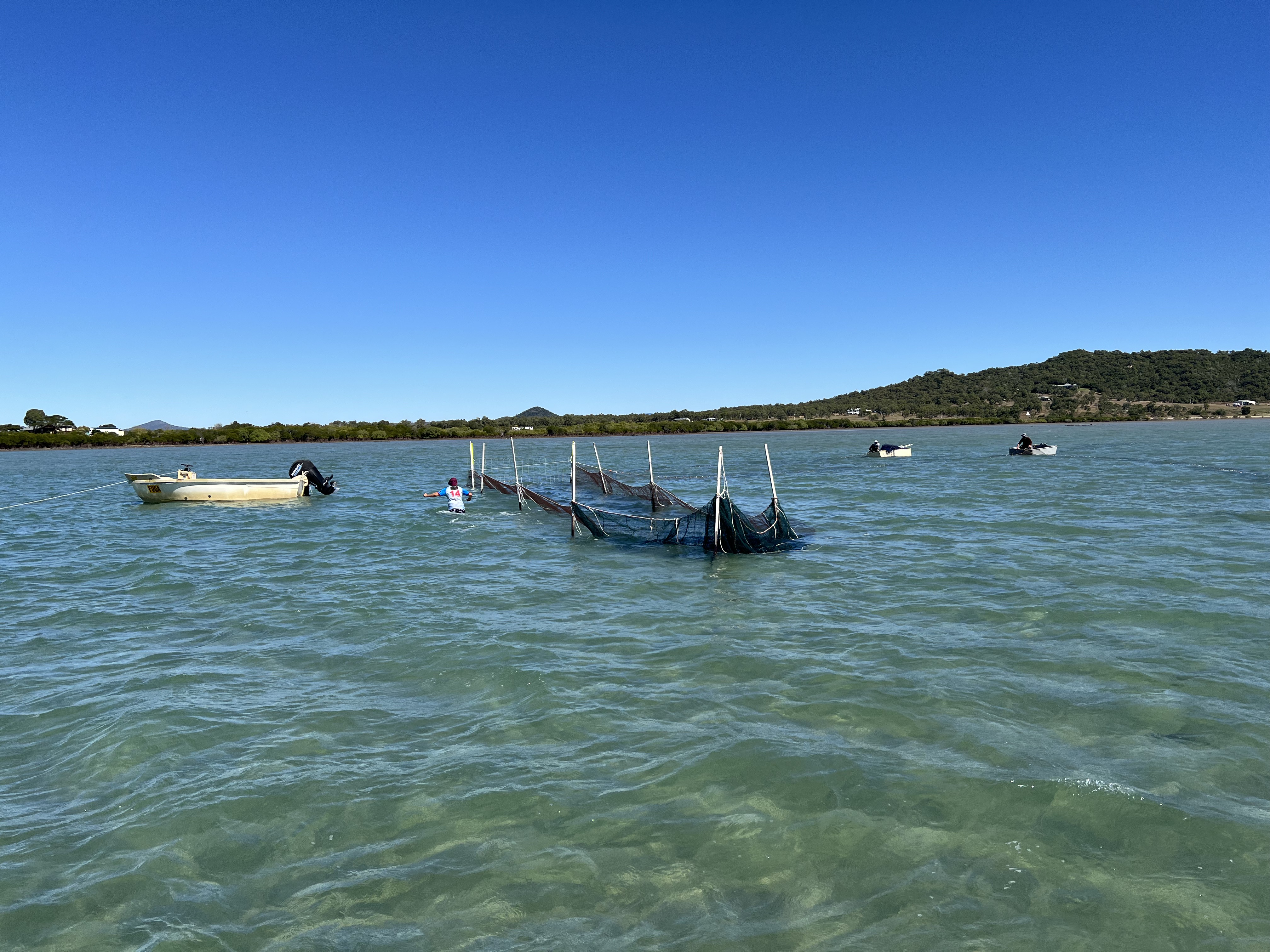
There’s no debate about whether the gear is effective. It’s brutally effective.
During 16 fishing days in central and north Queensland as part of the trial, one of the most effective shots caught over 6,000 fish on a single flat in a single day.
Six thousand.
That’s not “a bit of take.” That’s a whole flat’s worth of life being funnelled into a sock on a falling tide.
Even Chris — who is careful with his wording — couldn’t dodge the implications. There might not yet be published science on exactly what proportion of a flat’s biomass ends up in the sock, but any flyfisher can look at 800-metre wings and imagine plenty of real flats where it would be most of the fish present.
To make it even clearer, Chris referenced a promotional line from a tunnel net fisher in Moreton Bay: everything within that area ends up in the tunnel net sock.
If you fish flats, you know that’s exactly the issue. Flats fishing is built on predictable movement. The net uses that predictability against the fish.
What’s being caught?
On the data Chris had seen, tunnel net trial catches in 2025 looked very different from what Queensland’s current East Coast fin fishery targets.
In the existing fishery, barramundi and king threadfin make up a big chunk of the catch — around 35% by weight, from the figures Chris cited. These are higher-value eating fish. Fish Queenslanders actually want on a plate.
In the tunnel net trial data, barra and threadfin dropped to around 3%.
Again, no surprise to anyone who’s spent time staring at sand flats in the dry season. You don’t see appreciable barra numbers out on the open sand. Chris reckoned he saw two all year, despite spending many hours on flats.
Instead, the tunnel net catch was dominated by by-product and by-catch — low value and no value species — making up about 97% of the take.
Trevally were the number one catch by weight at around 23%. Permit came in around 6% by weight. And while DPI data might not break down each trevally species neatly, anyone who fishes the flats understands what that means on the ground: golden trevally, and GTs — the exact fish that define the experience.
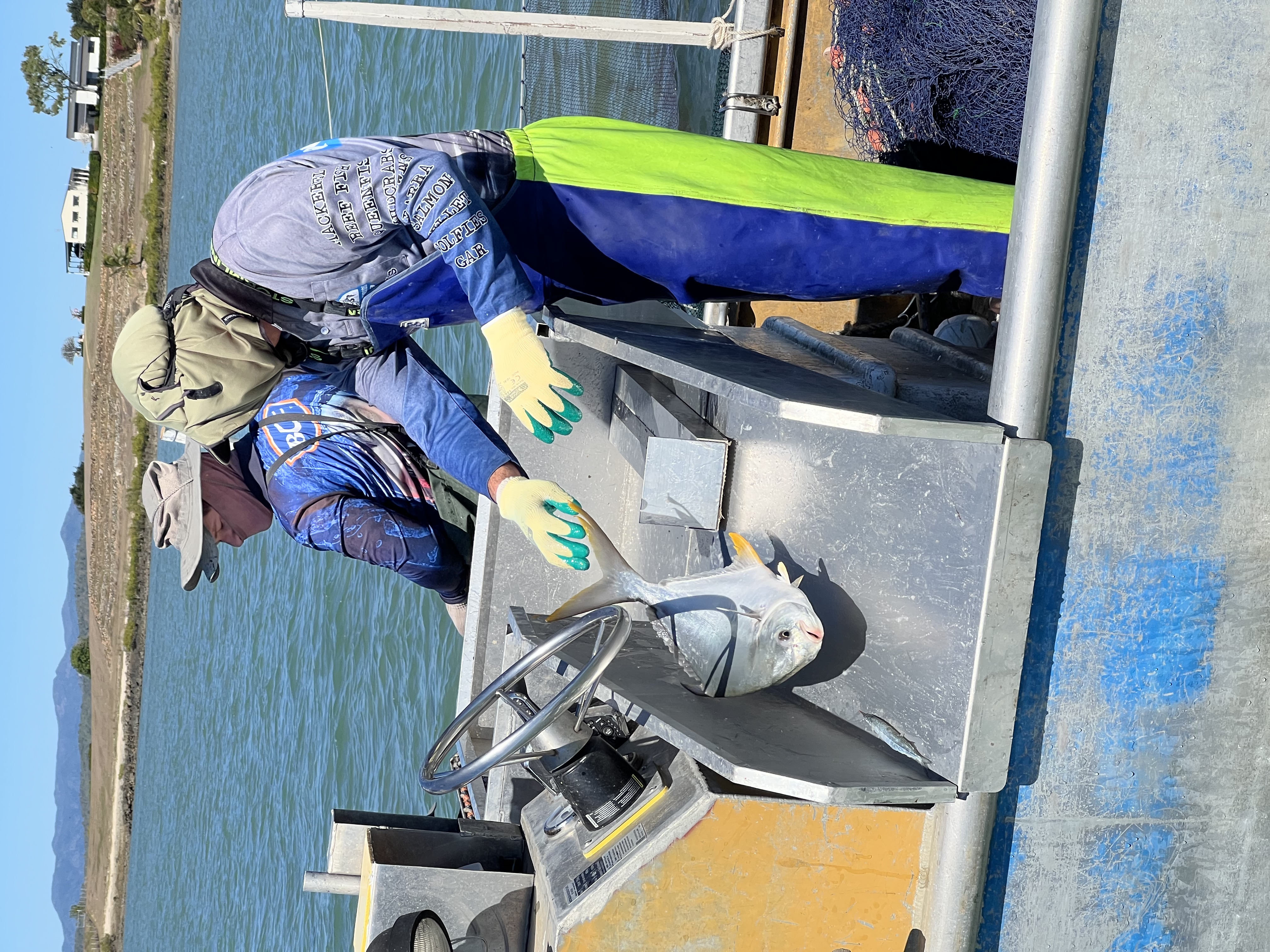
Chris also raised an important ecological worry: juvenile GTs in the 40–45 cm range showing up in big numbers on some flats. If those fish are immature, and they’re removed in bulk, the impact isn’t just today’s fishing — it’s tomorrow’s fishery.
And it’s not just flyfishing. The lure crowd — especially popper and stickbait anglers — is huge. Bigger than fly fishing. Those fish are a shared resource.
Why haven’t these fish been targeted before?
The blunt answer: they’re not great eating fish, and they don’t fetch much.
Chris wasn’t romantic about it. He said it’s not “luck” that permit and goldens haven’t been commercially targeted in a big way — it’s reality. If they were high-value seafood, there would have been a fishery already. Queensland is spoiled for choice: mud crab, prawns, barra, threadfin — plenty of genuinely good tucker with strong market acceptance.
Golden trevally and permit generally aren’t that.
And here’s where it gets dangerous. Tunnel nets are expensive to operate. Multiple crew. Gear investment. Full tide cycles. Launching and washing down. To make money on low-value fish, you need volume. That economic pressure isn’t a moral judgement — it’s just maths.
Which brings us to the core fear: localised depletion.
Localised depletion: the flat goes quiet
Chris gave the clearest explanation I’ve heard.
He described a particular flat he fishes that consistently holds small pods of golden trevally — five fish per pod, several pods spread across the flat. They tail hard, sucking crabs and shrimp, and they’re tricky to catch. Guides fish it. Locals fish it. Interstate and overseas anglers travel to fish it.
Now picture a tunnel net set across that flat on a day those pods are present. The fish end up in the sock. Say there are 75 goldens in there — big fish, five kilos each.
Even if the operator wants to be conservative and take only a third (25 fish), at roughly $4/kg beach price — potentially less — you’re looking at about $500 gross. With four wages to pay for a full day’s work, the pressure is obvious: take more fish. Sell more volume. Make it viable.
So the fish come off the flat.
Localised depletion is what happens next: immediately after netting, the flat is empty. The question becomes: when do fish come back? Months? Years? And if they do come back, and netting continues, how long before it happens again?
We don’t know.
That’s the part that should scare anyone who loves flats fishing — not because we’re anti-commercial fishing, but because we’re staring at a “roll the dice” experiment with a fishery that is only just beginning to be properly recognised.
Chris pointed to Hervey Bay as a lived example. A birthplace of Aussie saltwater fly fishing, full of pioneering effort in the early 90s. The flats were later netted. Even after nets were removed, the fishery still isn’t back to what it once was — even now.
That’s the cautionary tale. Once a flats fishery is knocked, recovery isn’t guaranteed.
“Nothing dies” — except it does
The other major concern is post-release survival.
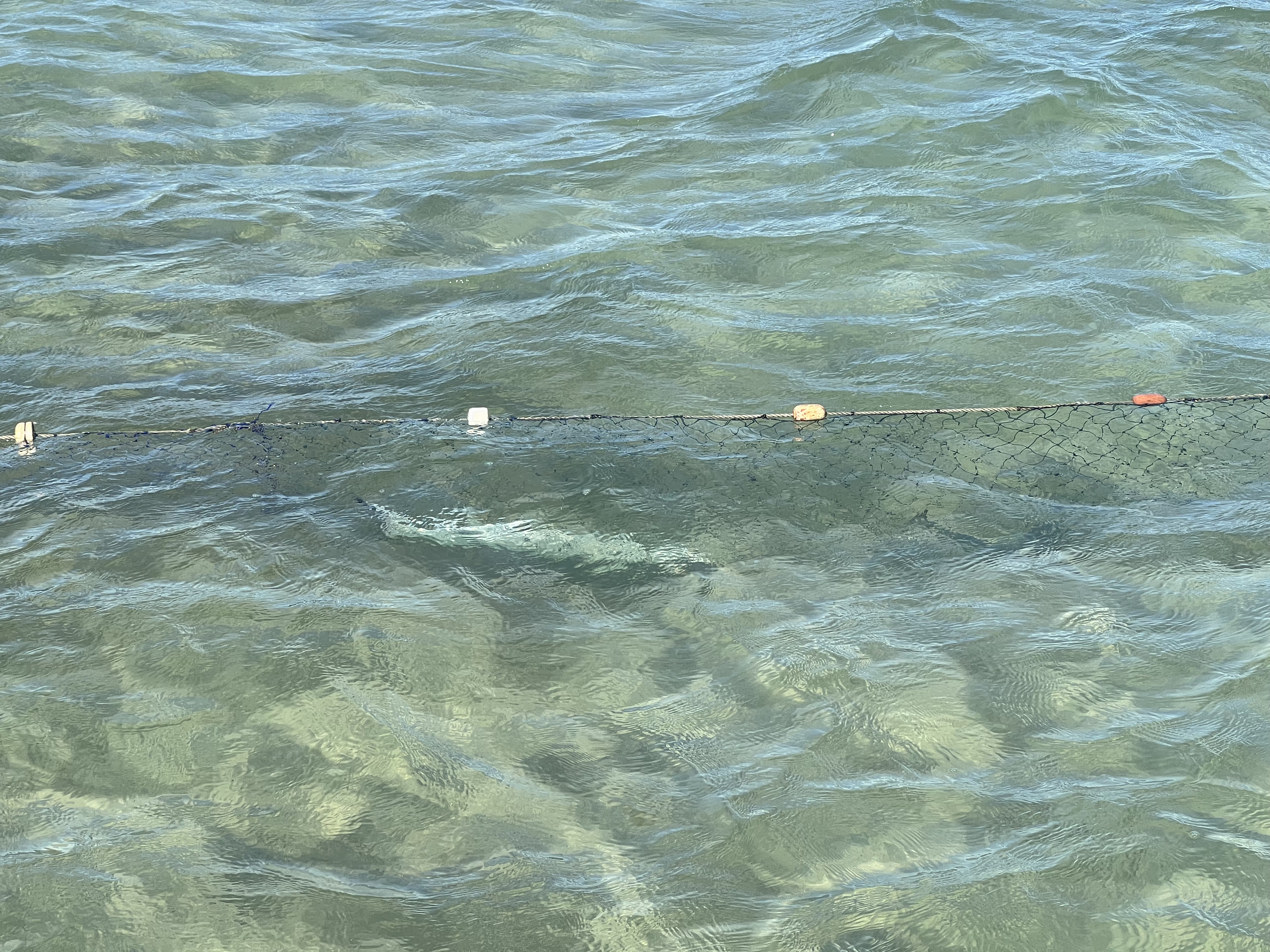
There’s been promotional material claiming “nothing dies” with tunnel nets. Chris was blunt: that’s not literally true. He’d seen photos of dead fish — milkfish trapped in the mesh, dead garfish on sorting trays.
But observed mortality is only part of the problem.
The bigger question is post-release mortality — fish that swim away but die later due to stress, injury, or predation.
The tunnel sock can hold thousands of fish of wildly different sizes: from juvenile fish to a metre-long trevally. In a crowded, thrashing mess. Then they’re lifted, sorted, and handled — often out of the water for meaningful periods, in tropical air and warm water.
Just because a fish swims off doesn’t mean it survives.
Chris referenced early work in 2022 at Cardwell that recommended post-release survival studies — holding fish in tanks for 48 hours, or longer-term tagging — because of exactly this concern. And as far as he understood, those kinds of studies hadn’t yet been completed for the current program.
Then there’s predators. Pelicans lined up behind the sock in Moreton Bay. Sharks in North Queensland — ever present, quick learners, perfectly designed to take advantage of easy meals. A disoriented fish in shallow water isn’t “released safely.” It’s a target.
Chris even relayed a report from a member of the public who stumbled across a trial: a permit, post-release, disoriented, swimming up and banging into a flats skiff.
That image sticks. A permit — the holy grail — reduced to a stunned, confused fish in a place where sharks are never far away.
The economics: peanuts vs a national asset
Even if you don’t care about policy, you should care about what this could do to the fishing economy.
I’ve fished Hinchinbrook a fair bit with guides. I’ve had about twenty guided days up there and caught one permit. And I’ll keep going back, because when it happens it’s Everest. That’s how permit fishing works: you pay for the chance. You work for it. You accept the odds. You come back.
Chris agreed — and added a crucial point: our Anak permit (Trachinotus anak) is endemic to Australia. It’s part of the global “permit grand slam” obsession. People travel to tick off the big four: Trachinotus falcatus (Americas), Indo-Pacific (we have that too), africanus (Oman), and anak (Australia).
To catch anak, they have to come here. And Queensland’s flats are the best place going.
Now put yourself in the shoes of an American angler who’s flown for 24 hours, paid guide rates, timed tides, landed in perfect weather — and you step onto the flat to find a 1.6km tunnel net staked across it.
You’re not coming back. And when you get home, you’re telling everyone you know: “Queensland’s flats fishing is cooked. Don’t bother.”
That’s how a fishery’s reputation dies.
Chris also talked numbers the Inshore Flats Project has been pulling together — including estimates of direct tourist spend on guided flats flyfishing, and broader recreational fishing contributions — and contrasted that against the likely small wholesale value of a tunnel net fishery targeting low-value species with limited operating windows (May to September, weather dependent, neap tides, calm winds).
The detail matters less than the shape of the argument: the economic upside of tunnel nets is small, and the downside risk to tourism, guiding, regional spend and reputation is enormous.
The fork in the road
This is the line that keeps coming back: we’re at a fork in the road.
If we protect net-free flats, this fishery continues to grow. More guides. More visitors. More stories. More love. More reasons for Australians — trout fishers included — to travel north and experience something unreal on our doorstep.
If we don’t, and tunnel nets become established across central and north Queensland’s flats, the risk is simple: the fishery gets degraded before it ever becomes what it could be. And once it’s gone, it’s not something you just “restore” with a policy tweak.
Chris’s message to decision makers was basically: you’ve got enough data now to weigh the environmental, economic, social and cultural costs. What is actually gained by pushing further down this path? Would you invest your own money in it, knowing the risks and the low return? And if the answer is no, why are we spending public money investigating something so fraught?
His message to the fly fishing community was even clearer: we need to come together, now, while it still matters.
What can you do?
Chris kept it practical:
-
Get informed.
Go to the Inshore Flats Project website. Learn what tunnel nets are. Read the concerns document. Understand the issue so you can speak about it clearly. -
Spread the word.
Talk to anglers and non-anglers. This sits inside a World Heritage marine ecosystem. Show people what’s being proposed. -
Get involved.
Follow their social pages. Share posts. Subscribe to email updates so the community can mobilise when consultation windows open and submissions matter.
That’s it. Simple, doable, effective.
The final word
At the end of the podcast, I thanked Chris for his time and his effort — and he made a point I want to repeat here.
He’s not doing this alone. There’s an army behind the Inshore Flats Project. People donating drone footage and videos. People writing documents and submissions. People lending expertise quietly. Chris and Este working hard in their household, but also a broader collective that’s formed because everyone has realised the same thing:
We’ve got an incredible fishery on our hands, and we can’t afford to let it go without doing everything we can to stop that happening.
If you love saltwater flyfishing — or you’ve ever dreamed of catching a Queensland permit or a golden trevally on the flats — this is your moment to pay attention. Tunnel nets are an existential threat to our flats fishery. Not in twenty years. Not one day. Right now, while they’re still in the trial stage.
Every flyfisher who cares about these fish should be speaking up. Be vocal. Support the guides and clubs pushing back. Keep the conversation alive.
Because the commercial value of killing permit and goldens is peanuts compared to the tourism and cultural value of keeping them alive.
If we don’t make noise, tunnel nets will slip through on the quiet.
If we are vocal, there’s a real chance to stop them.
www.inshoreflatsproject.com.au
Listen on Spotify, YouTube, or Apple Podcasts


