






Hooked up to a smelter.
JD and I had an alternative winter trip pencilled in for early this week, with the original rough itinerary being (after our recent successes) the lakes and estuaries of south-west Victoria. But then a few unexpected interruptions got in the way, and we decided a Lake Eildon trip would be a more efficient use of the new time limits, with this massive lake just up the road from JD’s home. Plus, we’d been talking about tackling the winter trout there for years and despite solo efforts, we'd never actually done a winter session on Eildon together.
One advantage of these hastily rearranged plans was JD would be able to duck out for a bit of Eildon reconnaissance ahead of my visit, thereby streamlining our combined fishing efforts.
By Friday, the forecast was looking good with the promise of reasonably settled weather – perfect for our preferred sight-fishing. Add clear water with gently rising levels, and there was cautious optimism that the change of plans might just work out okay.
The two things most likely to offer Eildon sight-fishing in winter, were midging trout and smelters. The former had produced patches of activity for me in winters past, while I’d occasionally had action with roach feeders, and – very occasionally and long ago – trout feeding on Australian smelt. Well, if the light winds held, the calm conditions would give us a chance of seeing (or hearing) at least one of the three.
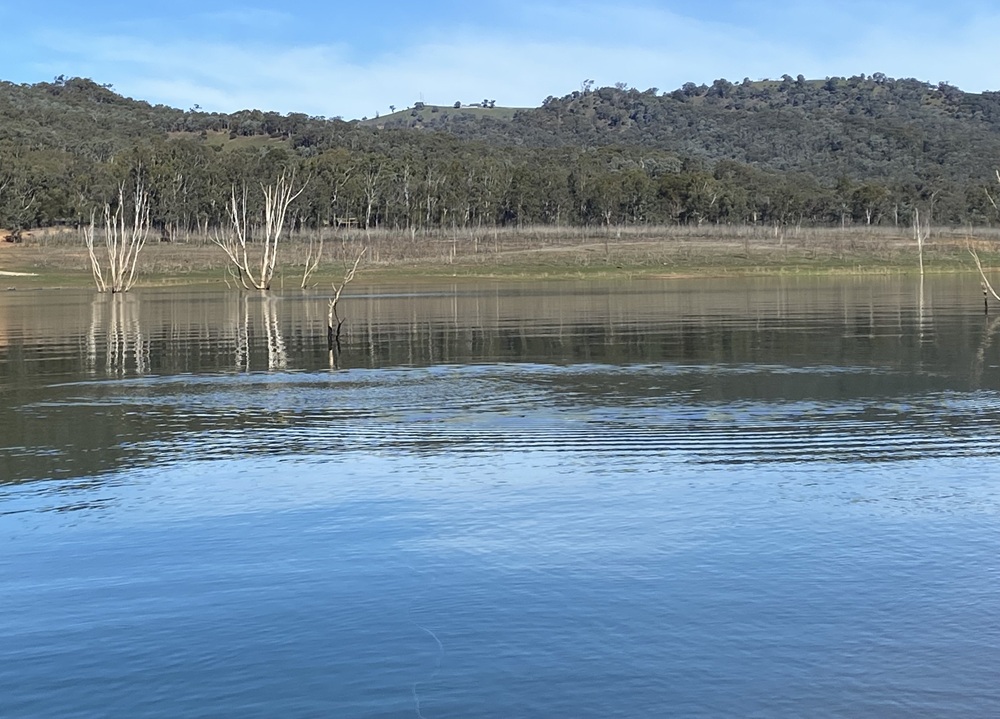
Smelter in action.
JD’s ‘live from the lake’ phone call on Saturday was just what I’d hoped for: under clear, windless skies, he reported huge schools of smelt twinkling both along the bank and out wide. Even better, he’d watched a number of different trout attack them, and could even report a follow and a bump from a nice fish. Then, in a flourish of dramatic effect, he added, “I’ve gotta go, a big fish just smashed the smelt right near me.”
Well, my plans for a leisurely trip up on Sunday were adjusted! I packed the car Saturday night, and got up early on Sunday to clear the desk. By 1pm, JD and I were walking down a steep track to a very inviting-looking lake, rigged up with his freshly-tied eyed smelt patterns.
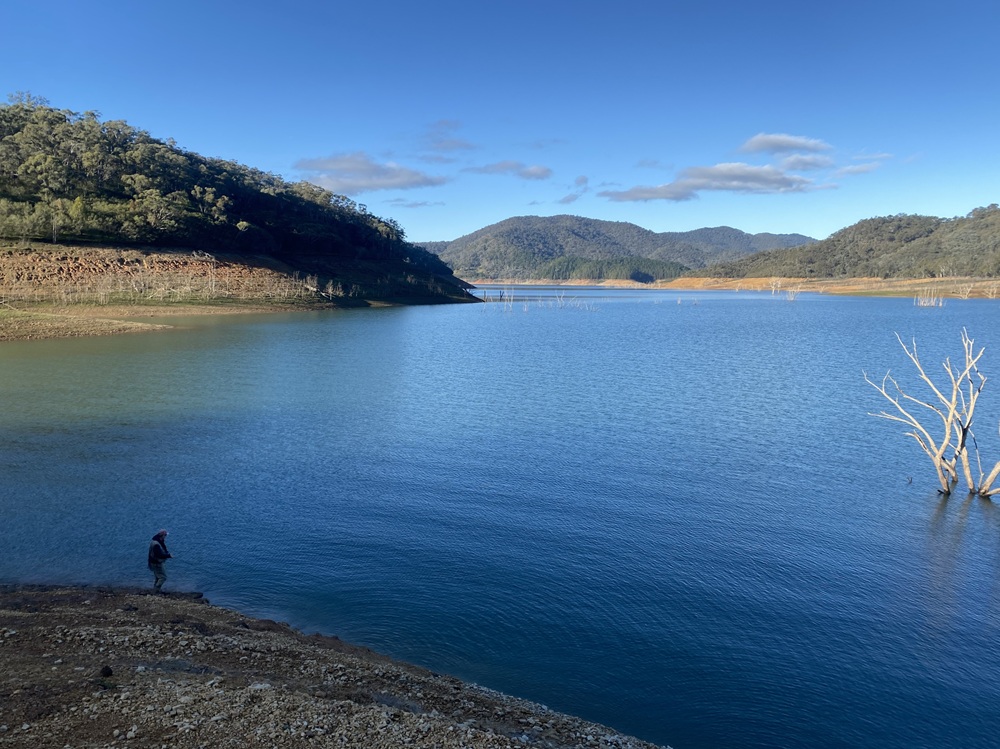
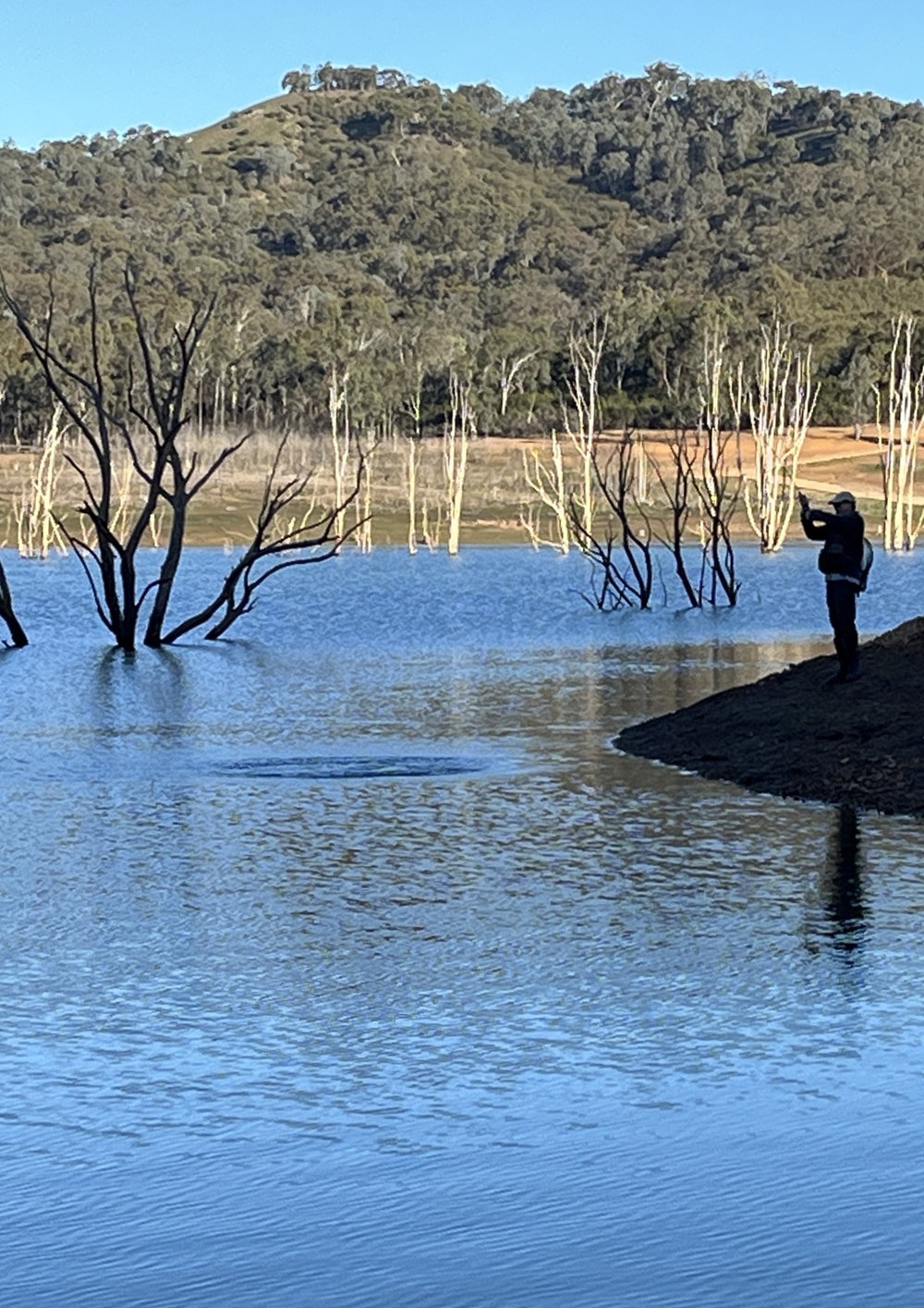
Fishy water!
Geez the lake looked good, and not for the first time, I wondered why, over the decades, Eildon has often failed to live up to our flyfishing expectations. I didn’t have time to dwell on the thought for long though, before a good trout cartwheeled through a smelt school beside a dead tree. Although too far out to reach, it was a promising early sign.
Over the next few hours, we were regularly entertained by trout ‘busting up’: some too far away to cover, others right at our feet on the bank. It was thrilling if difficult fishing, as is often the case when trout are feeding on Australian smelt. When galaxias, roach or gudgeon are on the menu, I find the trout easier to catch (comparatively!). However, there’s something about smelt behaviour that seems to confuse the trout. The strategies must work against predation, because despite regular onslaughts from trout and (we soon realised) schools of redfin, the water remained thick with these little baitfish. They could be found regularly along tens of kilometres of shoreline and across hundreds if not thousands of offshore hectares.
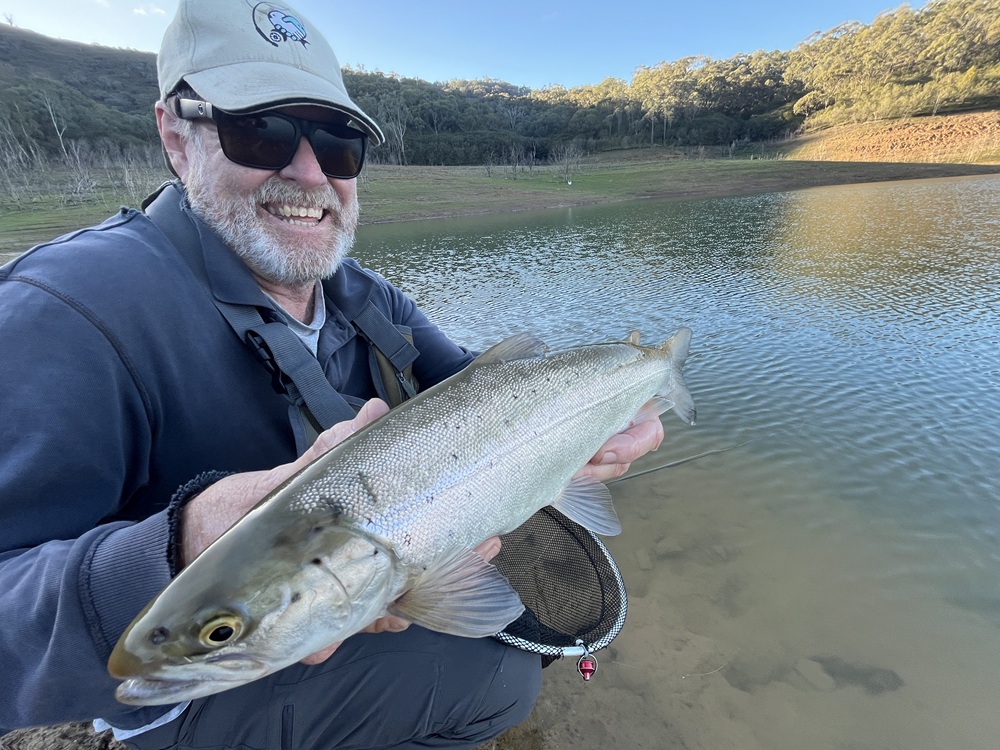
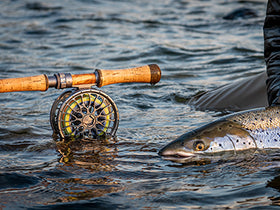
A nice smelter to JD.
Ultimately, JD managed to land a couple of very nice browns, while I hooked and dropped a beauty, and had a couple of other hits.
As can happen with true smelt-feeding trout, the action (counterintuitively) reduced towards evening, and died away altogether on dark – although the odd midge feeder did appear in their place.
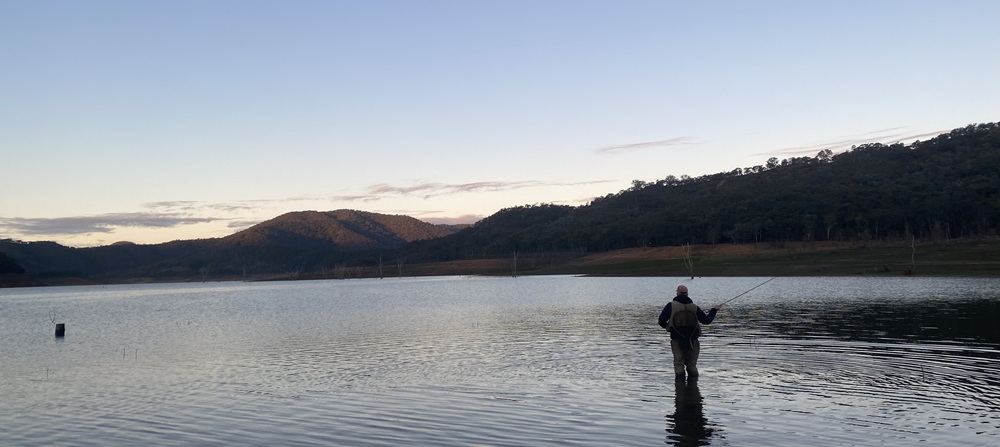
The smelter action faded on evening, although the odd midge feeder appeared instead.
The next day was boat day, and we were joined by our mate James Norney. As is often the case with boats and flyfishing, I seemed to spend a lot of time on the bank! Despite regular offers from my mates to come aboard, I do enjoy the precision and control I’m able to take advantage of when on foot. However, I love the magic carpet ride which can put me on a remote shore in minutes; a shore that otherwise might have taken hours to walk to. And it’s also fun to be onboard when chasing a regularly-moving trout which is well beyond range of the bank.
By close of play in the late afternoon, a steadily strengthening wind and chop had pretty much stolen our sight-fishing opportunities. The bank vs boat scores were about even, with equal numbers caught (and dropped!) from each.
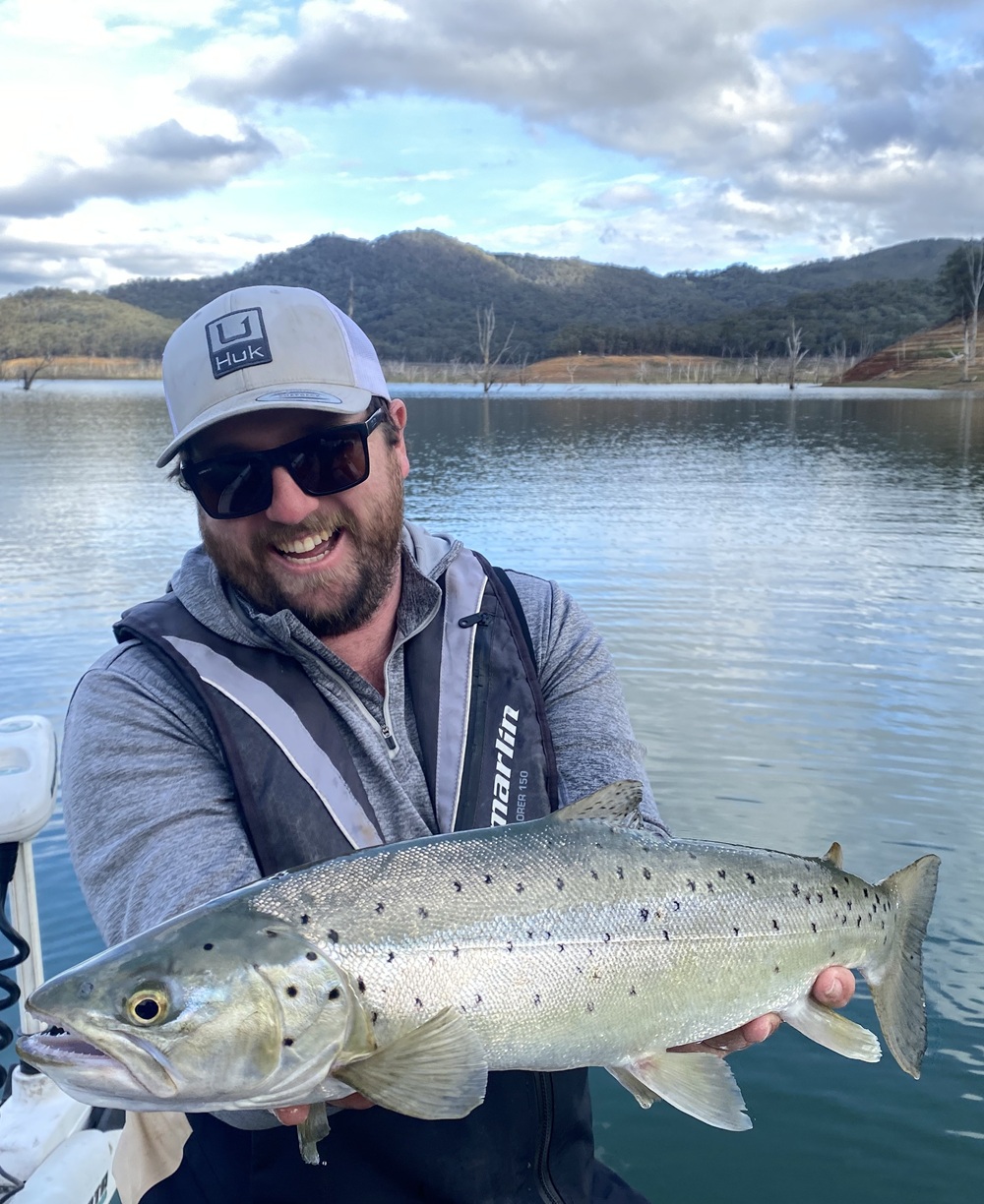
A boat beauty for James.
Overall, it was a good trip. We’d seen lots of trout, cast to plenty, shaken hands with a few, and even caught some. For me at least, smelt feeders are right up there with midging trout for the sense of satisfaction per trout landed, and I think I can say it was three excited and happy flyfishers who headed home from Lake Eildon.
Tactical notes on Eildon smelters
- Bust-off buffer
We encountered a lot of very good brown trout: mostly silvery pelagic models, but also a few more typically-coloured fish. A far cry from the small and somewhat skinny trout Eildon has a reputation for, these fish are very strong and hard to land. Coupled with proximity to sticks, snags and logs, you’d be mad to fish with anything less than top class 3X.
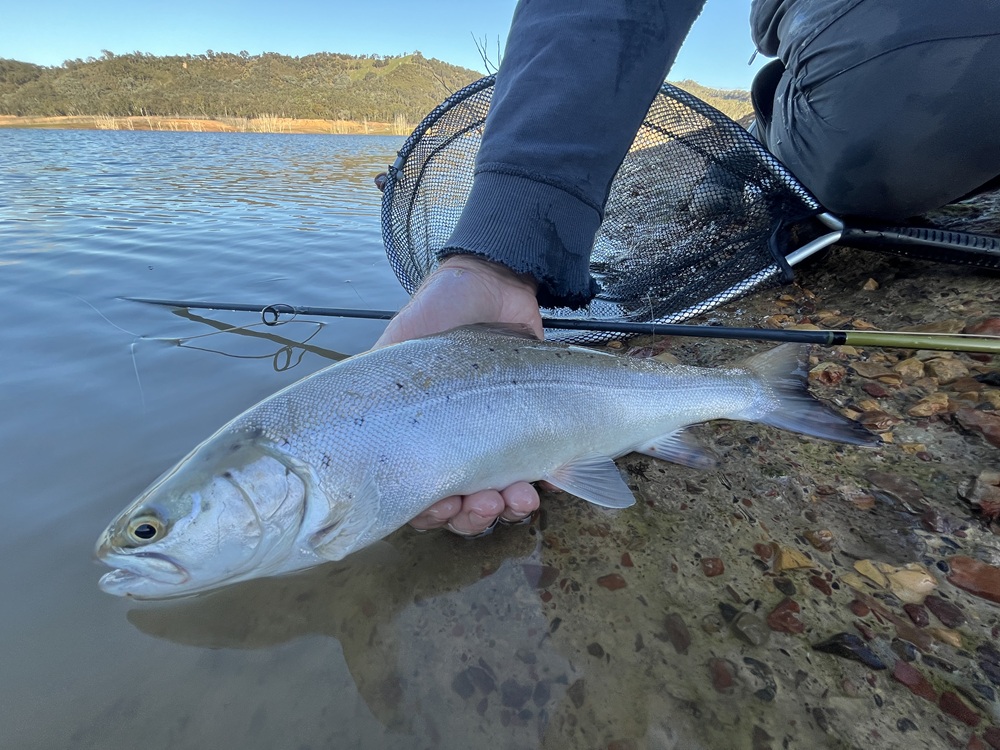
I reckon these trout are too hard to hook for them to break off afterwards.
- Trout or redfin?
The smelting trout are uisually solo, and moving more quickly and violently than redfin. The redfin, usually operating in groups, tend to ‘push’ through the smelt rather than charging or somersaulting. (The slower-moving redfin are also much easier to cover and therefore to catch.)
- Flies
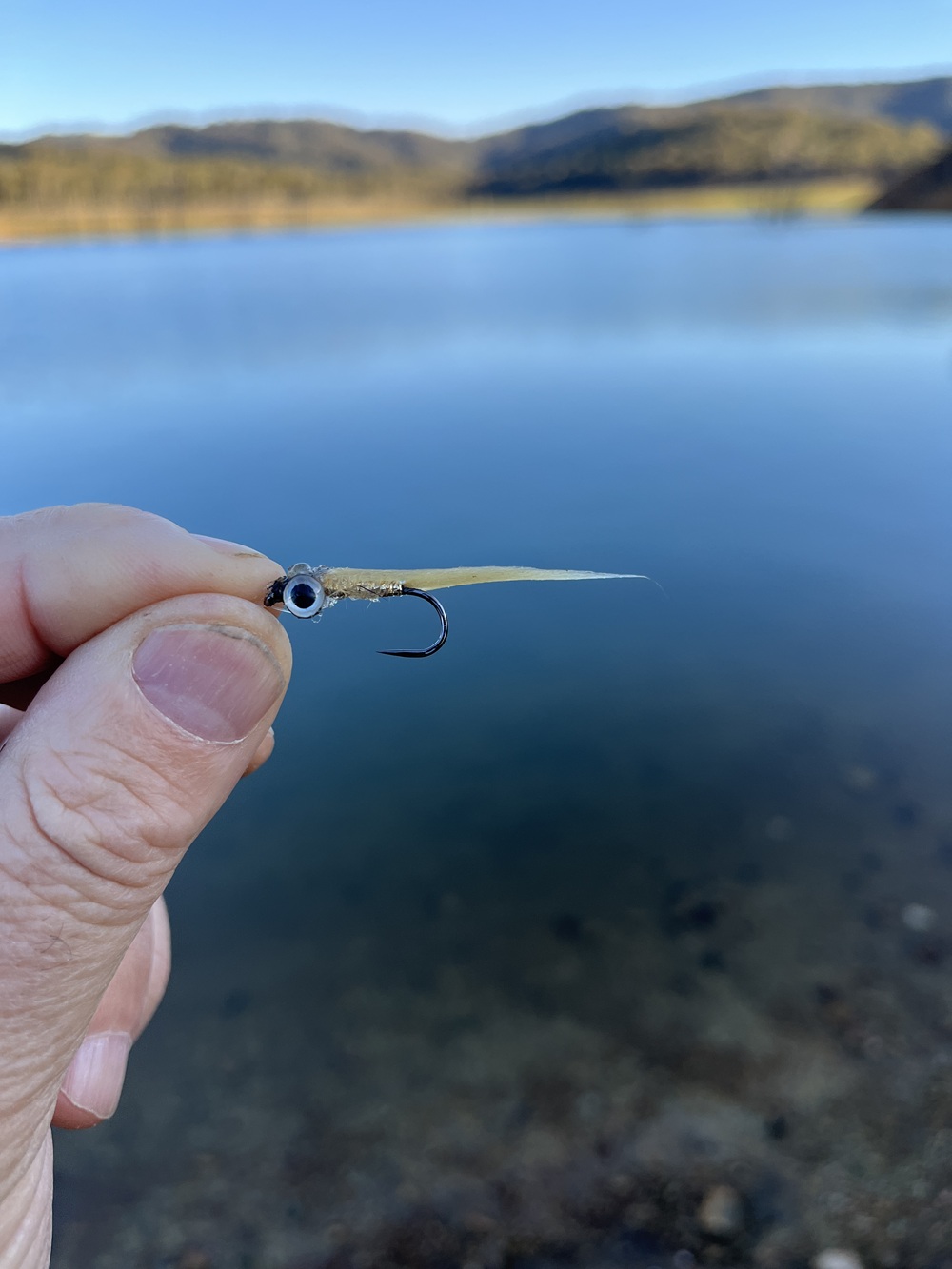
I suspect there’s no single magic fly for smelt feeders. So far, for the Eildon fish at least, the life-sized pattern JD ties with obvious eyes and a silver body seems to have an edge – although some trout still followed it without eating. Having spent half a lifetime down the smelter ‘rabbit hole’, I can suggest lots of patterns and theories, but no foolproof flies!
- Presentation
This is the most important bit. If you can get your fly in the area of a smelter while it’s still nearby with a quick, accurate cast, it greatly improves chances of a take. There’s still some luck involved: if the trout doubles back to mop up, you’re more likely to catch it. If it heads to another area, not so good! Slow or steady retrieves rather than fast are the best bet: real or fake, crippled ‘smelt’ stand out to the predators.
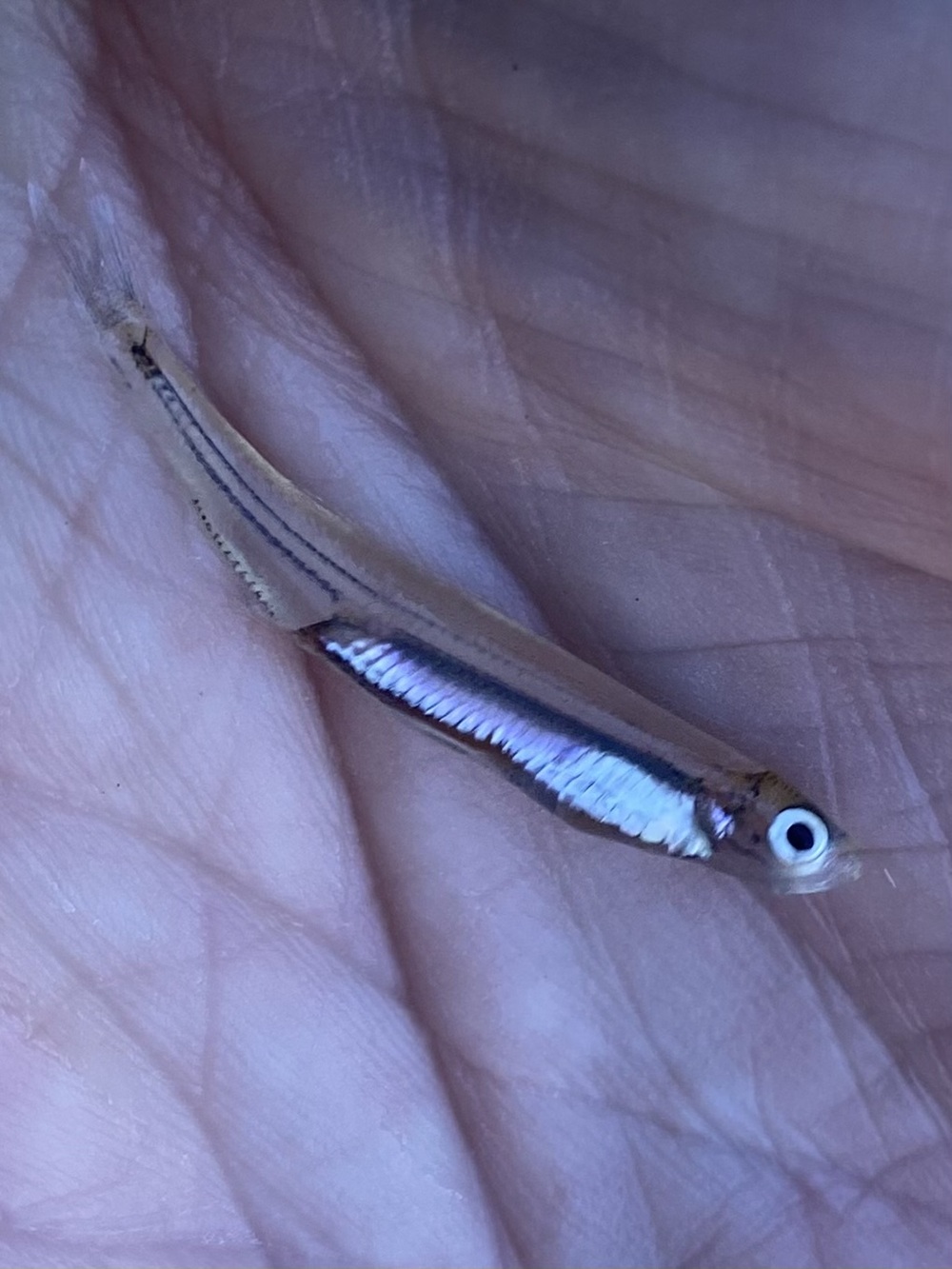
Trout food in the millions.
- Times & locations
As I’ve often found over the years with Australian smelt, gentlemen’s hours tended to be best (roughly 10am to 4pm at this time of year). Keep in mind though, even during this period, the smelters can clock on and off apparently at random. We wandered into one lovely-looking bay midafternoon without seeing a sign of a trout. Eventually we gave up and decided to head elsewhere, only for a smelter to erupt in the middle of the bay. We spent the next hour chasing several, with barely a break in the action.
We fished a number of points and bays on the western shore of Eildon, more due to physical proximity than anything, and we found smelt – and smelters – in most places, from the edge of submerged cliffs, to shallow bays. Even at 42%, Eildon is a vast waterway, and I expect the action would be very widespread. Endless opportunities to explore!
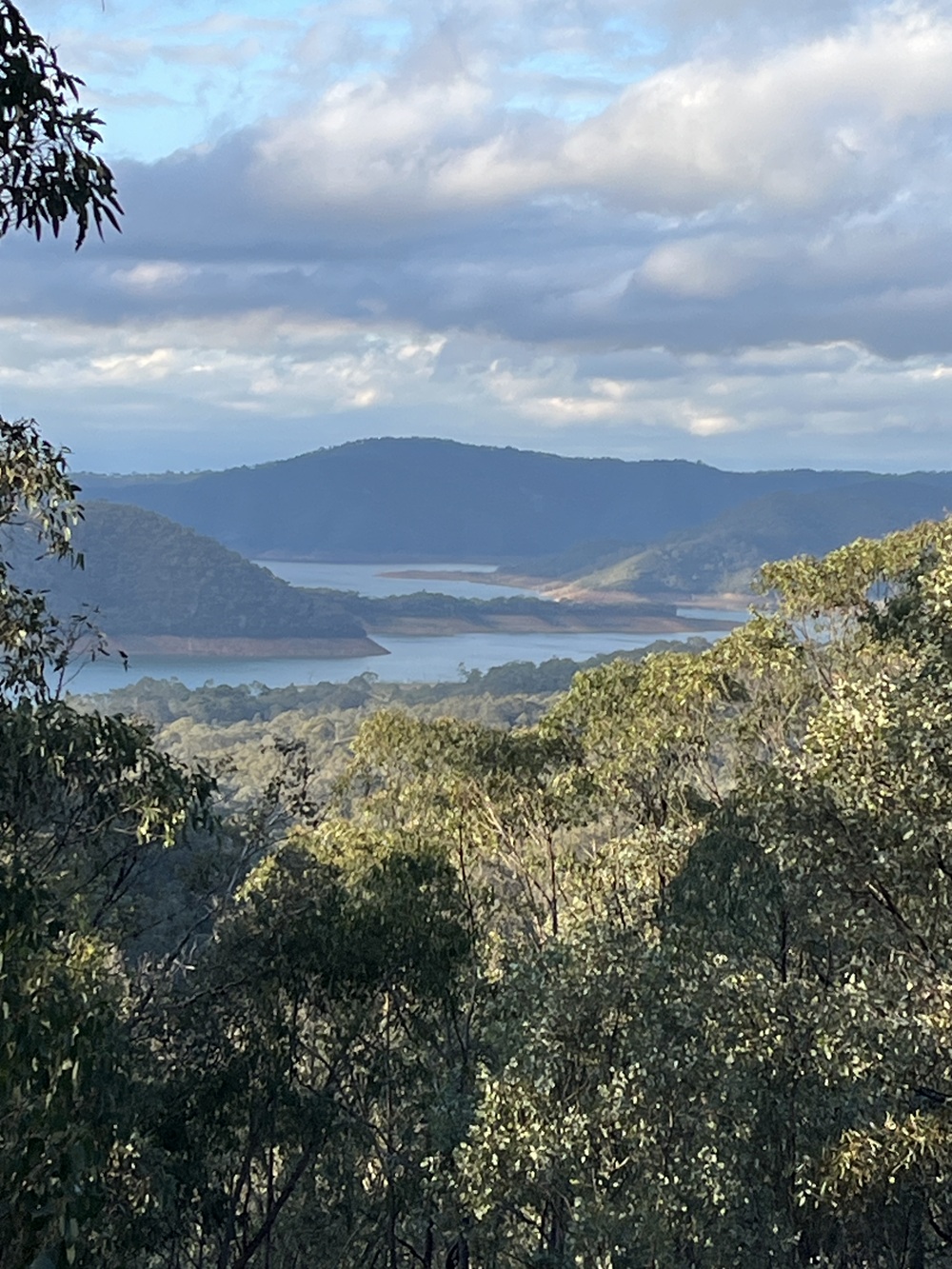
Endless potential.


