






In the world of fly-tying, there is a generally accepted process to be followed when tying a fly. This includes winding tying thread around the shank of the hook, and then using the thread to lash different materials to the hook shank. This sequence has been followed by fly-tyres for a few hundred years.
However, in all fields of human endeavour, there are gifted individuals who possess the ability to look at an accepted process and reimagine it, thereby coming up with a whole new method of doing something.
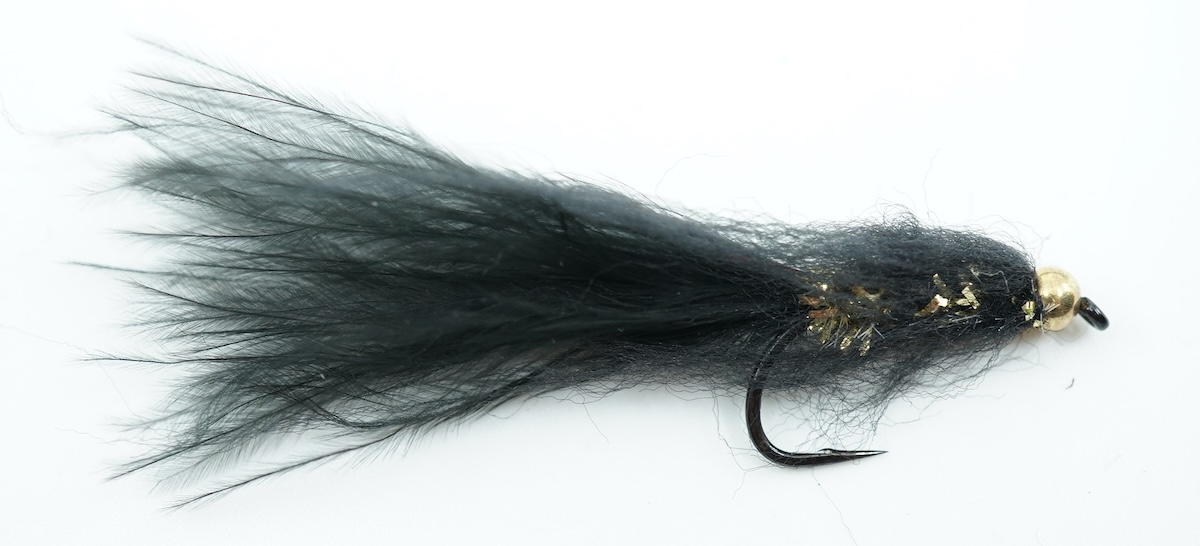
Murray ‘Muzz’ Wilson had this talent, and he applied it to his fly-tying. One example Muzz developed was a technique he called ‘fuzzling’. This enabled him to tie a different version of the extremely popular fly, the Woolly Bugger. Muzz christened the result the Fuzzle Bugger. Muzz’s pioneering technique created a fly with excellent mobility and translucence. The base colours showed through the covering material, creating a very attractive fly.
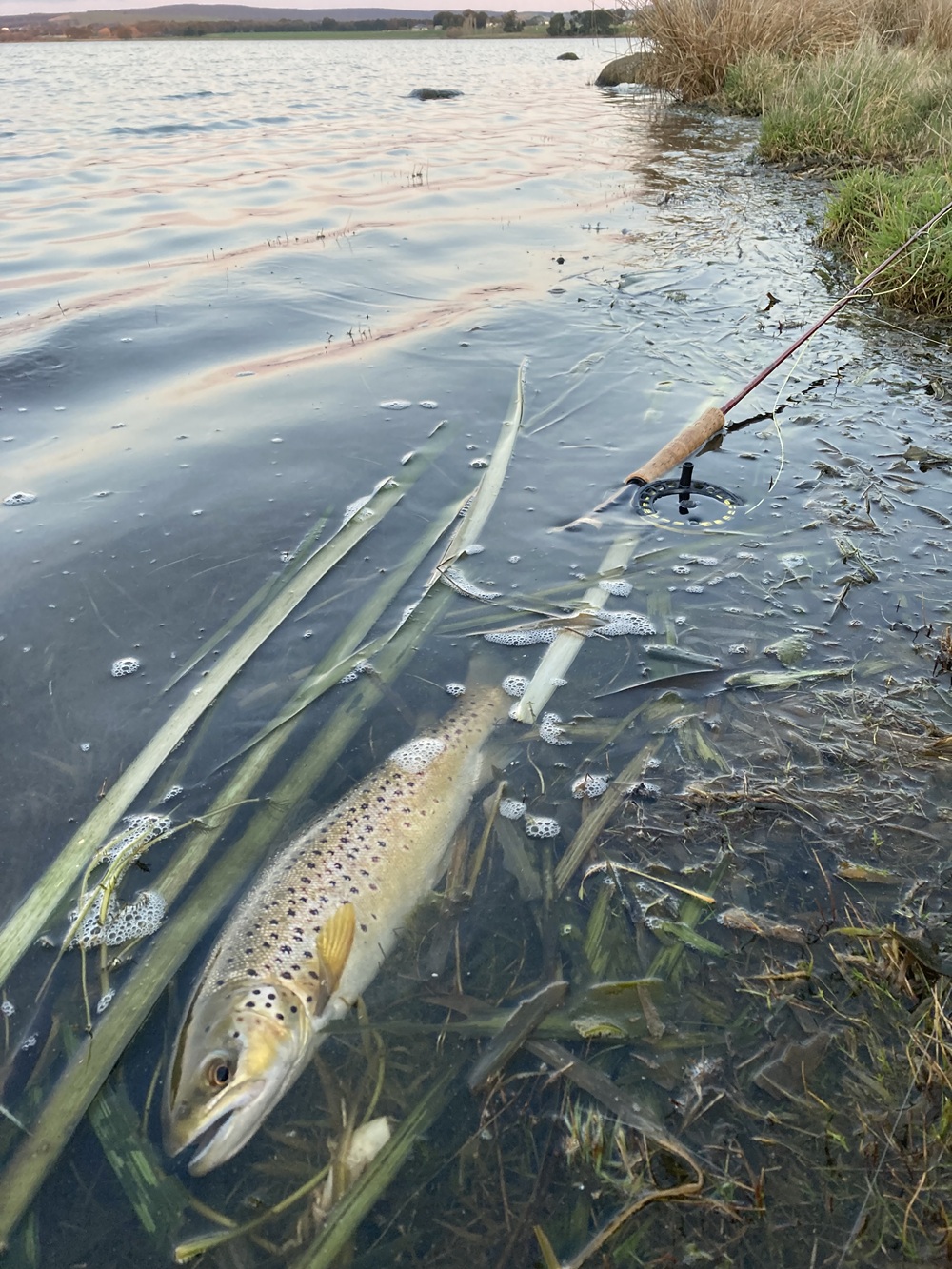
This winter smelter from Hepburn Lagoon took a lightly-weighted olive Fuzzle Bugger fished right in the shallows.
The fuzzling technique involves adding the fuzzle dubbing directly to the chenille, which is then wound around the hook shank to form the body of the fly. Velcro or a dubbing brush is then used to tease out the loose fibre in the fuzzle dubbing, creating a translucent body. Different colour combinations of chenille and fuzzle dubbing can be used to create different flies. My favourite combinations are red/black and gold/olive.
Materials
Hook – Ahrex Wet fly, size 8.
Thread – 8/0 in colour to match colour of the fly.
Bead – 3mm brass, colour of your choice.
Tail – Marabou, colour of your choice.
Body – Chenille, colour of your choice.
Dubbing – Fuzzle Dub, colour of your choice.
Tying method
1.Slide the bead onto the hook.
- Tie on a generous clump of marabou to create the tail. I like a long tail, ensuring the maximum amount of movement.
- Spin the fuzzle dubbing directly on to the chenille, then wind around the hook shank up to the brass bead and whip finish.
- Use Velcro or a dubbing brush to tease out the fuzzle fibres. I like to increase the amount of fuzzle towards the front of the fly.
With the arrival of the cooler months, the trout will be turning their attention to baitfish, and behaving more aggressively in general as spawning time approaches. This is the perfect time of year to give one of Muzz’s Fuzzle Buggers a go.


