





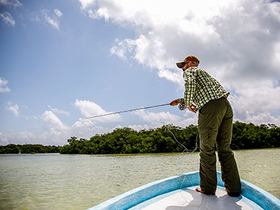
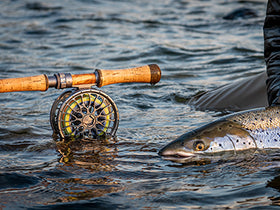

Hooked up during exceptional dry fly action in November.
“The song ended but the melody lingers on.” Irving Berlin’s quote resonates as I stroll past my tying bench. The 2025-26 river trout season has ended but my bench, covered in the remnants of the trout season's fly-tying, is a record into the past. Like an archaeologist, I can dig through the fragments of fur and feather on the bench and uncover a record of the season’s activities. The stubs from partridge feathers, a few random tungsten beads, an assortment of excess dubbing, discarded hackle feathers and bits of deer hair, in combination with short pieces of peacock herl and various tag ends from tying silk: all contribute to the story of the season just past. A Goulburn archaeological fishing timeline.
Dun-coloured dubbing and bits of grey hackle
The dun-coloured dubbing and grey hackles were from the Kossie dun fishing we had in early November.
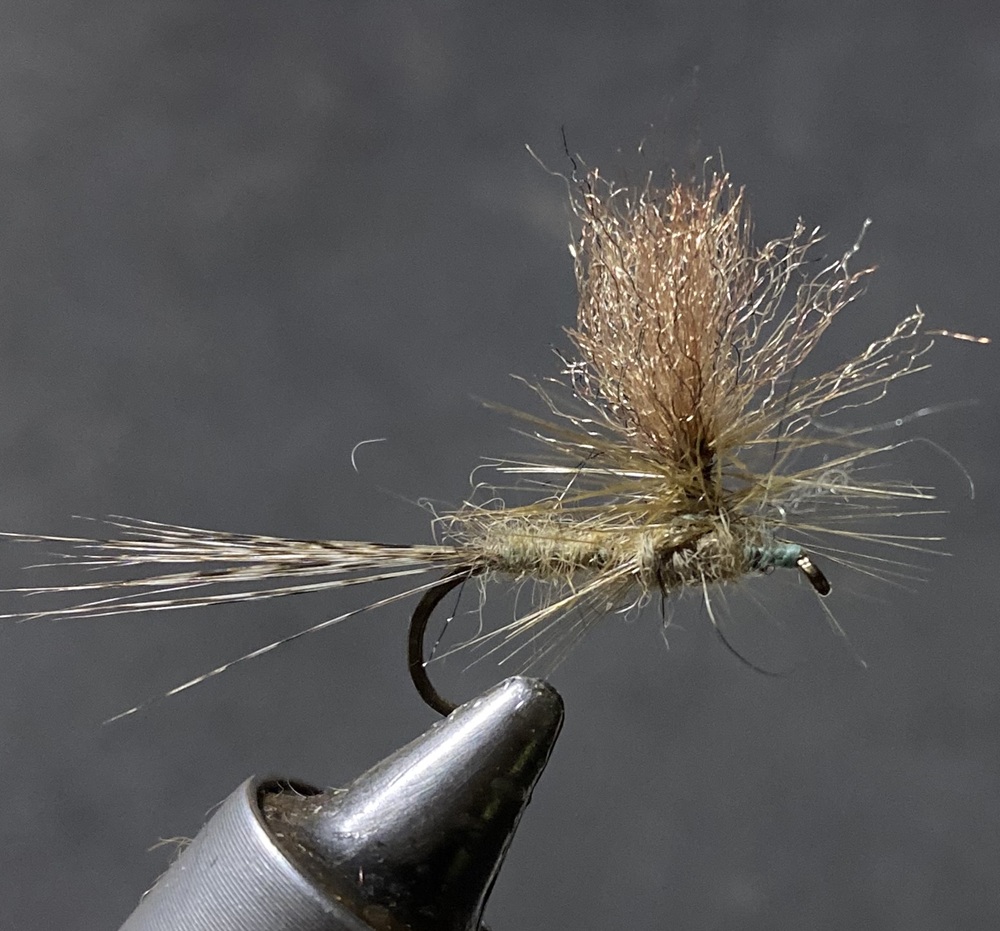
A successful Kossie Dun on the bench.
The Kossies were great! Who doesn’t like hatching Kossie duns and the frantic last light action they provide? Great-conditioned fish sucking down the large duns was an absolute highlight.
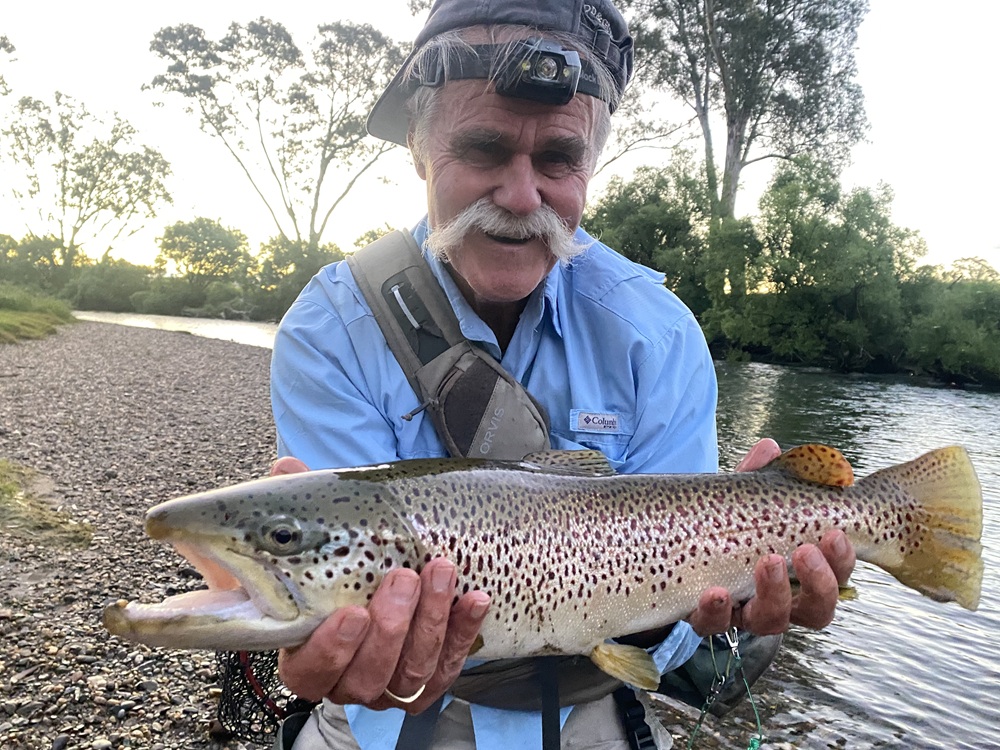
One of several beauties from the Kossie dun hatch period in November.
This sort of hatch doesn’t always happen on the Goulburn, but when it does – like it did this season – bliss!
Small hackle feathers and partridge feathers
On the bench, smaller hackle stubs, the relics of brown, red and grey dubbing fluff hinted at the fishing through November and early December. Tying smaller caddis flies and mayfly flies for the more typical, but often patchy, evening rises. Sometimes a small soft hackle did the deed when the others failed. The changing Goulburn flows are always an unknow with how the fish will react and sometimes it can be a struggle, and evening rises just don’t really happen. At these times it was important to take your chance if one was presented.
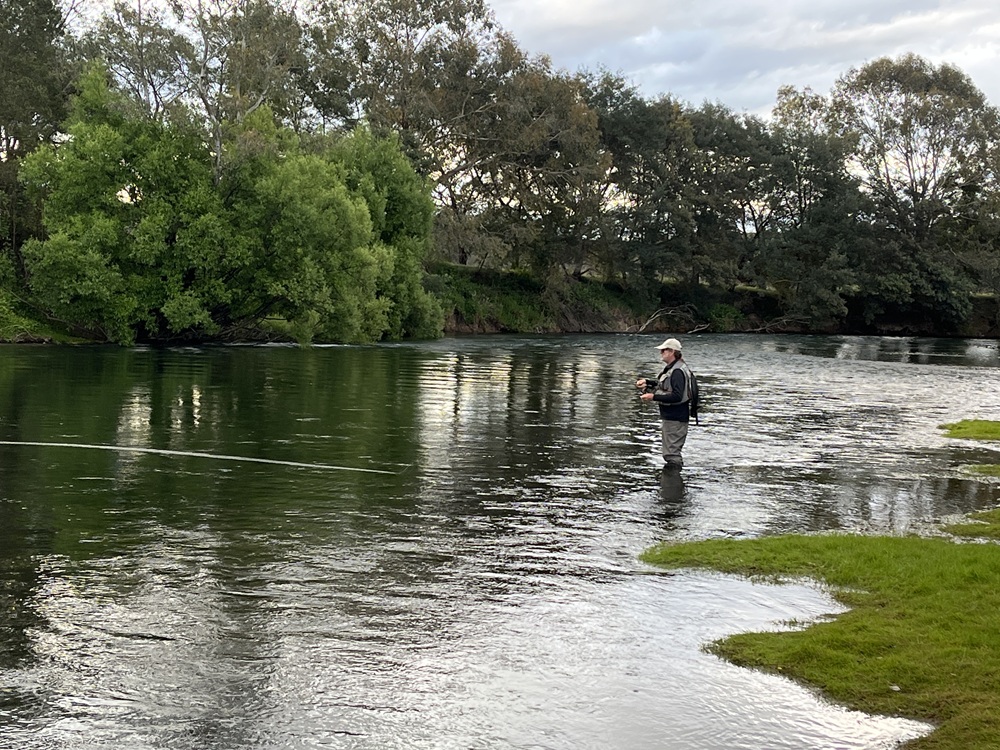
Some 'first half 'evenings were prolific; others sparse with maybe only a couple of chances
A strong memory from these ‘first half’ evenings wasn’t a success story. While standing hip deep in a high river on a rather quiet fishing night, a mate answered his phone. Chatting away and lazily casting his Grey Wulff one handed, the call was interrupted when the fish of the night ate his offering. With one hand holding the phone and one hand trying to play a good fish… the outcome was not a triumph! While the scene was highly entertaining for the watcher, it was not so enjoyable to the phone call recipient. Even now, well after the event, he is still scarred by the loss.
The fly bench remnants and associated packets of small hooks also remind me of some great action to daytime rising fish which occurred at times. This was the more technical side to Goulburn River flyfishing. While there were often patches of regularly-rising fish, catching them was not certain and often required the progression through a range of small to medium duns of varying colours, and sometimes unweighted soft hackle flies.
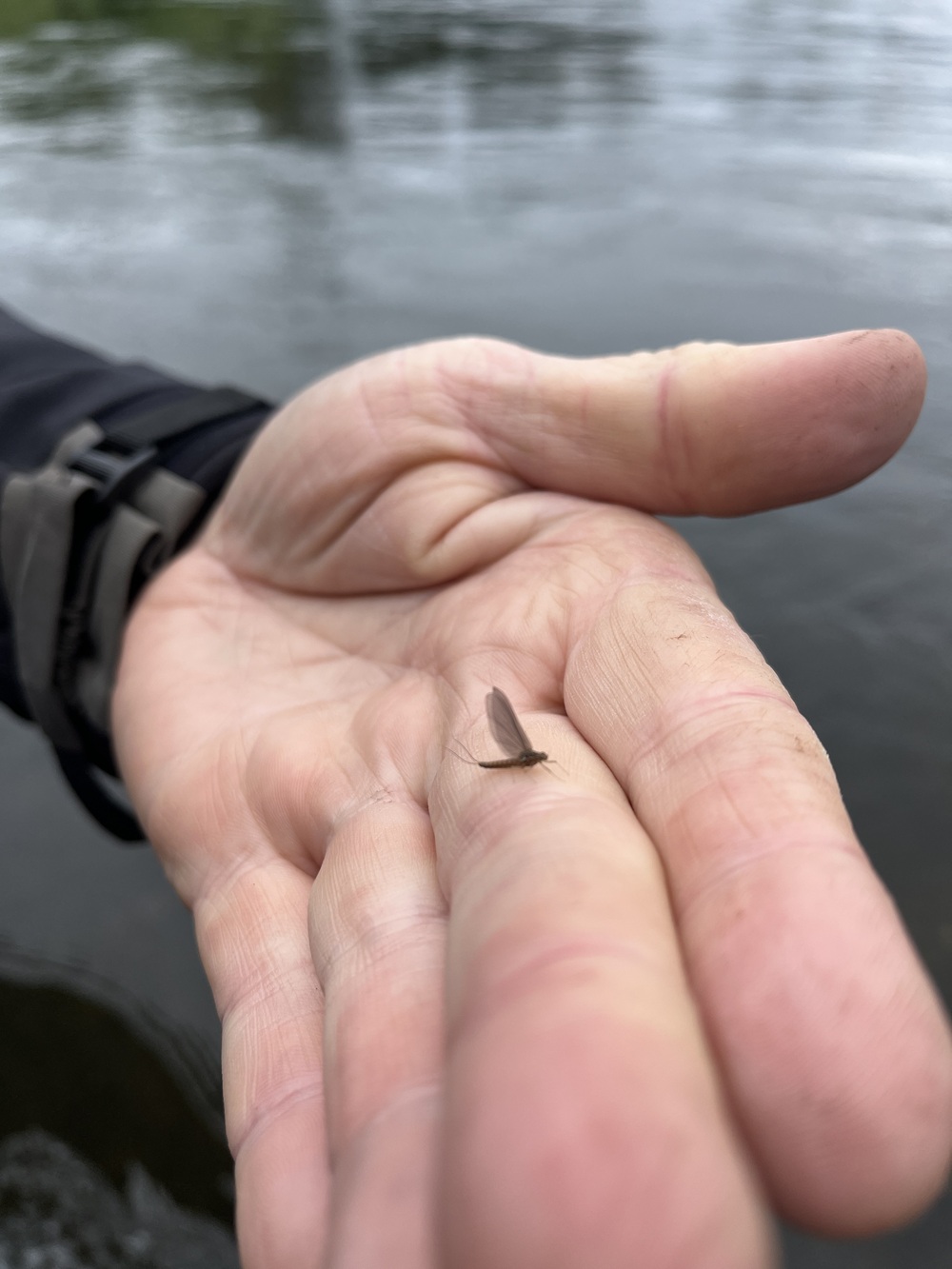
Daytime rise generator.
In these situations every fish caught was a win, but for me, not too many wins, and a lot of knot-tying. Not all history is good.
Black foam and orange feathers
Pieces of orange feather, black foam offcuts and short lengths of barred rubber legs have accumulated under my fly vice. These are the leftovers from the cicada flies. In contrast to the technical flyfishing, cicadas offered such a relief. The cicada fishing in December/January was so much fun and having a huge dry fly smashed off the top is pretty close to as good as it gets.
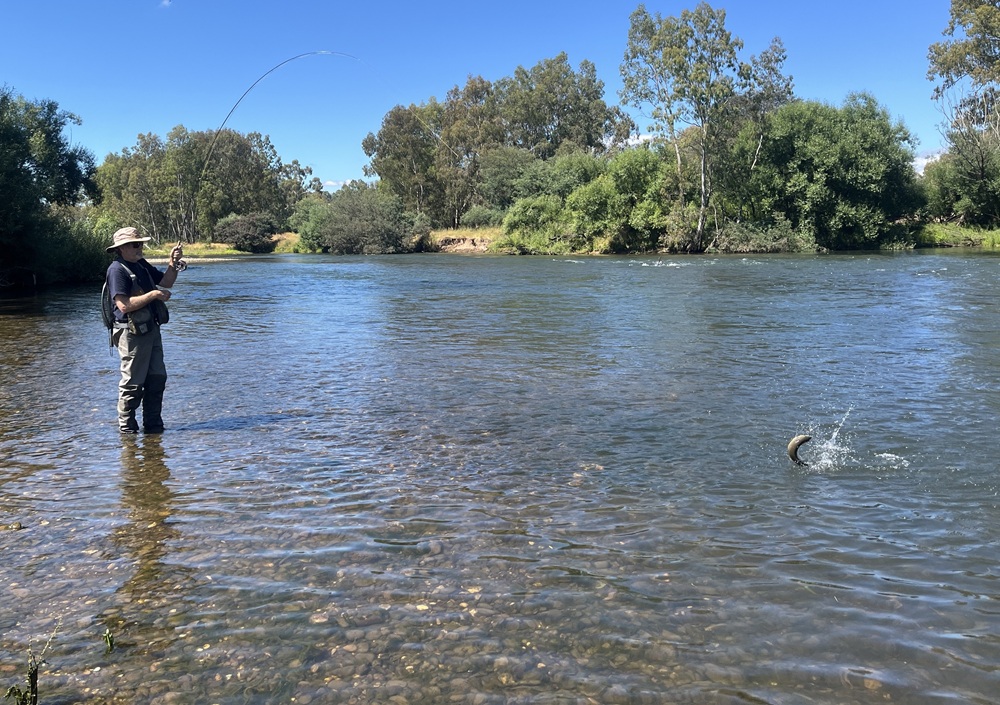
December cicada action.
Big offerings were presented and willing trout were looking up and keen to grab them. Not numbers, but quality. A season highlight.
Elk hair butts
The offcuts from elk and deer hair are scattered across the bench from tying caddis flies. These were really coming into their own in March through to May. If you could put a smallish caddis fly in front of a sipping fish you had a chance. Walking slow and pausing to watch into the smaller edge eddies and the larger backwaters looking for trout was one thing, but getting into position to cast the caddis to these sipping browns and rainbows was more of a challenge. It really needed a mate so one could do the spotting and describing where the fish was and telling the other when and where to cast.
Absorbing fishing. Chasing sipping trout, often highly educated fish, continued until the start of this month. Frustrating and challenging fishing that is so engrossing.
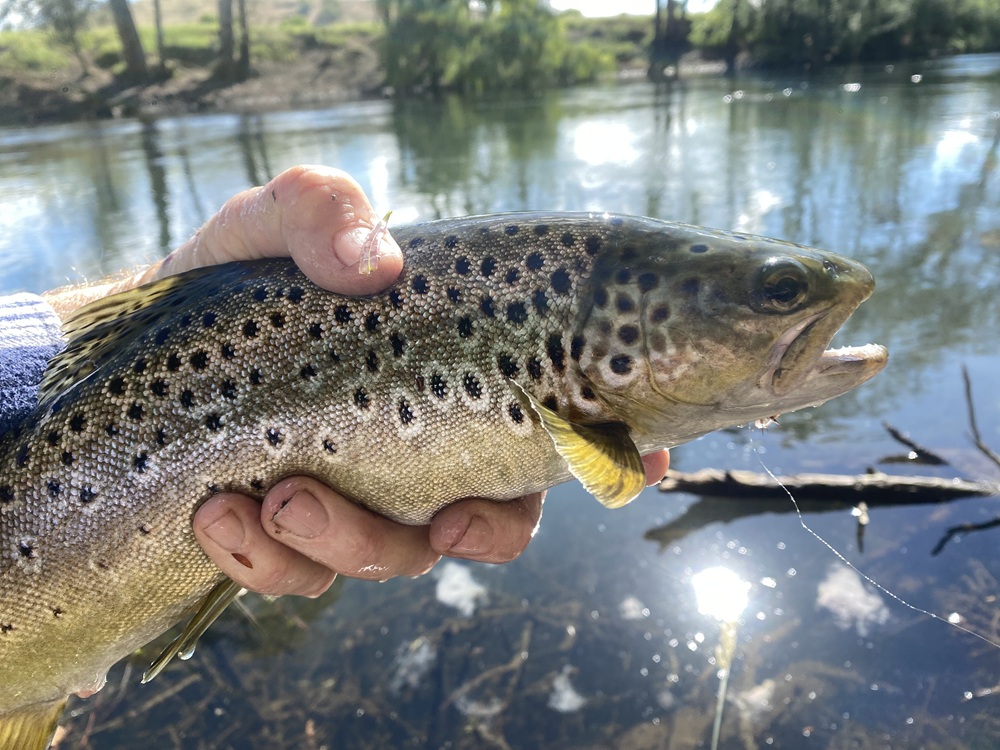
Sipper success.
The timeline of the season was complete by early June; trout were creating redds, showing it was time to give them their peace.
Season past
The fluff, feather and associated offcuts of silk and other materials all cluttered up on my tying bench are an absolute disgrace to some. The bits and pieces not only cover the bench but often spilling off onto the floor. It’s a mess. But it is a record into the past season, the same as the artifacts on an archaeological dig, and as I look at it, I do so fondly as it rekindles memories of the season past.
A Goulburn season to me is often a rollercoaster. Few Goulburn trout seasons are the same and not all trips last season were spectacular, successful or memorable. Anyway, if an angling session or trip doesn’t go to plan, I can always take some solace from the Bard. I’m not sure if William Shakespeare was a trout fisher, but he certainly seemed to ‘get it’ if this line in ‘As You Like It’ is anything to go by:
“And this, our life, exempt from public haunt, finds tongues in trees, books in the running brooks, sermons in the stones, and good in everything.”


