






Scott of the Antarctic, or Green of the Western Lakes?
I often use Benjamin Franklin’s quote as a mantra for most things in life: “By failing to prepare, you are preparing to fail”.
Although we never really fail when it comes to flyfishing because so many positive experiences are gained, preparedness can certainly increase the chances of meeting fish-catching expectations. This means acquiring knowledge to achieve a desired outcome – we all learn it, we’ve all got it, we just need to apply it. That may seem daunting, but fishers underestimate their knowledge of ichthyology, ecology, biology, limnology, physiology, entomology, hydrology, meteorology, trophology, ethology, geomorphology, and any other ology you can think of. It’s fine not to know the meaning of each of these terms, but I guarantee you use every single one of them for finding and catching fish – you possibly just didn’t know it. What is notable however, is the relative importance each ology has, and how to use it to your advantage.
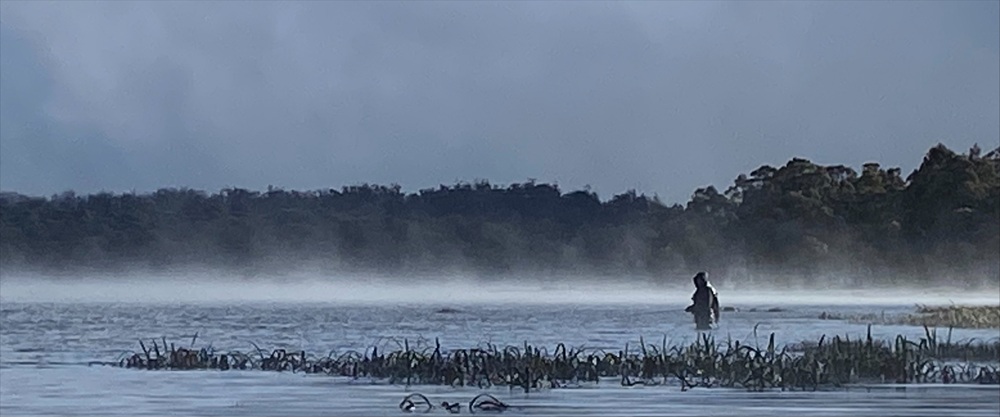
Quite a few 'ologies' are playing out in this Penstock picture.
For example, I would consider geomorphology (study of landforms and physical processes, especially river channels and habitat structure); hydrology (water movement, distribution, and properties); ethology (study of behaviour) and trophology (feeding characteristics and diet) of greater importance when fishing river systems than other ologies. While these ologies will always be dynamic, applying them based on your perceived weighting and prioritising for each, can greatly increase your chances of success – particularly in conditions not normally experienced.
In early December most years, my mate JD and I team up, board the Spirit of Tasmania and then use Miena as a base to fish the Nineteen Lagoons and beyond.
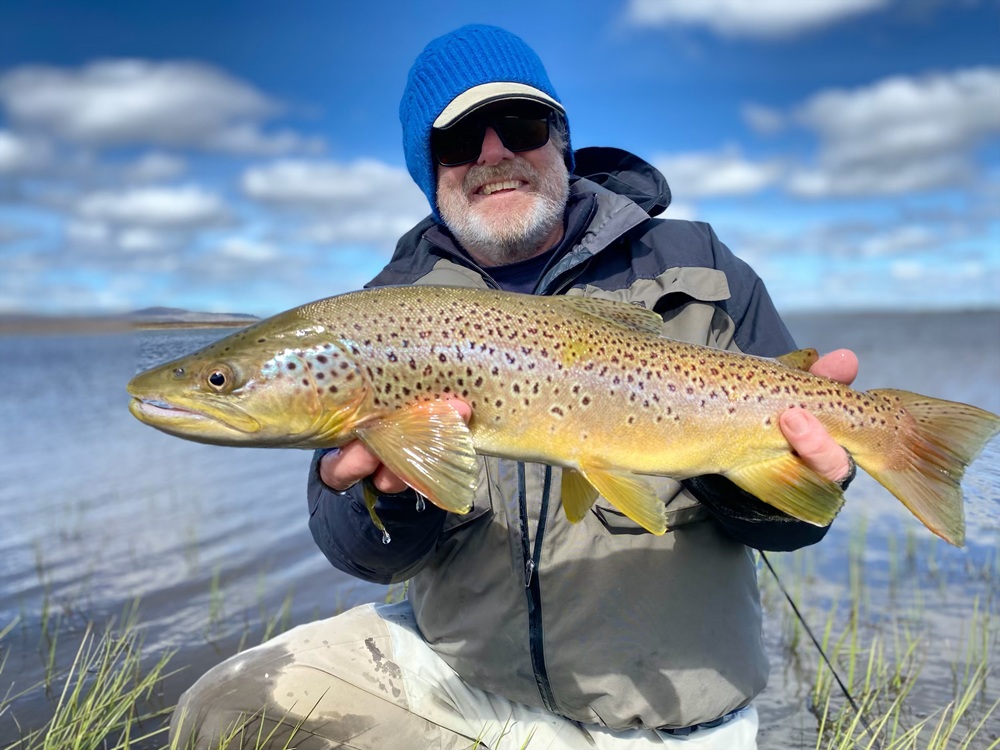
JD making the most of the relatively benign Western Lakes conditions early in the trip.
At this time of year, each high-pressure system takes several days (on average) to pass through, and we are likely to be blasted by cool temperature and WIND in between each system (meteorology). We normally plan for about a 10-day trip to give us enough of an opportunity to have some blue-sky sight fishing which high pressure systems typically provide.
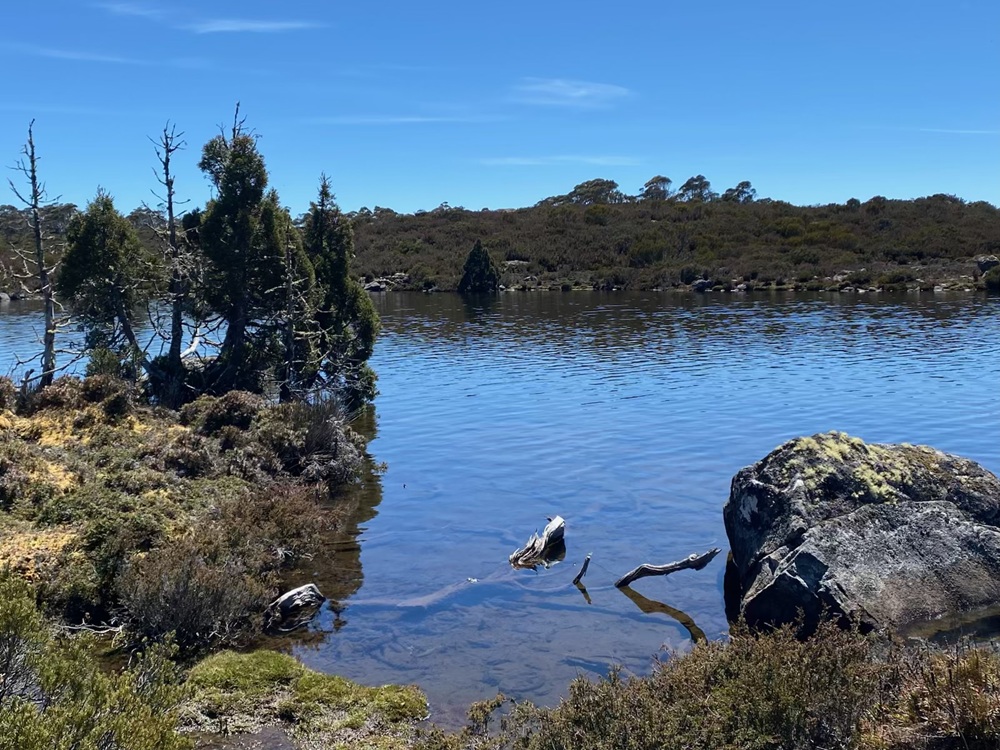
A 10 day visit should allow for at least some high pressure system/ blue sky days in the highlands, and thankfully the theory held this December.
For this year’s trip, Tasmania’s winter/ spring seemed to extend longer (seasonality / climatology) and although it was summer, we experienced a variety of adverse weather conditions that would normally stop most fishers contemplating putting the waders on (including me).
Charles Dawin wrote “It is not the strongest of the species that survives, nor the most intelligent that survives. It is the one that is the most adaptable to change”. In fishing terms, we can’t change conditions, so we have to adapt to them. When the weather was kind, we experienced some sensational sight fishing in some of the lagoons beyond the Lake Ada carpark. But one day, waking up to blizzard-like conditions, meant that we needed to employ all our ologies to come up with a plan. Sure, the lure of sitting in front of a fireplace rolling a fine single malt around the pallet was tempting in such poor conditions and could easily be justified, but fishing was always going to be a priority. The whisky would have to wait.
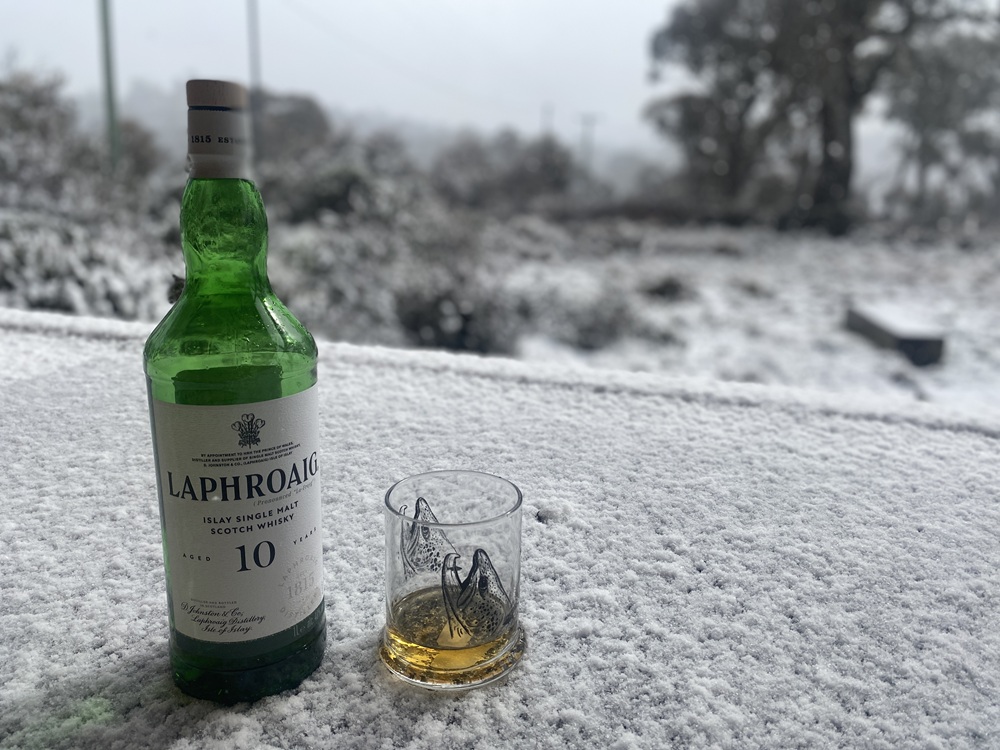
Temptation!
We arrived at our chosen destination and although morning, it was dark, blowing 20 knots, and snowing heavily. However, there was still the flyfisher’s ever-present optimism. Dressed for the conditions, we were quite comfortable and set out to observe the water. We figured that despite the weather in the outside world, the trout might be oblivious to the challenges we anglers faced, and would still be wanting to find food – possibly as much as we wanted to find a shop selling hot pies! We just needed to apply our ologies in priority order to find our fish. And that we did. On reflection, it was one of the most rewarding experiences I’ve had whilst flyfishing.
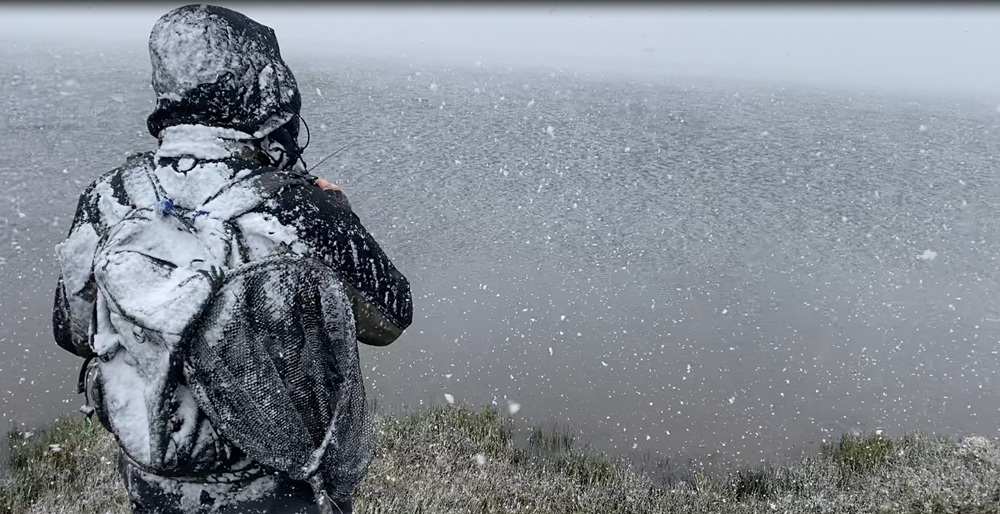
Brutal conditions - however duns still appeared, and fish still fed.
Our trip to Tasmania wasn’t just a holiday, it was a reminder that some of the richest experiences come from places where conditions change on a whim and comfort isn’t guaranteed. When you embrace the weather rather than fight it, and apply your ologies, there will always be opportunity to experience something special and learn something new. Did you know that duns still emerge at zero degrees, in howling wind and blizzard-like conditions? I didn’t.
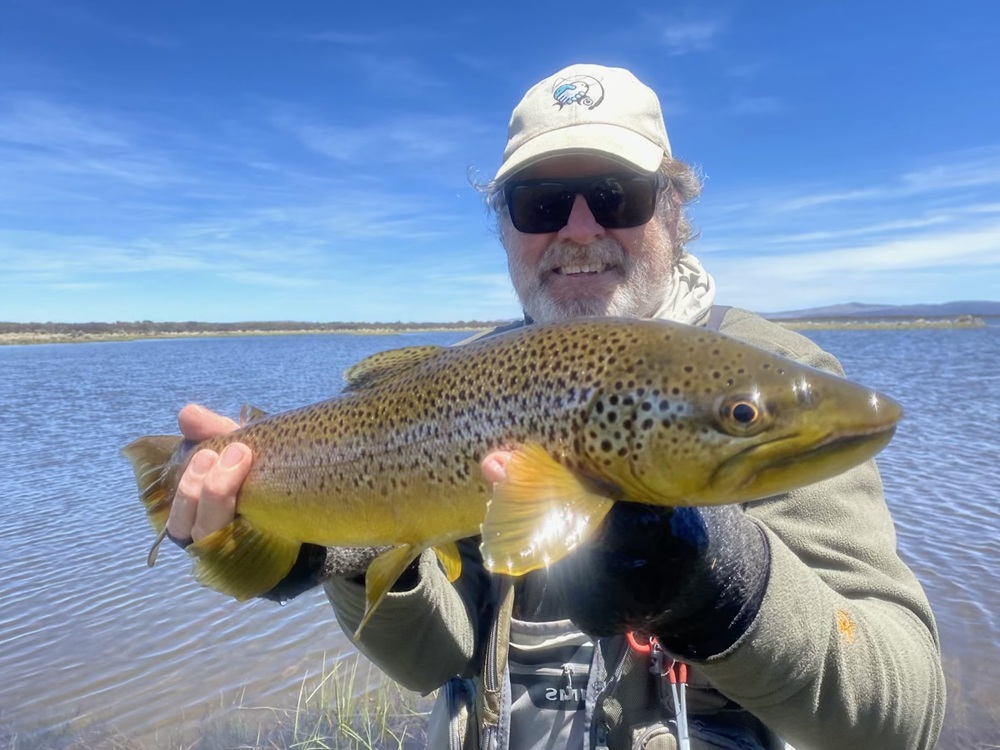
Kind weather again for the last day helped emphasise the cyclical nature of the weather in the highlands.
Remember, trout don’t get to leave when the weather turns and neither should we.


