





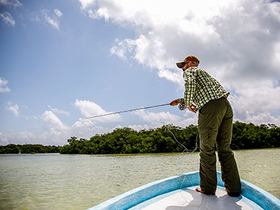
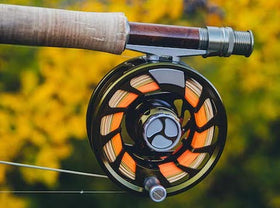
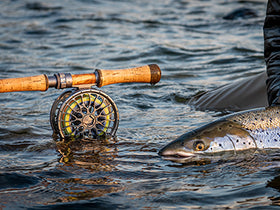

Australian salmon are an ideal species when making the shift from trout to salt - abundant, widespread, and hard-fighting.
The stream trout season has now opened here in Victoria, Tasmania and New South Wales. But during those few months when the trout are having a rest from fishing pressure, it’s interesting to hear the flyfishing conversations; especially in the states mentioned above. Over the closed season, I talk to a lot of flyfishers about where they’ve been catching, and the answer is usually the same: "The rivers are closed, so I haven’t been out fishing.”
There are the lakes of course, and some trouties have been fishing them during the river closure. However, one thing I don’t understand is how few of these anglers hit the saltwater.
Saltwater paradise on the back doorstep
After all, we live in Australia, surrounded by oceans. Bays and estuaries dotted along every coastline. Species such as whiting, flathead, Australian salmon, bream… even tuna, to name a few. All swimming around out there waiting for you to throw a Clouser at them.
So I’m writing this in the hope that someone will read it and realise you’ve probably already got most of the gear: all saltwater fish eat flies. (Except permit… I don’t believe they do, they’ve got lockjaw or something. Oh and milkfish, and bream at times.) Anyways, you can’t catch them sitting in the office waiting for the river season to open.
So why not try saltwater flyfishing?
Like I mentioned, if you already flyfish to trout in rivers or lakes, you’ve already got the right gear to give saltwater a go.
Trout gear for salt
Baby steps… don’t go from one pound trout on the Rubicon to chasing black marlin on the flats of K’gari/ Fraser Island. That might be a bit of a stretch with your trout rod & reel! I do know people who flyfish for bream with 3 weights, and bonefish with split cane rods. But baby steps, let's make it easier on ourselves.
A 5 or 6 weight rod, a reel with drag, and a floating line will be perfect for most if not all estuary fishing around NSW, VIC, TAS, SA and lower WA.
A 2X 9ft leader with 2X or 3X tippet added will be spot on for bream, flathead, whiting, salmon, luderick; even blue-throated wrasse are fun on fly.
Flies such as the Olive Magoo, Viva Magoo, BMS, Stimulators, mudeye patterns; even the ol’ Squirmy Worm will work at different times. And a lot of bream and estuary perch have fallen to small trout dries during a termite fall.
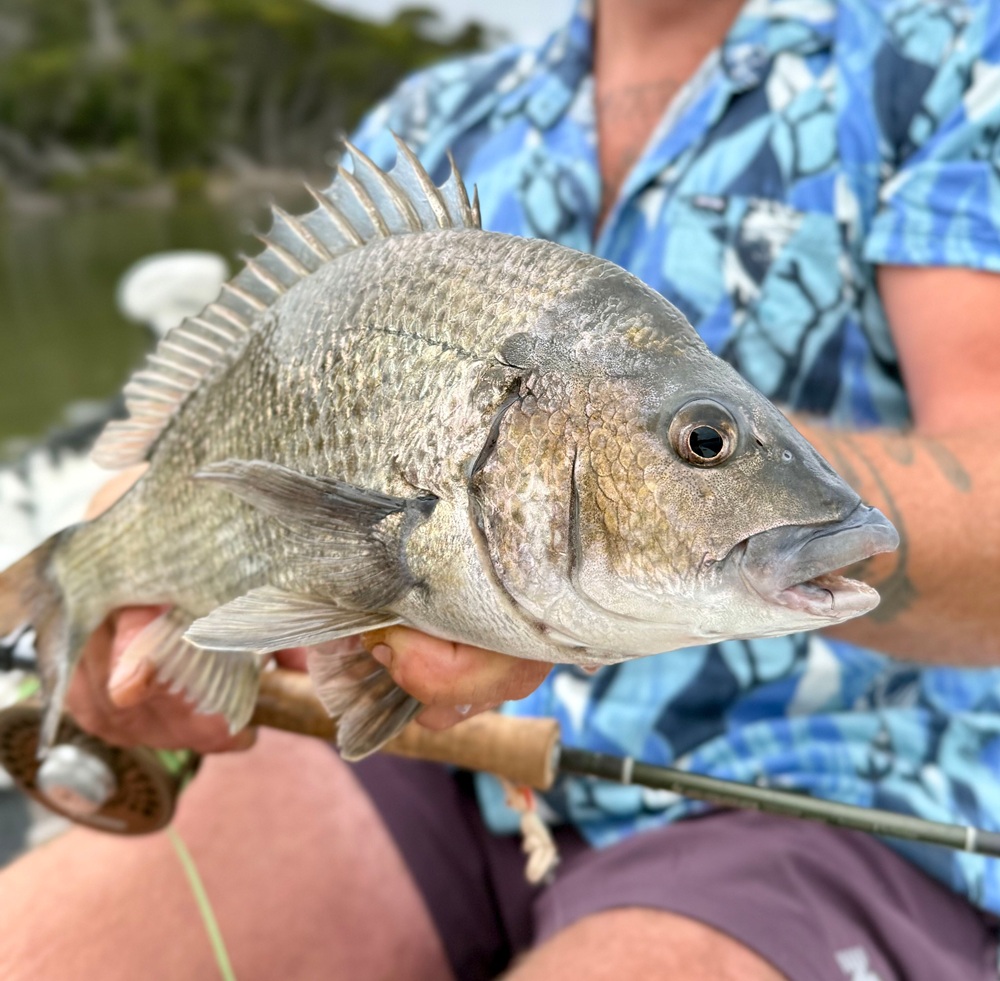
Bream will happily eat many of your trout flies, fished on your trout gear.
Baby steps, grab your 5 or 6 weight, tie on a Magoo and strip it along a rocky edge in the Maribyrnong River or one of Sydney’s harbours. Much the same as a strip for a trout. Let it sink down, long strip, pause, long strip. The Magoo could look like a small baitfish to bream or EPs.
Take the family for a drive down to Fairhaven, get fish and chips, and sneak a cheeky fish in on the Painkalac Creek, or do the same on the lower Derwent.
A short drive east of Melbourne you have the Tarwin River loaded with bream and EPs, or east of Adelaide, the Onkaparinga and its bream.
I bet most of you drive further to fish a trout stream.
Salt tips
Some key tips when getting into saltwater flyfishing:
- Gear Care Wash your gear down after every use in salt water; if you step the game up and buy into some sealed drags, and salt component rods, you’ll still be washing them down. It’s fine to use trout gear in salt, just take care of it.
- Striking This would be one of the hardest parts of flyfishing in the salt to get used to after trout fishing: NO TROUT STRIKES. You’ll need to STRIP set the fish; more of a tug on the line rather than lifting the rod tip. Most saltwater species have hard mouths and eat facing you. Lifting the rod will pull the fly out of their mouth.
- Retrieves To some extent, you’ll still need to ‘match the hatch’. No real point fishing a Glo Bug to tuna eating baitfish… (the buggers will probably eat it, but you know what I mean.) Try to fish your flies like the food that’s in the water. Shrimp, baitfish, crabs, even weed. Ticks and sinks for shrimp, natural drifts for weed flies. Long fast strips for a fleeing baitfish.
Species
A few species to target when starting out in the salt:
- Bream, both southern black bream and yellowfin bream. Mostly caught in or around estuaries. Brackish water around rocky reefs, mangroves or reedy edges. Retrieves ranging from little tics to long slow draws. You will usually want the fly to get down in the water column. Flies such as the trout flies already mentioned, plus Clousers, BMS, BMS Hammerhead, Spawning Shrimp, Disco Shrimp.
- Flathead, of which there are many different species, inhabit nearly every coastline. Dusky flathead are found in estuaries and coastal bays from Cairns to the Gippsland lakes here in Vic, living over sand, mud, gravel and seagrass. Oceanic flathead such as tiger, sand and bar-tailed flathead are generally found more offshore over sandy grounds. Flathead spend most of their time hunkered down in the sand or mud, ambushing prey as it swims past. Retrieves ranging from fast strips with pauses, or long slow draws. Very important to get your fly near the bottom in front of the fish. If you can fish a heavier fly, bumping it off the bottom, you’re in the game. Flies such as the trout flies already mentioned, plus a variety of Clousers, weighted shrimp patterns, and poppers if fishing water under a metre deep. (The flathead below is from Andersons Inlet - an excellent saltwater fly destination not far from Melbourne.)

- Australian salmon are a cool water fish native to Australia and NZ, ranging from lower parts of QLD right down and around the coast to southern WA. Tasmania included. Large numbers of these fish can be found near the shore, and in the estuaries, bays and harbours. These guys love a fly! Try retrieves such as roly poly, fast strips and long strips. As well as the trout flies mentioned, once again try a Clouser and poppers. A Surf Candy can be good too.
Bigger steps
Now, as your confidence in saltwater grows, it might be worth upgrading some rods, reels, lines and tippets.
Rods & reels
If you’re going to fish the salt more it would be beneficial to get a rod with saltwater-suitable components: reel seat and guides most importantly. Most high-end rods these days come fitted with just that.
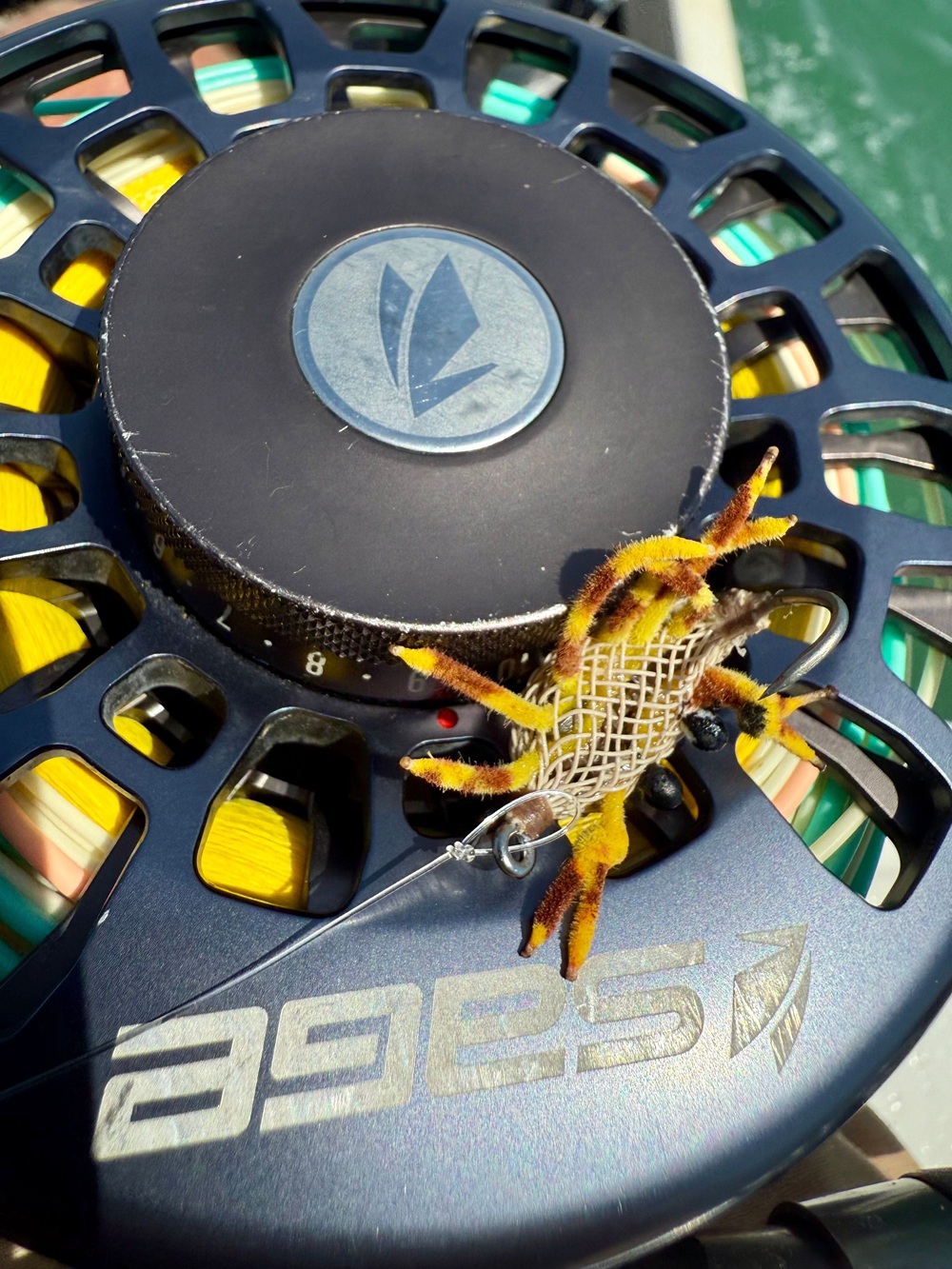
For reels, a sealed drag is good so you don’t have to worry if you dunk your setup under the water.
Fly lines
Most importantly, you may want to think about sinking lines: full sink, intermediate sink or a sink-tip. I prefer different lengths of sink tips, that way I don’t have to worry about my running line sinking at my feet if fishing from the bank.
Where you’re fishing should determine the length and sink rate of your line. For example, in most cases here in Victoria, I use a 6 or 12ft Di3 sink tip. (Di stands for Density Index. The numerical value following the Di represents the line’s sink rate in inches per second, e.g. a Di3 sinks at 3 inches per second.)
Keep in mind that if you’re fishing in warmer climates, like up north in the tropics, or overseas on a coral atoll, you’ll need to fish with tropical flylines. These are designed with a stiffer monofilament core and a harder coating to maintain rigidity and slickness in warmer temperatures. Unfortunately, a cooler climate trout line would turn into a wet bit of sticky spaghetti up north, making it very difficult to cast and manage.
Backing
Backing takes on a whole new meaning when you get into serious saltwater flyfishing. It’s very important to have at least 300 to 500 metres of backing on that upgraded reel. Fish such as bonefish, permit and giant trevally to name a few will go for huge runs, even to the point where you might have to chase them down with a boat.
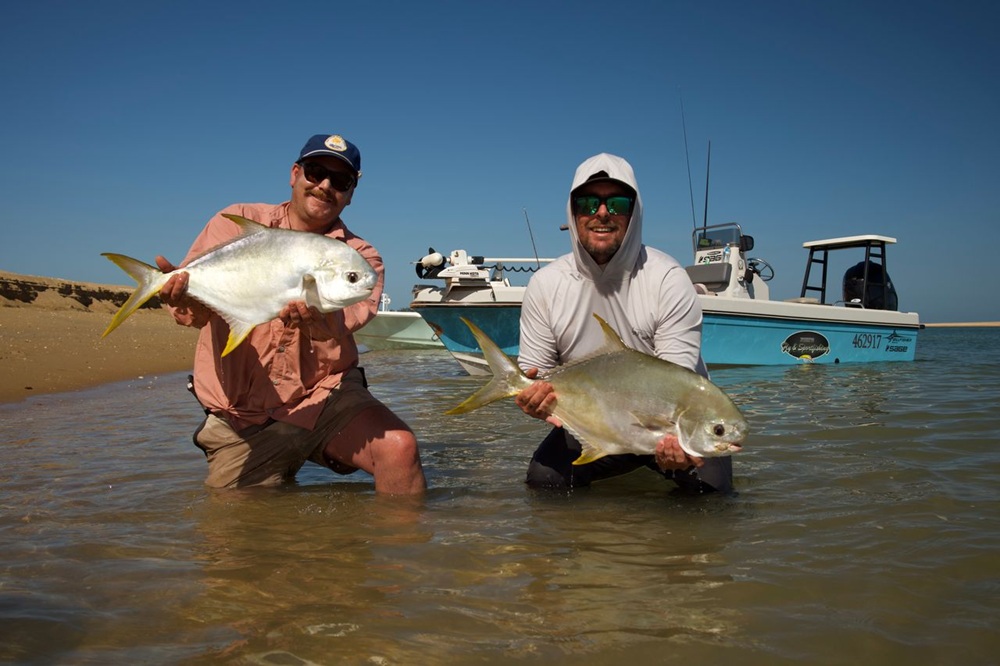
Backing takes on a whole new significance when you hook species like permit. (Turns out they do eat a fly after all!)
30lb to 50lb gel spun will be perfect, and your local fly shop can put this on with a reel winding machine.
Tippet
Obviously, if you’re stepping up the salt game, you’ll have to think about tippet and leader sizes for different species.
To break it down somewhat, and looking at trout tippet for comparison, i.e. 2X, 3X, 4X, 5X, some salty examples are:
Bream – 1X, 2X, 3X.
Australian salmon – 1X, 2X, 15lb.
Bonefish - 1x,16lb, 20lb.
Triggerfish - 16lb, 20lb, 25lb.
Tuna - 25lb, 30lb, right up to 80lb.
Barramundi - 20lb, 30lb, 40lb.
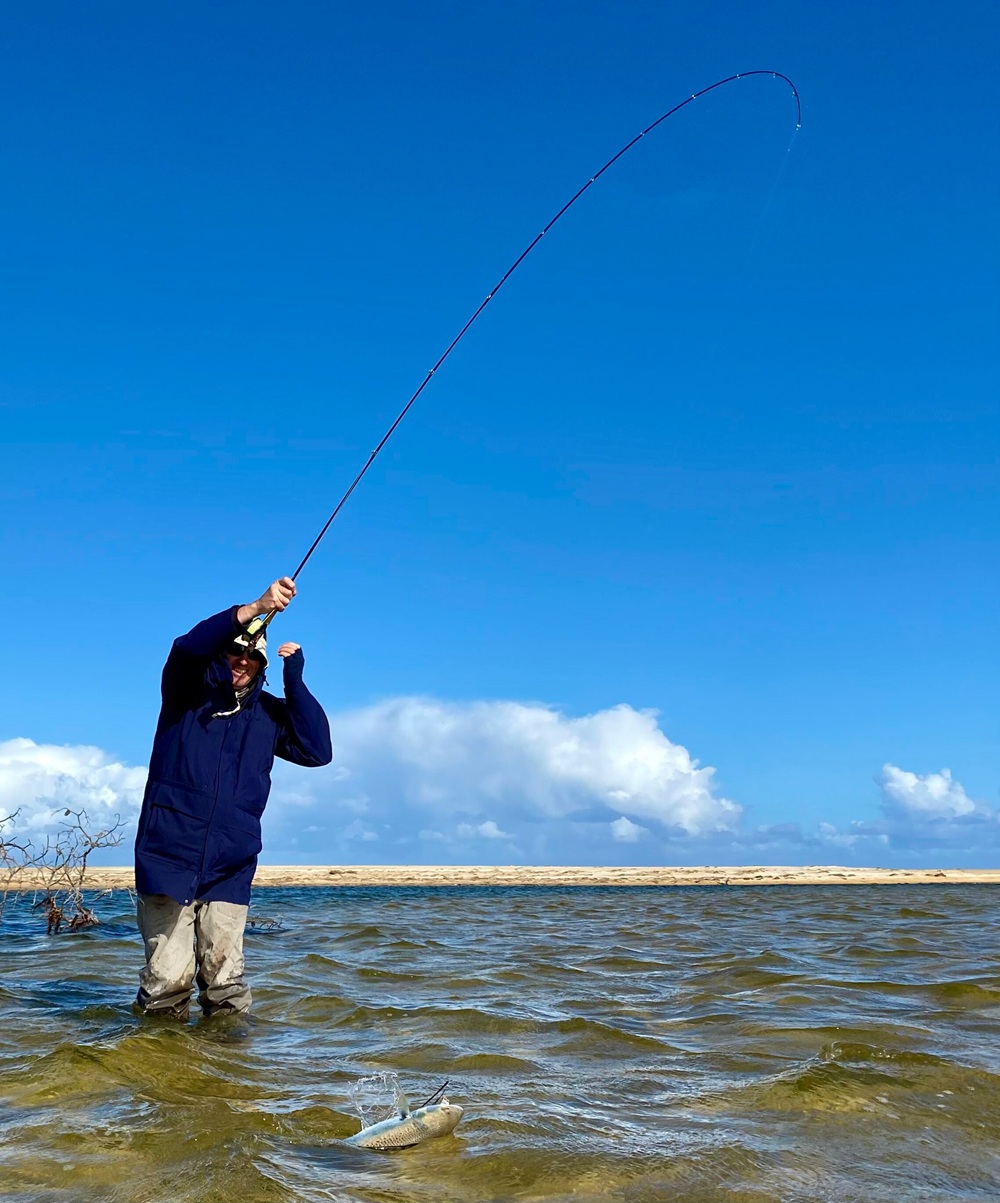
A decent salmon is going to push the upper range of your trout tippet.
As an all-round tippet material, I prefer fluorocarbon for its abrasion resistance, being less visible underwater for those spooky fish, and it sinks quicker.
Salt steps
One of the good things about getting into salt when you’re already a trouty is, you can do it at your own pace. You have the basic skills and some entry-level gear, so you can choose to take you time focusing on the ‘bread & butter’ saltwater species, or you can enter an accelerated program towards big ‘glamour’ species like kingfish, tuna, permit, trevally and bonefish – and gear up accordingly. Or, maybe something in between. Anything is good – just as long as you’re not locking the fly gear away when trout are temporarily off the menu.
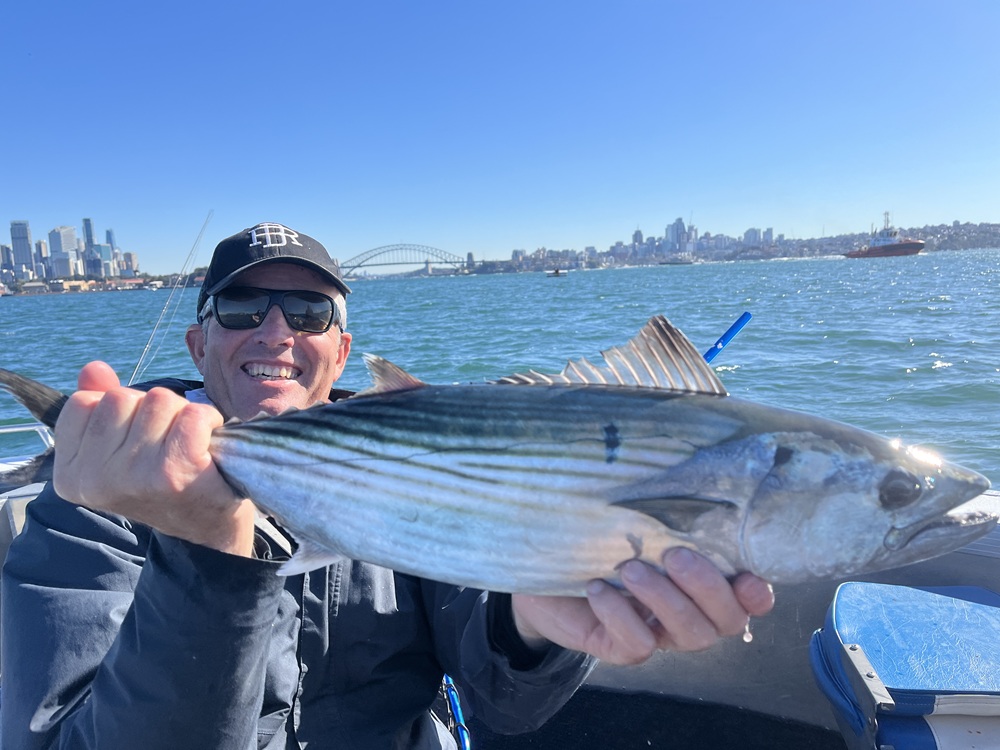
A long way from trout, but not far from home.


