





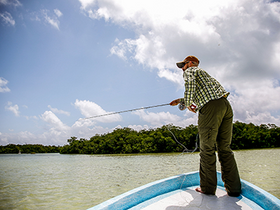
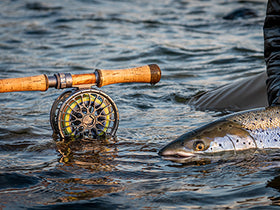

Many readers would be aware that my flyfishing has been heavily influenced by competition fishing. For those who have tried competition fishing, you would recognise the anticipation in seeing your river beat for the first time. Especially when fishing in foreign countries, you would have limited knowledge of the type of water you may draw.
All anglers, whether they be in competitions or not, have their preferred fishing methods and we all hope we will find suitable water for those methods when we explore a new place. However, hope as we might, the river in front of us is what we have to work with. So in order to be successful, we need to employ the fishing methods best suited to water we have. This is particularly important for the competition angler, as he or she can’t simply walk on to water they would prefer. Simply put, your beat is your beat and no amount of complaining or self-pity is going to change that.
I think some of the most difficult parts of a river to consistently fish well, are the long glides leading to the tail-out of a pool. We are all familiar with those shallow, clear, smooth pieces of water, further complicated by the accelerating current as we move closer to the tail-out. Upstream presentation is difficult here, requiring longer casts and perfect mending. Many anglers simply walk on past, which by definition means this type of water is more lightly fished over the course of a season. Something to think about?
I used to avoid this kind of water as well. However, my experiences in competition fishing have taught me to embrace it, particularly the tail-outs where the current starts accelerating. Swinging a team of soft hackle flies through this water can be extremely effective and has given me many good results over the years.
So when I come across these long glide/ tail-out sections, the first fly I confidently tie on is a Partridge & Orange Spider. It’s such a simple fly, and yet it has probably caught me more fish in rivers than any other.
Materials
Hook - Ahrex FW524, Tiemco TMC2499SPBL or Hanak H150BL, all size 12.
Thread – Black 8/0
Body – Orange floss
Rib – Fine gold wire
Hackle – Partridge chest feather (I prefer English partridge.)
Tying Method
1.First tie in your gold wire to the bend of the hook.
2. Next, tie in the orange floss and wind forward to 2mm behind the hook eye, forming a smooth body.
3. Rib with the wire, winding in the opposite direction to the floss.
3. Tie in the partridge feather by the tip, winding in 3 turns while ensuring the natural camber of the feather cloaks around the fly, not out. This can be a little tricky as some feather seem to have a mind of their own irrespective of how you tie them in!
4. Finally, whip finish and apply a small amount of clear head cement.
I’m particular about the hooks I use for this fly, as trout hooked downstream of the angler are (annoyingly!) more likely to get off. Using the circle-style hooks I have recommended above improves your conversion rate by about 10 percent.
Also, I like the Pearsall’s Orange floss silk for this fly. However, it is no longer made and therefore difficult to get hold off. So if you can’t find the Pearsall’s product, simply use a bright orange colour – but not fluoro – as a substitute.
Fishing it
I use a 4 weight 10ft single-handed rod, or 3 weight 11ft trout Spey rod when swinging small wet flies. The extra length gives the angler better line control.
With the single-handed rod, I use a floating Spey line, combined with a 5ft intermediate poly leader. The tippet is around 1.2m, with a dropper 900mm from the point. Breaking strain/ diameter will depend on the size of fish being targeted. Usually, I use .16mm tippet.
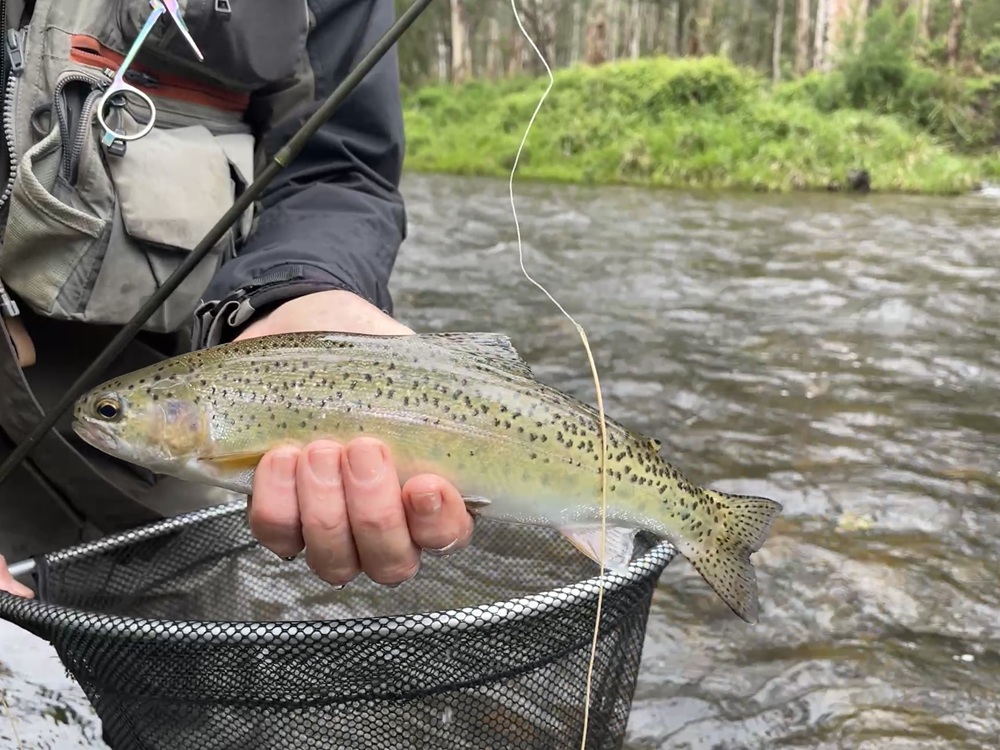
Spring success swinging a soft hackle on the Howqua.
For the Spey rod, I prefer a Scandi head, usually combined with a 7.5ft intermediate poly leader. The tippet set up is the same as for the single-handed set up.
I like to fish the Partridge & Orange on the point, and another soft hackle on the dropper – or a beaded nymph depending on the depth and speed of current. People argue that putting the heavier fly on the point helps with presentation, which is correct. However, I believe the flies fish better with the unweighted fly on the point.
My basic technique is to cast at approximately 45 degrees downstream, swinging the flies across and down the river. Slowly and patiently working downstream enables you to methodically cover every piece of water.
Using this fly and technique becomes quite an addictive (and effective!) way to fish.


