

.JPG)
The high country lakes can provide an interesting change from the 'big three', although negotiating steep and treacherous slopes can be required!
It's been windy, occasionally stormy, and with an odd flood in the mix. Nothing that anyone who fishes the Snowy Mountains would think unusual, but still, it's the persistence of the wind that's different. It’s been relentless: hour after hour, day after day, with hardly a moment's respite. There are wind-weary fishers heading in earlier in the day before it gets stronger, as it seems to pick up at lunchtime. Then they head out again once the wind lulls on dusk. But even the change of wind direction that happens so often as the sun sets, seems fickle, not typical. The flotilla of small tinnies usually zipping around the lake are pretty much grounded as the white caps and the swell roll down the arms of the lake, reflecting and refracting off the rocks into confused and broken water.
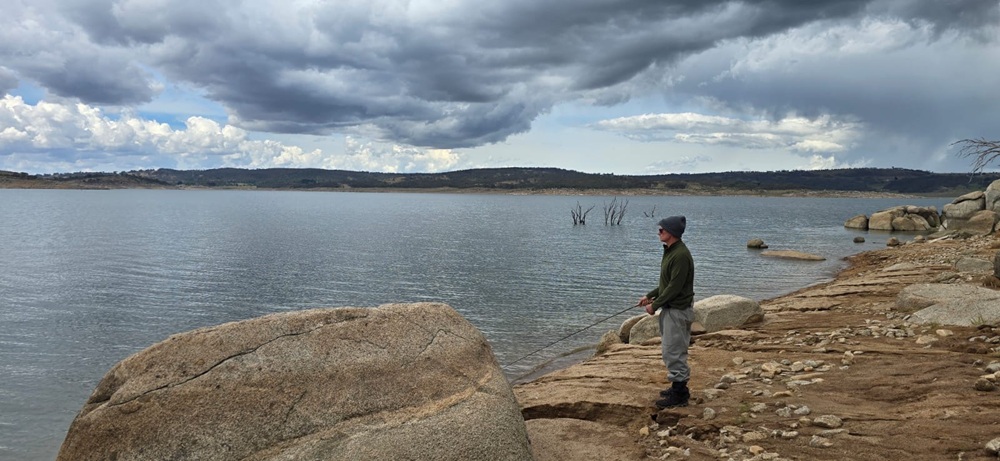
Storms building on Lake Eucumbene.
During my recent 6-day trip with Editor Philip (see Lake Eucumbene’s dragonfly feeders), we spent a fair bit of time hiding from the wind. Over the years, we've become good at dodging the weather in general. One year, I recall weatherman-Weigall spotting a hole in a massive thunderstorm rolling through the mountains and out onto the Monaro plains. This hole got us three hours of safe and dry fishing on Black Lake, whilst everyone else was back in their cabins.
Murrumbidgee
During the worst wind day of this trip, with gusts over 100 km/hour, we sought shelter in the deep valley of the Murrumbidgee River below Tantangara Reservoir.
We've always done well on this water, even though it's physically demanding to fish well, with algae-covered boulders, groin-height tussocks spanning wombat warrens, and aggressive hikes up and down the hillsides that are borderline rappel-worthy. The effort paid off, even though the wind still found its way into the gorge, more than once threatening to blow us off a boulder and into the river. We both caught fish in the first half hour, Phil a brown, me a rainbow, and we continued to build up steady numbers over the rest of the day. Every pool and every run held a few fish.
.JPG)
Hooked up while escaping the gales on the Murrumbidgee (or trying to)!
Some small, but mostly larger, and the biggest, a four-pound brown that swallowed my size 12 red tag elk hair caddis. I'd let the fly drift slowly down a deep edge of a large pool. The fly had just stopped in a boulder eddy. I saw the shape coming, saw the fly hammered, and struck into a fish that immediately went aerial. Then, it decided to head downstream. I had to tighten up before it hit the reeds and weeds, and thanks to the 2X tippet I at least got my fly back, albeit now useless with a straightened hook. Philip’s fly of choice was a Royal Wulff and he caught the last two fish of the session in the dam wall tailwater before we headed back to Lake Eucumbene for the evening rise.
Evening rise
Those two words, evening rise. How I miss saying them, dreaming about them through the long winter and spring months. Well, I can announce that there were abundant midges, sometimes joined by termites, caddis, and assorted beetles on the lake. Every evening we were there, we had a great evening rise. We either fished Middlingbank or Frying Pan and saw hundreds of fish, some small, some large, and for an hour or two every night we could cast to a riser almost each cast. That did not however, translate into netted fish. We didn't really crack the code, but we did get fish and we had a lot more plucky-chances. Griffiths Gnat and black/brown midge pupa attracted the most interest, along with black beetles. Judging by the lack of audible commentary from our many fellow evening rise bank fishers, I suspect the same story applied. The fish are definitely on, but they're not full-on just yet.
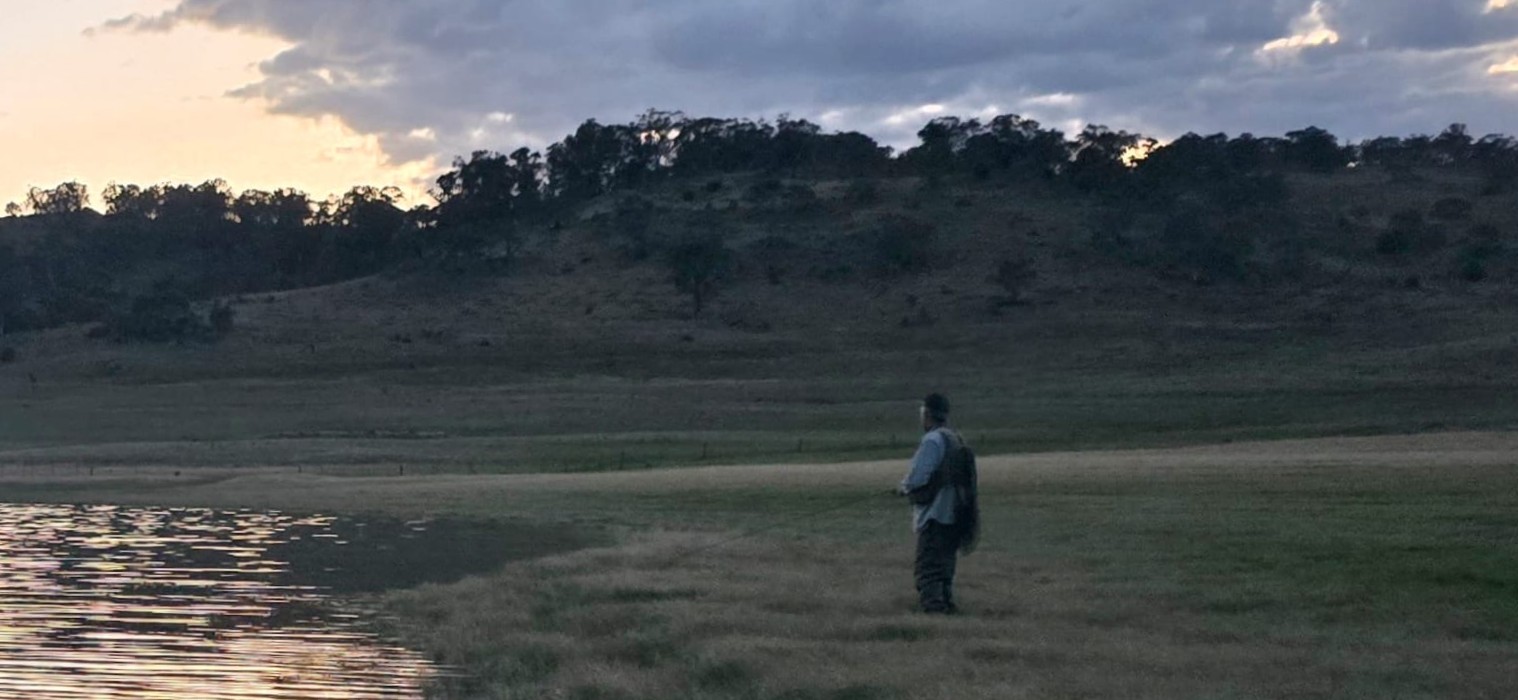
The evening fishing is shaping up nicely.
The terrestrial fishing experience on Lake Eucumbene was much the same. We saw plenty of fish, but whilst Phil zenned himself into the dragonfly feeders with patience, persistence, timing, and presentation, we mere mortals could only watch on, but smug in the knowledge that it really feels like it's about to kick off and the editor will be safely back in Victoria! Our best day, when Rod Allen joined us, netted us a team effort of 15 fish, with Rod catching half. Well, it was his birthday!
I’ve had credible reports of mudeye fishing after dark, and of a cleaned fish from Frying Pan being full of Christmas Beetles. On one evening at Middlingbank, right on dark, the seagulls were taking Christmas Beetles on the wing and I definitely heard a few distant gloops.
High Country
I got to pick the day we headed for high country water. If you're in the Snowies for a few days, don't overlook the prospect of fishing the smaller high-country lakes like Geehi,Tumut Ponds, Guthega, and Island Bend. For me, high country lakes are all about the less wind, the better, and polaroiding the fish first. While I will blind fish these dams if I have to, I rarely do well. But a big dry, like a PMX, or a Henneberry Hopper when the grasshoppers are on, will nearly always bring a polaroided fish up to the fly. In these high-altitude conditions with shortened growing seasons, big fish have to be opportunistic. There are no consistent hatches on these lakes, yabbies are very scarce if they're there at all, they are nutrient-poor, crystal clear, aquatic deserts, and the fish really rely on terrestrial insects blowing onto the water for a lot of their food. Insects with big bodies and lots of twitching legs!
Up in this highest country, we've noticed that our fish sightings increase as the day goes on, peaking after lunch. On this trip, as so often happens, we were on our way back to the car when I spotted a 5lb black shape cruising from my position about 4 stories above the water. Definitely in need of a rappel, but not having one, I launched myself into the void with my companion yelling instructions into my deaf ear, as I cut an angle through the boulder-strewn slope. I couldn't go straight down because I had to stay ahead of the fish.
Ten metres from the water, still on a one-in-one slope, I watched the trout ease over a drop-off into fathomless water and disappear. I put a cast out, pretending I thought it might come back whilst I caught my breath, and then started walking along the bank. Philip saw another fish, smaller, and that too disappeared.
I put a cast out and waited for further instructions. “It’s coming up!” came the excited shout less a than a minute later. The fly was sucked down, the confused strike delayed far too long, but then good solid weight. Phil later explained that from his aerial view from the top of the hill, the fish loomed, wraith-like out of the darkness seeming to take forever to reach the fly and then just committed to it without hesitation. I love my PMX!
.JPG)
A good brown from up high.
Both Dry Dam and Three Mile Dam near Mt Selwyn, can offer exciting lake fishing, and the chance of the brown, rainbow and brookie trifecta. This trip we struggled a bit on Dry Dam, for no particular reason I can think of. We had rising fish, and the odd pluck, but didn’t land anything of size. But these dams are definitely worth a look when you feel like something different. Midge pupa, small brown nymphs, and small dries - blowfly, Royal Wullf, and Elk Hair Caddis, and hoppers - can all work well. There are sporadic dun hatches early in the season, with beetles, and of course dragonflies (you’ll see some good leapers) pretty much all summer. No watercraft on Dry Dam, but they are permitted on Three Mile.
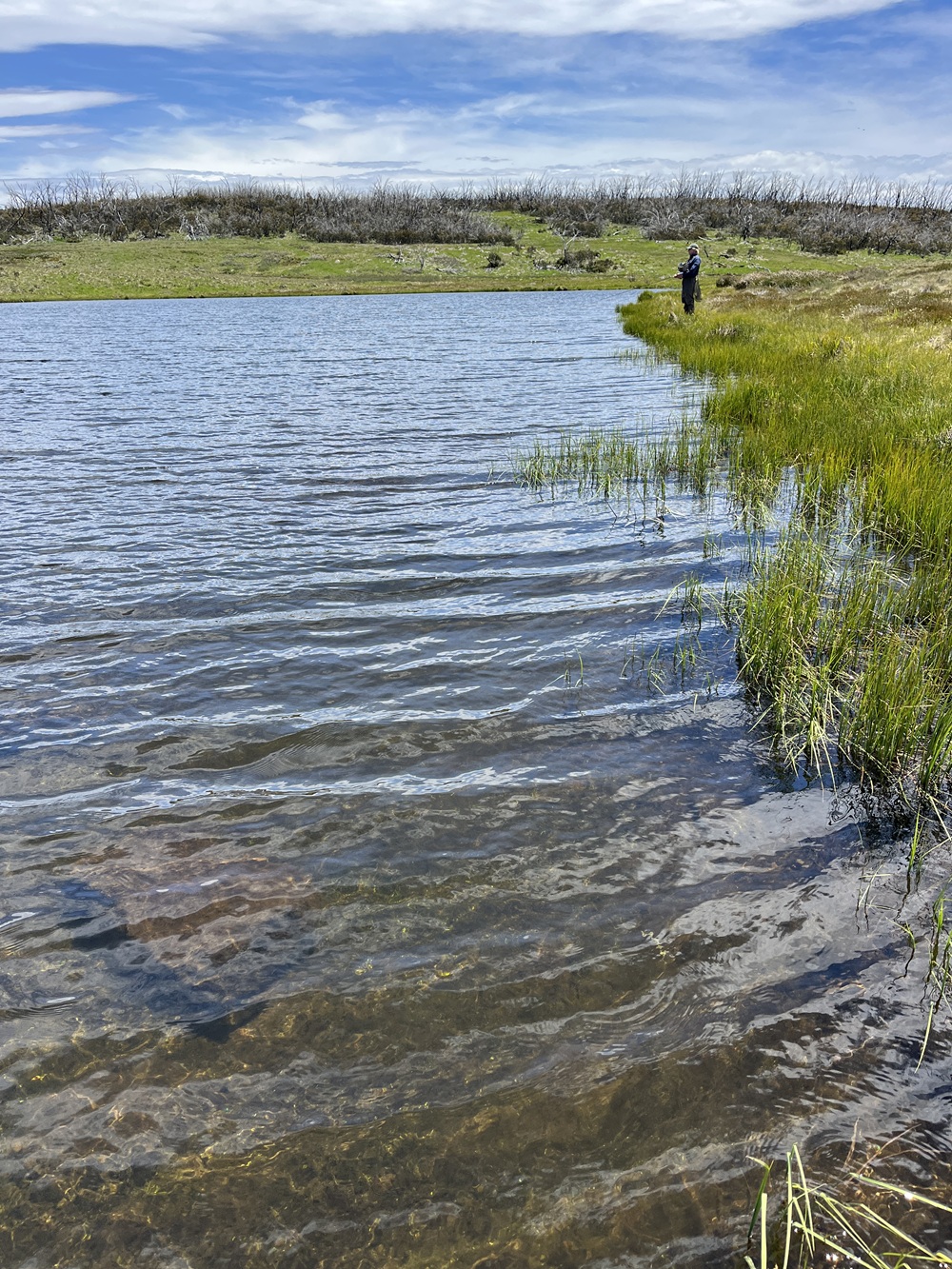
Dry Dam.
Jindabyne & Tantangara
Reports from Jindabyne are that the fishing has been testing but rewarding. A recent Fly Fish Australia, NSW/ACT Chapter competition round held on Lake Jindabyne, fished Creel Bay and the Snowy River Arm. Some quality fish were caught, but not the quantity hoped for: 16 trout caught & released from 15 competitors. Mind you, they did fish on the same day we were on the Murrumbidgee River hiding from the gales!
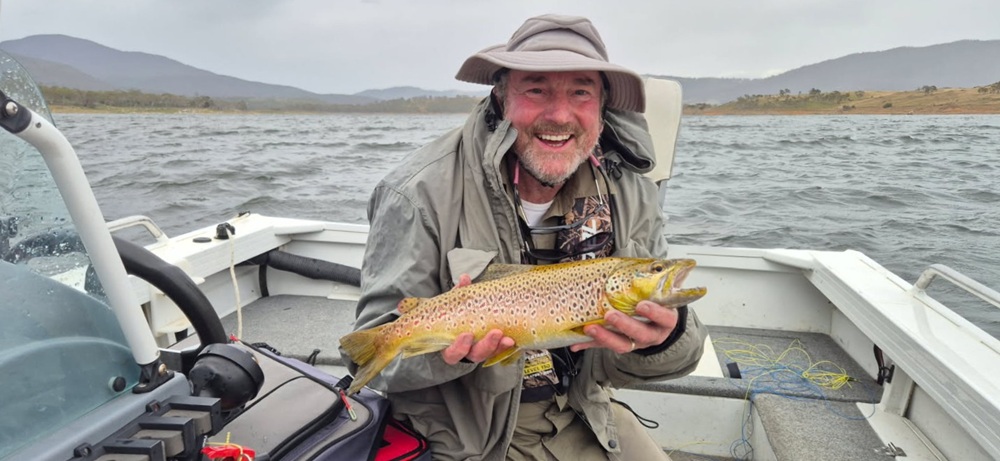
Rob Staples managed a couple of nice Jindy fish during the recent comp - despite the rough conditions. (pic. courtesy Rob Staples)
Tantangara reports are all good. Very few people are fishing there due to the Snowy 2.0 bank fishing restrictions at the dam wall end, but some nice fish are being caught. The ramp is accessible, but with low water levels is not ideal. With little surface action, Woolly Buggers and size 12 nymphs worked well. On the last two trips I’ve been there, the ramp was blocked; first by a campsite set up in the turning area; the second by 20 odd canoes and their teenage occupants preparing for an adventure. I was patient.
Snowy Lake Levels
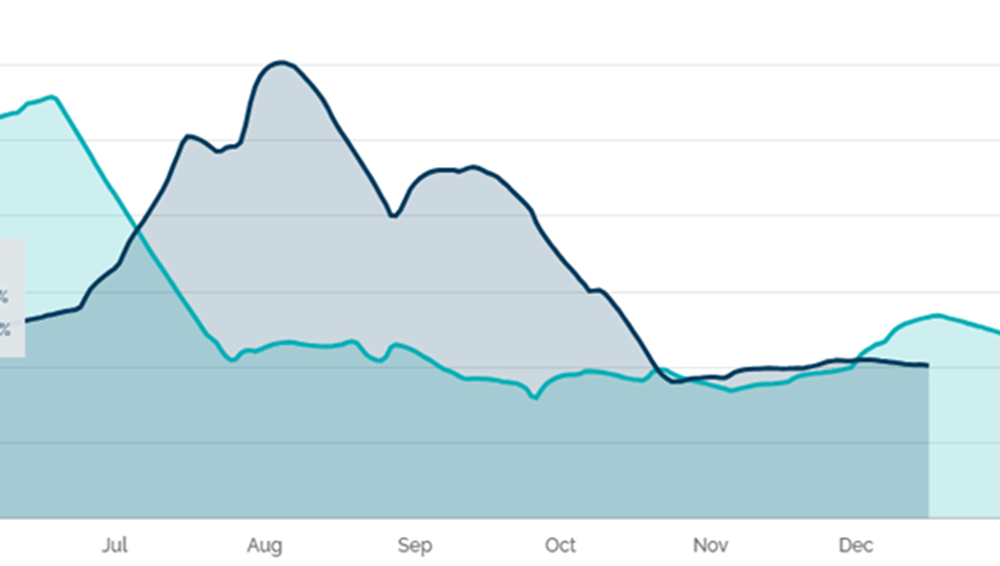
Lake Eucumbene peaked at 46.71% on 8 December but has basically hovered around 46.6% for the last few weeks – which is less than 4% shy of the level this time last year. Fingers crossed it holds that level for a few more weeks at least.
Lake Jindabyne has been stable at around 77.5% since mid-November, around 20% higher than this time last year.
Tantangara Reservoir had been up and down like a yoyo, but has now been stable at around 10% (darker line on the Snowy Hydro graph below) for nearly two months. Based on the observed river flow in, and the outflow from the dam wall, it appears this is a deliberate strategy, perhaps related to the Snowy 2.0 pumped hydro project.
Postscript
Not content with the results of my personal efforts with Philip, yesterday I put together a posse for a rematch with the dragonfly feeders. On a suitably hot (and of course windy) day, David, Rod, and I set off, with my wife Katell driving the boat. As we reached our first lee rocky shore, Rod pointed out all the beetles on the water, and the subsurface log that lifted and sucked one down. A different day, a different challenge it seemed. The first hour and a half we covered around 5 km of bank between us, I saw nothing, David and Rod spotted several fish but had no real interest shown in their flies. PMX, beetles, hoppers (yes, we'd seen some on the water), Woolly Buggers and Red Tags all got an outing.
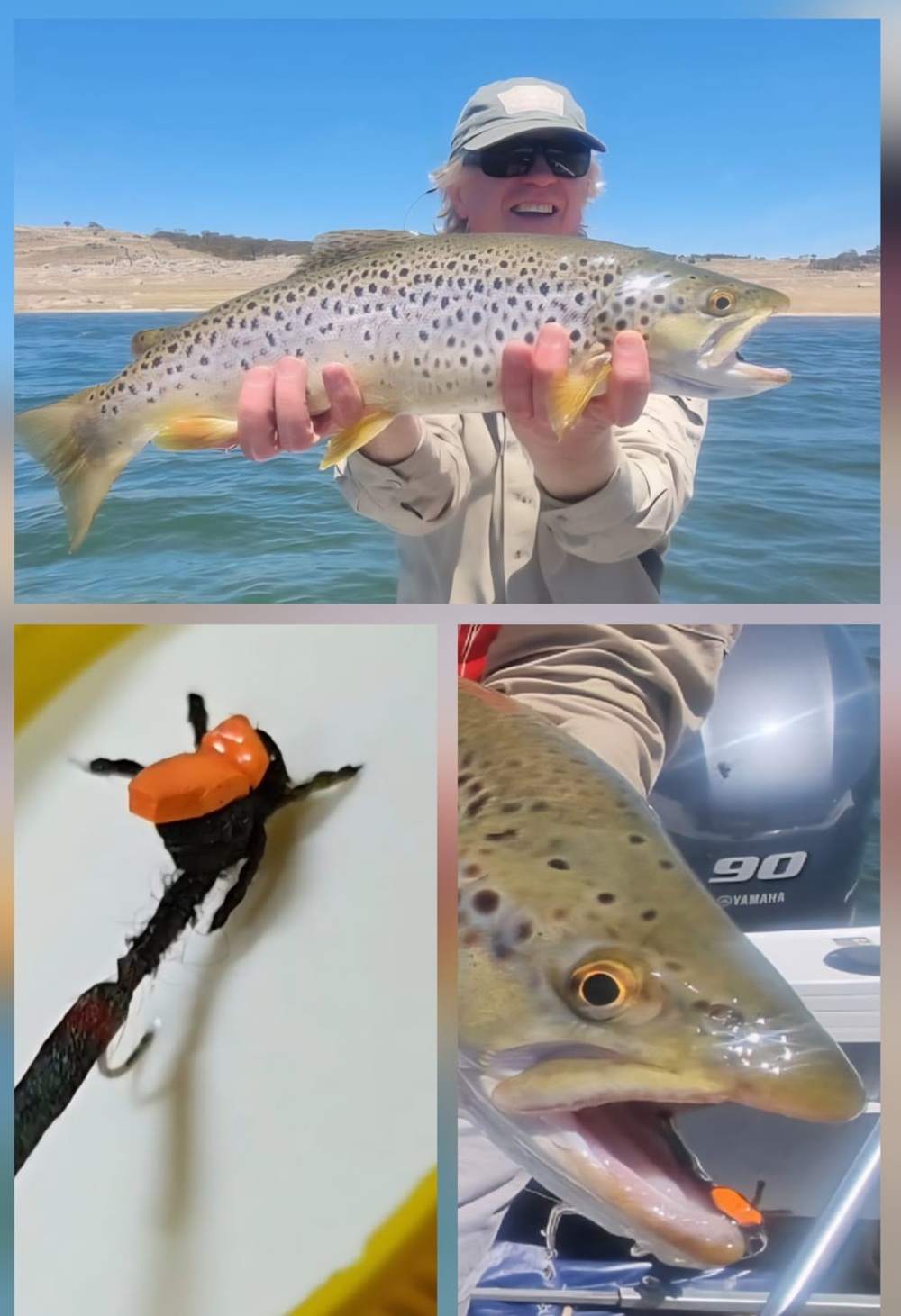
Regrouping, we headed for Rushy Plain Bay where things picked up dramatically. David, fresh from a trip to the US west coast, had a fly box full of very good looking hoppers, one of which closely resembled those on the water. That got him fish. Rod persevered with the PMX/ Red Tag duo, and got fish. I stayed in the boat and spot-locked near an amazing submerged rock garden, where several dragonfly leapers were carrying on with abandon. I was fishing a PMX with a prototype dragonfly pattern with a bendy foam tail and a big foam head. I had interest, then more interest, then I spotted a beauty. It cruised up to the PMX, but swam straight past that and ate the dragonfly. I hadn't really thought through navigating my way out of the rock garden with a big brown trying to swim around and under every boulder, but with Katell gathering photographic evidence, I managed to wend my way out into deep water where eventually I was able to get the fish into the net. Honour was satisfied. Thank you team!