





.jpg)
Ocean versus estuary.
With a bit of spare time on my hands, I decided to head to the west coast of Victoria for a few days.
This time of the year my fishing focus has well and truly switched from rivers and streams to lake fishing and in particular, estuaries and surf.
The southwest of Victoria is blessed with river systems spilling into estuaries and out to the wild Southern Ocean, with its frighteningly powerful waves eroding away the coast to form natural sculptures such as the 12 Apostles.
.jpg)
Big seas.
Driving along the Great Ocean Road and looking out to sea, the last thing that comes to mind is fishing - from the shore or a boat. This is after all the infamous Shipwreck Coast.
However, nature always creates its own balance. Amongst the raging chaos of the open ocean, there exist several river systems that flow into estuaries before (when conditions are right) entering the open ocean.
The rivers and estuaries offer a calm and tranquillity that defies what is just beyond the river mouths.
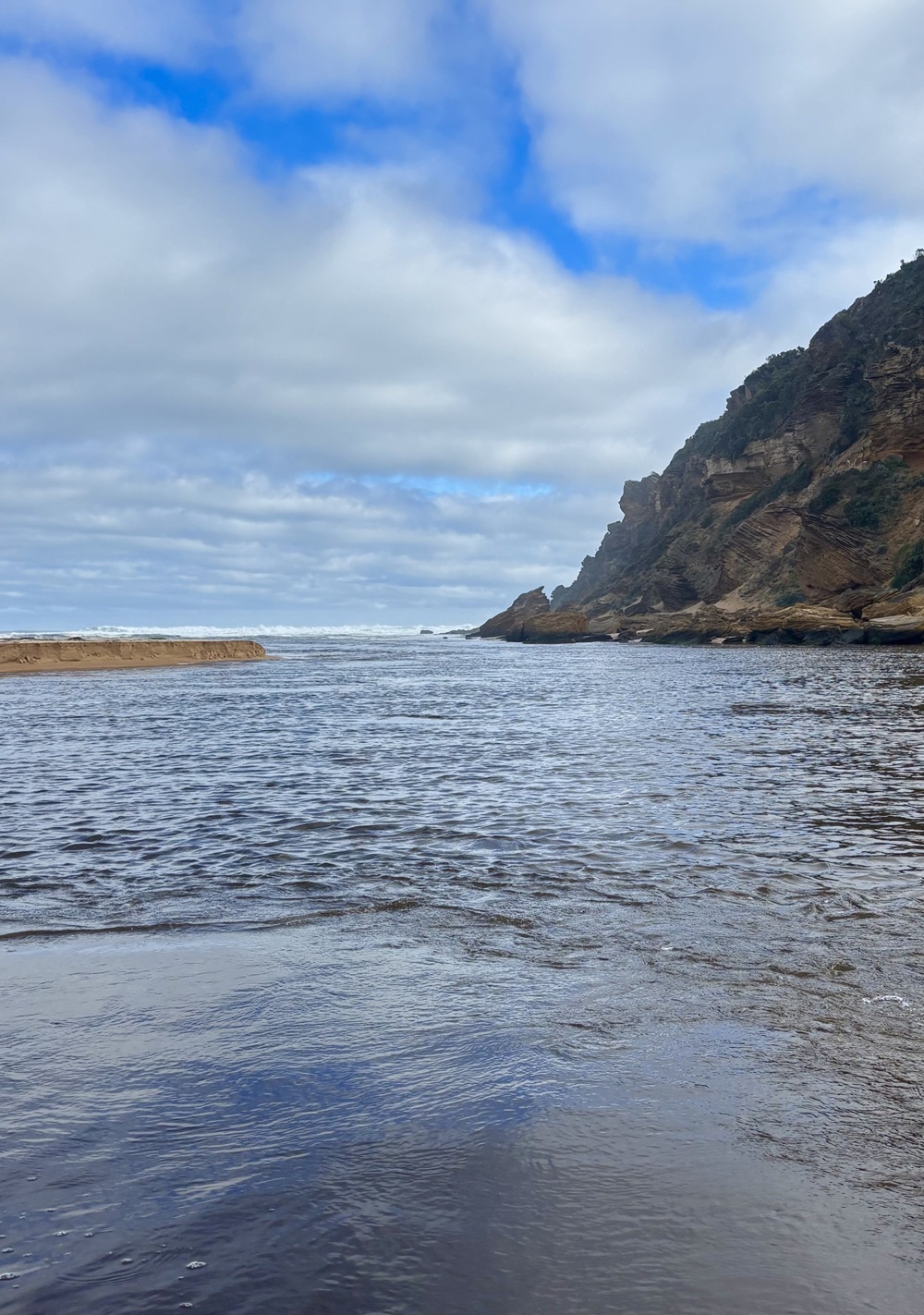
Relative calm.
Some sheltered beaches along this coastline offer fantastic surf fishing, and the estuaries offer enjoyable, challenging fishing for black bream and estuary perch (EPs). Bycatches are salmon, mullet and – if you’re lucky or skilful enough - mulloway.
My target species this trip were bream and EPs.
Factors that aid fishing for these species using a fly are varied. What I encountered this trip was tremendous flow of water coming down the systems and dark, muddy water. You would have to hit a bream on the nose to grab its attention in the murky water and for it to contemplate eating your artificial baitfish imitation.
A lot of rain has been falling in this region, for which one can only be thankful! I am sure the farmers are happy, as is nature in general. The previously dry ground is gulping down the water and mid-winter looks and feels like early spring.
When the water is brown and flows are high, from a flyfishing point of view we turn to the tides and ocean swell to assist us. A high tide and supporting wave action and winds can push tremendous volumes of blue-green salty water up into the estuarine systems. The saltwater works against the fast-flowing muddy fresh water and creates a buffer between the two. It is at the coming together of these two forces of nature that good fishing can often be found, as fish tend to gravitate towards the mixing water, fuelled by the salt and all the baitfish and other organisms that enter the systems with it.
Aside from the prospect of good fishing, if you safely stand right at the mouth of the estuary, you can witness the transition from black tea-coloured water in the waves to blue green being forcefully pushed up the system.
.jpg)
Salt meets fresh.
You stand there in awe, one eye out for safety (the surges of water can crash though sand dunes and inundate you in seconds) and one eye on the crystal clear blue-green water which resembles something out of the Maldives or Sardinia, crashing into the muddy streamflow.
As expected, generally, fishing in these conditions is a challenge, with all hope pinned on the short window for good fishing opening up at the coming together of the water titans.
When conditions are challenging and before the water (hopefully!) clears, your mind can play games with you. You start wondering how on earth are you going to catch a fish when the fish can’t see your fly and you can’t see the fish.
.jpg)
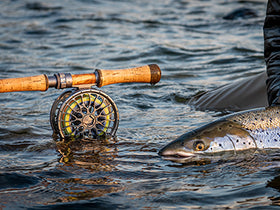
When it all comes together!
However, ultimately, some lovely fish have come to hand! I can’t describe how exhilarating these fleeting moments of action are. Strong healthy fish with saltwater flowing through their gills, intent on smashing baitfish (and our flies). Once they realise they have been deceived, the fight comes into its own as the fish powerfully cut through the water like torpedoes. All you can do is hold on and watch your line rip through the water as you adjust your drag to hopefully enable some control. You absorb the thumps and the runs, pray that, in the excitement, you didn’t strike like a trouty for a weak hookset, and that your leader and tippets knots don’t give way.
During the journey, thankfully our friends the bait fishers offered a few insights as they delved into the murky depths with a clear advantage, offering the fish something they could find by smell, rather than sight. Their modest success rate was a sign that, despite what at times seemed a mission impossible, the fish were there. Using patience backed up with a bit of knowledge and skill, there was hope for the fly.
.jpg)
I am glad we stuck around!


